
American alligator
Alligator mississippiensis
Description
How to identify
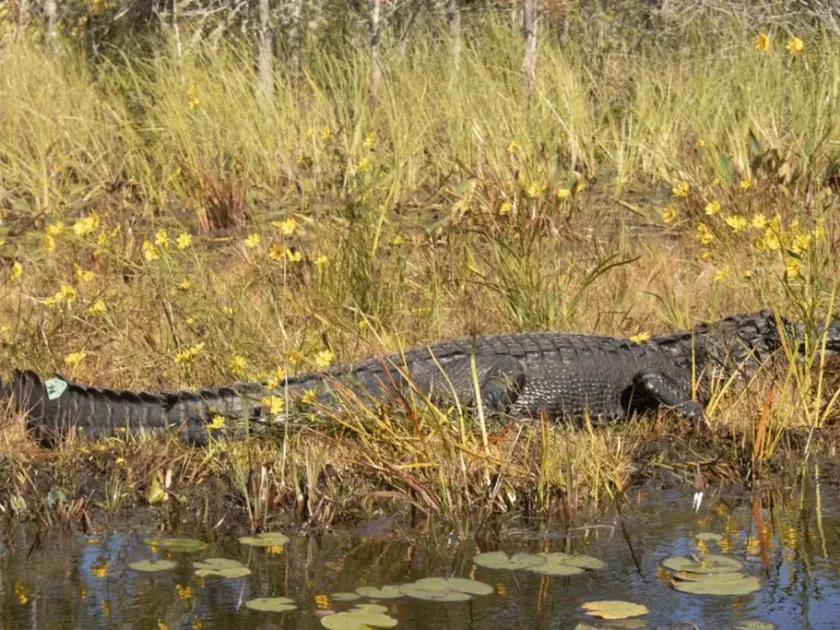
The American alligator (Alligator mississippiensis) is a member of the Alligatoridae family within the Crocodilia order. It is a large crocodilian native to the southeastern United States.
Recognizable by its broad snout and dark, armored skin, this reptile thrives in freshwater environments such as swamps, marshes, and river systems adjacent to farmland.
As a biological entity, the alligator is a specialized predator that exerts influence over aquatic ecosystems frequently utilized for agricultural irrigation.
Its reproductive cycle involves constructing nests from vegetation, which may be established near irrigation ditches or man-made farm ponds.
Highly adaptable, these reptiles frequently colonize artificial water bodies, integrating themselves into human-managed landscapes and water distribution networks.
What it damages
Alligators cause significant damage to agricultural infrastructure by undermining the stability of earth dams, irrigation canals, and drainage embankments through digging and movement.
In aquaculture, these reptiles pose a constant threat to commercial fish stocks, as they penetrate netting and cages, leading to substantial economic losses.
Livestock operations are susceptible to predation, particularly when animals rely on open water sources that are occupied by alligator populations.
Physical disturbance of soil structures by these large reptiles exacerbates soil erosion, requiring intensive maintenance of the irrigation network.
Their presence can lead to the obstruction of water flow in irrigation systems, negatively impacting the efficiency of crop watering schedules.
Control measures
Management strategies involve the installation of heavy-duty exclusion fencing and electrified barriers to prevent alligators from entering aquaculture facilities.
Vegetation control along canal banks is essential to reduce the availability of nesting sites and cover, making the area less hospitable for these animals.
Acoustic deterrents and specialized motion-sensing technology are deployed to discourage alligators from approaching sensitive agricultural infrastructure.
Professional trapping and relocation programs are conducted by certified agencies to mitigate threats to farm operations while adhering to conservation laws.
Regular inspections of dams and irrigation canals allow for the early detection of damage caused by the reptiles, ensuring timely repairs and systemic integrity.
Taxonomy
- Latin name
- Alligator mississippiensis
- Family
- Alligatoridae
- EPPO code
- ALGTMI
Discussion
No discussions yet — be the first.