
Alligator treehopper
Alligator
Description
How to identify
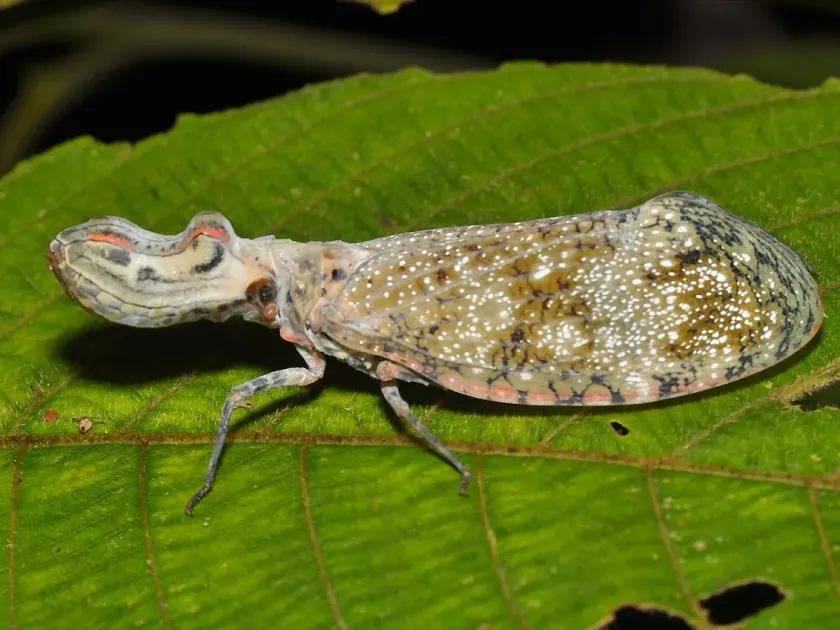
The Alligator treehopper (family Membracidae) is a fascinating but destructive insect named for the distinctive dorsal projection on its thorax, which resembles the head of an alligator.
Adults are typically small, measuring 5-10 mm in length. Their coloration mimics tree bark, ranging from dark brown to grey, which provides excellent camouflage against predators.
Nymphs possess distinct spines on their bodies and lack functional wings. They are usually found in clusters on stems or the undersides of leaves, often remaining stationary for long periods.
They are equipped with piercing-sucking mouthparts. The adults are highly mobile and can jump several feet when disturbed, thanks to their strong hind legs.
The life cycle consists of the egg, nymph, and adult stages. They typically overwinter as eggs embedded within the bark of young twigs to survive harsh winter conditions.
What it damages
Alligator treehoppers primarily attack a wide variety of deciduous trees and shrubs. Common hosts include apple, pear, maple, and linden trees, especially in nursery settings.
The damage is caused by the feeding process, where the insects extract nutrient-rich sap from young, succulent tissues of the plant.
Heavy feeding can lead to stunting, wilting, and deformation of young shoots. In some cases, the damage to the vascular tissue can impede the growth of the entire branch.
Furthermore, they excrete a sugary substance known as honeydew. This attracts ants and serves as a medium for the growth of sooty mold, which blocks sunlight from leaves.
- Young fruit tree saplings.
- Ornamental deciduous trees.
- Nursery-grown broadleaf plants.
When it appears
The activity cycle of the treehopper begins in mid-to-late spring. As temperatures rise above 15 degrees Celsius, the overwintering eggs begin to hatch.
Nymphal development takes place throughout the late spring and early summer. During this time, they are most active and sensitive to external environmental factors.
Adults typically emerge by mid-summer. Multiple generations may occur in one season depending on the geographic location and overall warmth of the climate.
By autumn, adult females lay eggs into the bark of current-year or one-year-old twigs, marking the end of the active life cycle for the current year.
Warm and dry summers often contribute to population surges, making monitoring and control efforts particularly crucial during July and August.
Signs of infestation
A primary indicator of infestation is the presence of sticky honeydew on the leaves, which often leads to a black, soot-like appearance caused by mold growth.
Inspection of twigs may reveal small, longitudinal scars or slits in the bark. These are the oviposition sites where the female has laid her eggs.
Leaves on infested shoots may show signs of chlorosis or curling at the edges, indicating that the plant is struggling due to sap loss.
The presence of ants crawling on the bark or branches is a strong indicator that sap-sucking insects like treehoppers are present on the tree.
Finding the insects themselves is often easy if the branches are shaken, as the adults will immediately jump or fly away from the site of disturbance.
Control measures
Cultural control involves pruning and destroying infested twigs during the dormant season, which effectively removes the eggs before they can hatch in the spring.
Chemical control is most effective when targeting the nymphal stages. Systemic insecticides containing imidacloprid or acetamiprid are highly effective for long-term protection.
Biological control can be enhanced by encouraging natural predators such as lady beetles, lacewings, and parasitic wasps, which prey on treehopper populations.
Using yellow sticky cards in the nursery or garden can help monitor adult populations and reduce their numbers early in the infestation cycle.
Proper plant maintenance, including adequate watering and balanced fertilization, helps trees remain resilient against treehopper attacks throughout the growing season.
Taxonomy
- Latin name
- Alligator
- Family
- Alligatoridae
- EPPO code
- ALGTSP
Discussion
No discussions yet — be the first.