
Cotton stem weevil
Alcidodes affaber
Description
How to identify
The cotton stem weevil, scientifically known as Alcidodes affaber, belongs to the family Curculionidae. It is a significant pest characterized by its distinctively elongated snout, typical of weevils.
Adult insects are small, dark-colored beetles with a robust exoskeleton. Their bodies are well-adapted for navigating and clinging to the stems of host plants.
The larvae are typically legless, white, and C-shaped, living primarily inside plant tissues. This concealed lifecycle makes them particularly difficult to detect before significant damage has occurred.
The development of Alcidodes affaber is heavily influenced by environmental factors such as temperature and humidity, which dictate the length of its life cycle and seasonal activity.
This beetle reproduces quickly under warm, humid conditions, allowing multiple generations to infest a single cotton crop season, which complicates management efforts significantly.
What it damages
The primary host for Alcidodes affaber is the cotton plant (Gossypium). The pest targets the plant's vascular and structural tissues, leading to serious agricultural losses.
Adult weevils feed on the tender stems and terminal buds, which stunts the growth of the plant and causes structural weakness in the growing branches.
The larvae cause the most severe damage by boring into the stems and flower buds. This activity destroys the plant's vascular tissues, effectively cutting off the nutrient and water supply to the developing bolls.
Infested buds and flowers often drop prematurely, leading to a substantial decrease in yield. The physical damage caused by larval tunneling also creates entry points for secondary pathogens and rots.
Severe infestations can lead to widespread plant wilting and death, resulting in significant economic impacts for cotton producers globally.
Signs of infestation
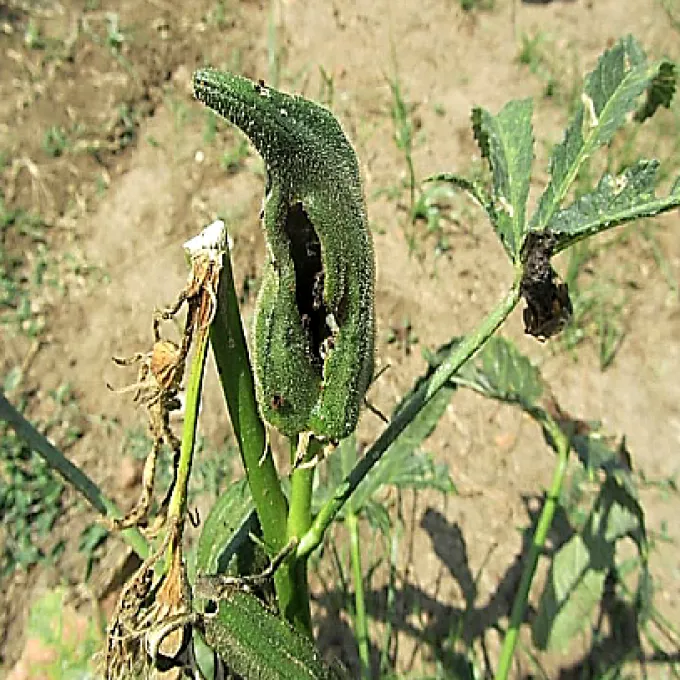
Early symptoms include small, punctured holes on young stems, which are indicative of adult feeding activity or oviposition sites where the eggs were laid.
A clear sign of damage is the wilting or drooping of the plant's top growth. This often occurs because the larva has compromised the stem's integrity from the inside.
Premature shedding of buds and squares is a strong indicator of larval presence within the reproductive structures of the plant.
Physical deformities, such as gall-like swellings on the stem, are common where larvae have established their feeding galleries inside the stalk.
Fields showing patches of stunted growth compared to healthy plants should be inspected for the presence of boreholes and internal damage within the stems.
Control measures
Effective management begins with proper cultural practices, such as removing and burning infected plant debris immediately after harvest to eliminate overwintering sites.
Deep plowing of fields during the off-season is highly effective at destroying the soil-dwelling pupae and dormant adults of the cotton stem weevil.
Chemical control focuses on applying systemic insecticides during the peak activity period of the adults to prevent them from laying eggs inside the tissues.
Biological control methods involving natural predators and parasitoids can play a crucial role in maintaining the population below the economic threshold.
- Implementing crop rotation to disrupt the pest life cycle.
- Monitoring pest populations using pheromone or light traps.
- Maintaining field hygiene by controlling weed hosts in the surrounding areas.
Taxonomy
- Latin name
- Alcidodes affaber
- Order
- Coleoptera (beetles)
- Family
- Curculionidae
- EPPO code
- ALCIAF
Discussion
No discussions yet — be the first.