
Alabagrus
Alabagrus
Description
How to identify
The genus Alabagrus belongs to the family Braconidae, order Hymenoptera. These are specialized parasitic wasps that serve as vital components of natural insect control systems.
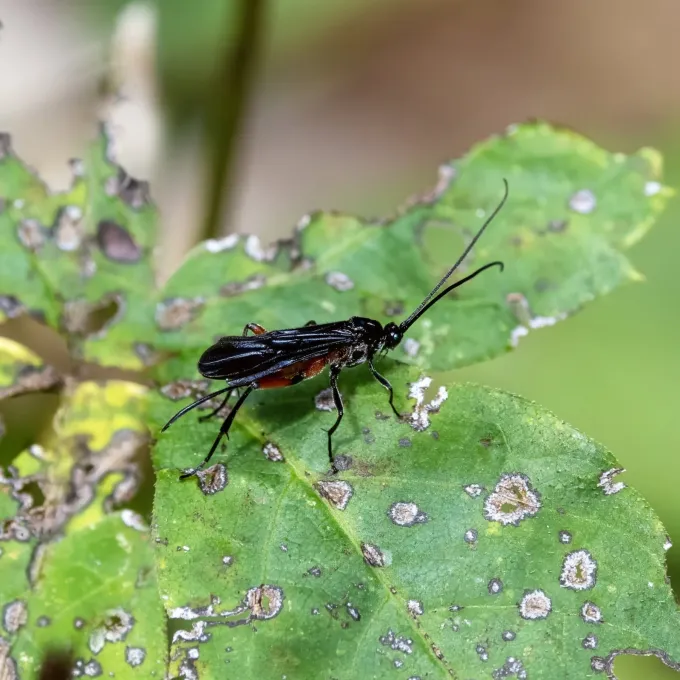
Adult Alabagrus wasps are typically identifiable by their slender bodies and striking color patterns, often displaying combinations of black, orange, or yellow.
They possess elongated antennae and a distinct wing venation pattern characteristic of the subfamily Agathidinae. Females are equipped with a well-developed ovipositor for egg-laying.
These insects develop as endoparasitoids, meaning they complete their life cycle inside the larvae of their hosts, specifically targeting various species of moths.
It is crucial to emphasize that they are not plant pests; rather, they are beneficial insects that assist farmers by reducing pest populations.
What it damages
Members of the Alabagrus genus do not cause any physical damage to crops or ornamental plants as they do not feed on plant tissues.
Instead, they act as natural predators of Lepidoptera larvae, which are significant pests that consume foliage, stems, and fruits of various agricultural crops.
By parasitizing caterpillars, they effectively suppress the growth of pest populations, preventing significant agricultural damage that would otherwise occur.
Their role is particularly valuable for controlling hidden feeders, such as stem-boring moths, which are notoriously difficult to target with conventional chemical sprays.
The presence of Alabagrus indicates a functional, diverse agroecosystem where natural biological mechanisms effectively mitigate pest outbreaks.
When it appears
The seasonal activity of Alabagrus is synchronized with the life cycles of their moth hosts, spanning throughout the primary growing season.
Emergence typically begins in early spring, coinciding with the arrival of the first generation of pest moths, which provides necessary hosts for the wasps' reproduction.
Peak abundance is observed during mid-summer when the populations of host larvae are at their highest in fields and orchards.
Multiple generations may occur per year, depending on the local climate and the continuous availability of susceptible caterpillar species.
As temperatures decline in autumn, these wasps enter a dormant stage, typically overwintering as pupae within the cocoons created after the host larva is consumed.
Signs of infestation
There are no signs of "Alabagrus damage" because these insects do not feed on or damage crops in any way.
An indicator of their success in the field is the presence of mummified or hollowed-out caterpillar carcasses, which signify successful parasitism.
Fields with healthy Alabagrus populations will generally show less leaf loss and overall lower levels of pest-related stress on the crops.
Adult wasps can occasionally be observed feeding on the nectar of field flowers, which is a key requirement for their survival and reproductive success.
Monitoring these wasps is a useful practice in integrated pest management to assess the health of the local biological control community.
Control measures
No control measures are needed against Alabagrus; on the contrary, growers should strive to protect and encourage their presence.
The most important step is to avoid the indiscriminate use of broad-spectrum insecticides, which can kill these beneficial wasps along with the pests.
Implementing Integrated Pest Management (IPM) practices, such as maintaining floral strips of nectar-rich plants, provides necessary food for adult wasps.
Preserving hedgerows and unsprayed buffer zones provides essential habitat for these insects to survive the winter and re-colonize crops in the following spring.
Using selective biological or chemical agents that are harmless to parasitic Hymenoptera is highly recommended for sustainable crop production.
Taxonomy
- Latin name
- Alabagrus
- Order
- Hymenoptera
- Family
- Braconidae
- EPPO code
- ALBGSP
Discussion
No discussions yet — be the first.