
Agraylea multipunctata
Agraylea multipunctata
Description
How to identify
Agraylea multipunctata belongs to the order Trichoptera, specifically the family Hydroptilidae. These insects are known as micro-caddisflies due to their significantly smaller size compared to other members of the order.
The larvae are distinct for their unique life strategy of building small, portable cases made from silk and fragments of aquatic vegetation or algae, which serve as camouflage.
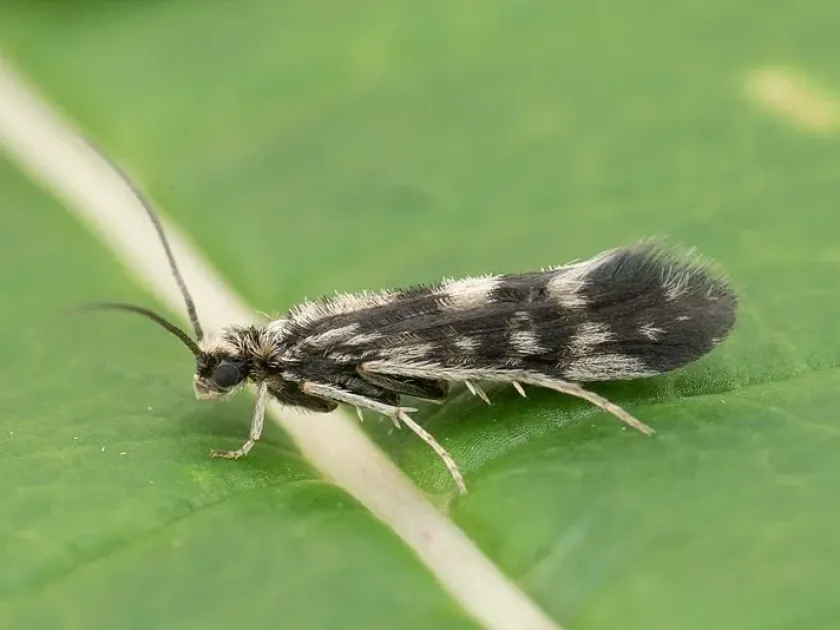
Adults are small, hairy insects that resemble moths. Their forewings typically exhibit a characteristic spotted or mottled pattern, which is a key diagnostic feature for visual identification.
Because they are part of the Hydroptilidae family, they are generally elusive and difficult to spot without close inspection of submerged plant surfaces or fine-mesh netting.
Understanding their taxonomy is important, as they are not classic crop pests but can become problematic in intensive aquatic gardening or specific research facilities.
What it damages
The damage caused by Agraylea multipunctata is primarily linked to the feeding habits of the larvae, which graze on both algae and the soft tissues of vascular aquatic plants.
Ornamental water plants such as water lilies (Nymphaea), lotus, and various submerged oxygenators like Elodea can suffer significant aesthetic and structural damage when larvae are present in high densities.
Larvae consume leaf blades, often leaving behind skeletonized patches or irregular holes. This not only destroys the appearance of the plants but also interferes with the plant's photosynthetic efficiency.
The accumulation of larval cases and excrement can lead to water quality degradation, creating an environment susceptible to secondary fungal or bacterial pathogen outbreaks.
In ornamental settings, heavy infestation can lead to the rapid decline of sensitive plant species, causing significant financial loss to commercial growers and pond enthusiasts.
When it appears
The life cycle of Agraylea multipunctata is synchronized with the seasonal growth cycles of aquatic vegetation, providing the larvae with a steady food supply throughout the warmer months.
Adult emergence typically peaks in the summer, from June through August, when mating and oviposition take place directly onto or near suitable submerged substrates.
The larval stage is the most active period of damage. Larvae develop throughout the spring and summer, responding to water temperatures and food availability.
Overwintering usually occurs as larvae, which enter a period of reduced activity, hiding within their cases among plant debris or in the substrate at the bottom of the water body.
Successive generations can occur in warmer climates or controlled water environments, requiring consistent monitoring throughout the active growing season.
Signs of infestation
The presence of small, elongated, or flattened cases attached to the stems or undersides of leaves is a definitive sign of an Agraylea multipunctata infestation.
Small, irregular holes or "windowpane" damage on the leaves occur when the larvae consume the green tissue while leaving the tougher veins intact.
During the evening, adult caddisflies can often be seen resting near the water's edge or flying just above the surface of the pond, which confirms their reproductive activity.
Empty pupal cases found on the surface of plants or near the waterline suggest that the larvae have successfully completed their metamorphosis and a new generation is underway.
A general loss of vigor or yellowing of aquatic plants without clear signs of disease should prompt an inspection for the presence of these micro-caddisfly larvae.
Control measures
Manual removal of larvae and their cases during routine pond maintenance is the most direct and environmentally friendly way to manage small infestations.
Good pond hygiene, such as removing excess organic matter and decaying leaves, significantly reduces the available habitat for larval development and overwintering.
Introducing natural predators, such as small fish that consume aquatic invertebrates, can effectively keep the population of caddisfly larvae in check within larger systems.
While chemical insecticides are generally discouraged in aquatic environments due to non-target toxicity, biological control agents can be used if infestations become severe.
- Regular inspection of submerged aquatic foliage.
- Using fine-mesh netting to remove adult insects during evening flights.
- Pruning and disposing of heavily infested plant parts.
- Maintaining optimal water chemistry to support healthy plant growth.
Taxonomy
- Latin name
- Agraylea multipunctata
- Family
- Hydroptilidae
- EPPO code
- ARAYMU
Discussion
No discussions yet — be the first.