
Agraylea
Agraylea
Description
How to identify
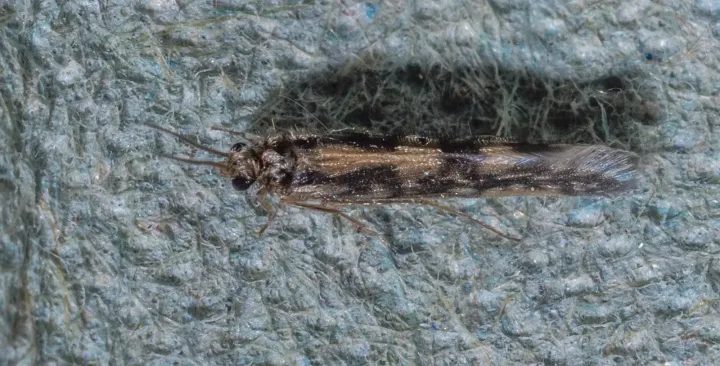
Agraylea is a genus of caddisflies (order Trichoptera) belonging to the family Hydroptilidae. These are tiny insects that, in their adult stage, live near water and resemble small moths with dark, hairy wings.
The larvae of Agraylea possess a distinct morphology: they construct flat, portable cases made from fragments of filamentous algae or tissues of higher aquatic plants. The larva's body is strongly compressed, allowing it to move efficiently across leaf surfaces.
Identification of the species requires analysis of wing venation in adults or examination of the larval case structure. Unlike many other caddisflies, Agraylea larvae are extremely small and often go unnoticed until a mass infestation occurs.
Their life cycle involves complete metamorphosis: egg, larva, pupa, and adult. Females lay eggs directly onto submerged plant parts, where larvae immediately begin their active feeding phase on host tissues.
Under warm water conditions or within greenhouse environments, Agraylea can complete several generations per season, which significantly increases the risk to cultivated aquatic plants.
What it damages
Agraylea primarily damages aquatic and semi-aquatic plants, including various species used in ornamental gardening, aquascaping, and hydroponic production systems.
The primary damage is caused by the larvae, which scrape the epidermis and consume the leaf parenchyma, leaving behind characteristic transparent windows or irregular holes in the leaf blades.
Plants with delicate submerged or floating leaves, such as water lilies, pondweeds (Potamogeton), and certain Elodea species, are most susceptible and can be destroyed rapidly by high larval populations.
When infestation density is high, the pest disrupts the plant's photosynthesis processes, leading to stunted growth, shoot deformation, and the eventual collapse of the plant's vegetative structure.
The economic impact of Agraylea increases in intensive aquatic cultivation, where even minor leaf damage significantly reduces the marketability and vitality of the products.
Signs of infestation
The main sign of pest presence is the discovery of specific flat cases that the larvae attach to the undersides of leaves.
Visually, damage appears as discolored leaf patches that eventually turn into small, jagged holes, creating a frayed appearance on the affected foliage.
The presence of dark frass (excrement) around damaged areas indicates active feeding and confirms a high concentration of larvae on the host plant.
During detailed inspection of the water column or substrate surfaces, one can observe adult insects, which are typically active during twilight hours.
A sudden decline in the overall condition of aquatic plantings, characterized by yellowing and leaf shedding, serves as a warning sign of an escalating pest population.
Control measures
The primary control measure is the regular cleaning of ponds and hydroponic systems to remove organic debris, which serves as a breeding ground for Agraylea larvae.
Mechanical removal of infested plant parts and manual collection of larval cases are effective strategies for small, isolated infestation outbreaks.
Biological control agents, such as preparations containing Bacillus thuringiensis, allow for selective targeting of larvae without causing harm to fish or other beneficial aquatic organisms.
Chemical insecticides should be avoided in most aquatic systems due to their high toxicity to non-target hydrobionts; therefore, emphasis is placed on ecological management practices.
- Using light traps to monitor and reduce adult insect population density.
- Installing fine mesh screens to prevent adult insects from entering greenhouse ponds.
- Managing water quality and nutrient levels to reduce the attractiveness of plants to the pest.
Taxonomy
- Latin name
- Agraylea
- Family
- Hydroptilidae
- EPPO code
- ARAYSP
Discussion
No discussions yet — be the first.