
Agapetus fuscipes
Agapetus fuscipes
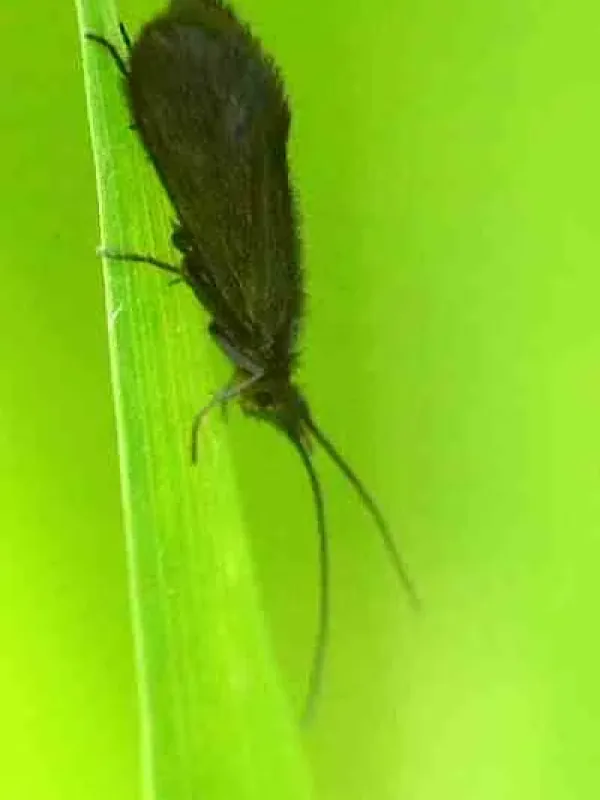
Description
How to identify
Agapetus fuscipes belongs to the order Trichoptera, commonly known as caddisflies, and the family Glossosomatidae.
Adult insects are small, with two pairs of hairy wings that are typically folded roof-like over their abdomen when at rest.
The larvae of this species are easily identifiable by the portable cases they construct using fine sand grains and silk secretions.
These larvae have a distinct segmented body and specialized thoracic legs, which are essential for navigating the surfaces of rocks and aquatic vegetation.
Their coloration typically ranges from light brown to dark brown, allowing them to blend seamlessly into the aquatic substrate.
What it damages
While Agapetus fuscipes is primarily an aquatic organism, it can become a pest in hydroponic systems, aquatic nurseries, and controlled growing environments.
Larvae feed by scraping periphyton, but when populations are dense, they may consume parts of the leaves and roots of the crops being grown.
Mechanical damage caused by larval feeding creates lesions on plant tissues, providing entry points for various pathogenic fungi and bacteria.
Severe infestations can lead to stunted growth and reduced crop yields due to the direct damage to the plant's root and nutrient absorption systems.
In aquatic plant production, the presence of these larvae can disrupt the local ecosystem and lead to significant quality degradation of the final product.
When it appears
Adult Agapetus fuscipes are typically active during spring and summer months, which is the primary period for mating and egg-laying.
Larval development is continuous throughout the growing season, reaching its peak when water temperatures favor faster metabolic processes.
During the cooler autumn and winter months, larval activity decreases as they enter a phase of dormancy or slower growth in protected underwater spots.
In indoor greenhouses or heated aquatic systems, the lifecycle can continue year-round, requiring consistent monitoring throughout all four seasons.
Understanding the temperature dependency of their life cycle is crucial for timing any management actions to prevent future population spikes.
Signs of infestation
The most reliable sign of an infestation is the presence of the characteristic dome-shaped sand cases attached to stems or the sides of growing containers.
Visible scrape marks on the leaves of aquatic plants suggest that larvae are actively feeding and consuming the plant's surface tissues.
Darkened lesions or necrotic tissue around the base of the plant or on its roots are typical indicators of physical feeding damage.
A sudden decrease in the health and vigor of aquatic plants, accompanied by visible larval debris, strongly indicates a Agapetus fuscipes outbreak.
Regular visual inspections of the substrate and root systems will reveal the accumulation of their portable cases long before massive damage occurs.
Control measures
Mechanical removal of the larvae and their cases from the water systems and substrates is the most direct and effective management technique.
Adjusting the water flow and maintaining optimal water quality parameters can create a less hospitable environment for the development of these larvae.
Biological controls, such as introducing specific natural predators or using microbial-based insecticides, can help manage populations in confined areas.
Implementing strict sanitation protocols in nurseries prevents the spread of the pest between different aquatic growing tanks or systems.
- Regular mechanical cleaning of water filters
- Frequent inspection of root zones for larval cases
- Managing water temperature to interrupt life cycles
Taxonomy
- Latin name
- Agapetus fuscipes
- Family
- Glossosomatidae
- EPPO code
- AGAPFU
Discussion
No discussions yet — be the first.