
Agapetus
Agapetus
Description
How to identify
The genus Agapetus belongs to the order Trichoptera (caddisflies), specifically within the family Glossosomatidae. Adults are small, moth-like insects with hairy wings often held in a tent-like position over the body.
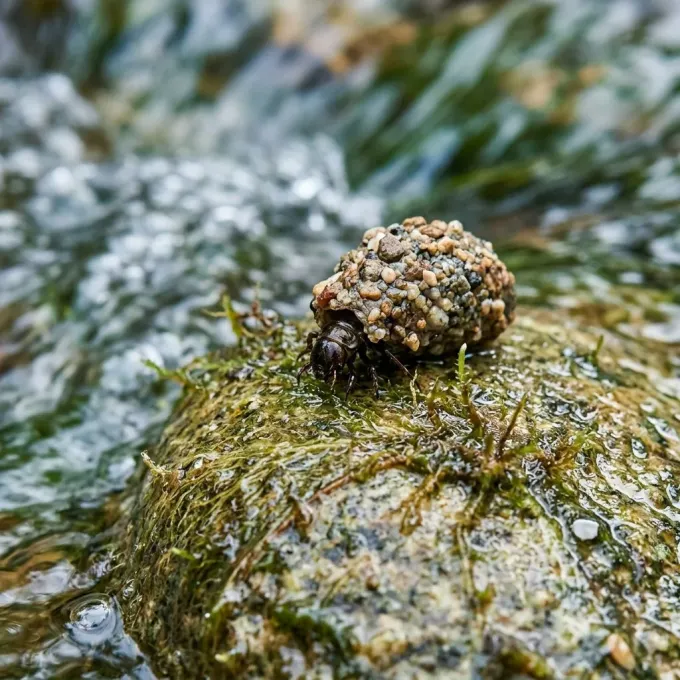
The larvae are aquatic and are well-known for constructing portable, dome-shaped cases made from small mineral grains or sand, cemented together with silk.
This construction provides effective protection against predators and strong water currents, allowing them to thrive in fast-flowing mountain streams.
The life cycle involves complete metamorphosis, consisting of four stages: egg, larva, pupa, and adult. This biological structure is typical for the order Trichoptera.
For agricultural professionals, identifying these insects correctly is important to avoid confusion with actual crop-destroying lepidopteran pests.
What it damages
Species within the genus Agapetus are not considered agricultural pests, as they do not feed on crops, vegetables, or field plants.
Their diet consists primarily of periphyton—algae and organic debris—which they scrape off rocks using specialized mouthparts while remaining underwater.
The only potential for concern is their presence in irrigation canals, where large populations might interfere with filter efficiency or mechanical water flow systems.
They lack the physiological adaptations necessary to damage plant tissues, meaning they pose no threat to agricultural yield or plant health.
Since they occupy a strictly aquatic niche, their impact on terrestrial farming operations remains negligible under normal conditions.
When it appears
Adult emergence of Agapetus typically occurs during the spring and summer months, coinciding with warmer weather conditions.
The larval stage is often present year-round, as the constant water temperature in streams allows for continuous development through most seasons.
Population density is heavily dependent on the water quality, oxygen levels, and current speed, which determine the rate of maturation.
The timing of life stages is regulated by environmental cues such as photoperiod and water temperature fluctuations throughout the year.
Seasonal patterns are crucial for understanding the population dynamics of these insects in habitats adjacent to agricultural zones.
Control measures
There are no chemical control measures recommended for Agapetus, as they are not classified as a pest species for crops.
In cases where their presence in irrigation systems becomes a nuisance, mechanical cleaning of inlet screens and irrigation filters is the standard management practice.
Maintaining high water quality and managing aquatic vegetation in water supply channels is sufficient to keep their populations in check.
It is strongly advised to avoid applying pesticides near water sources, as these chemicals can harm non-target aquatic insects and disrupt the local ecosystem.
Focusing on integrated pest management for true pests is more efficient than monitoring or controlling these benign aquatic organisms.
Taxonomy
- Latin name
- Agapetus
- Family
- Glossosomatidae
- EPPO code
- AGAPSP
Discussion
No discussions yet — be the first.