
Williana moth
Aethes williana
Description
How to identify
The Williana moth (Aethes williana) is a species of moth belonging to the family Tortricidae, a large group known for their leaf-rolling and bud-boring larvae.
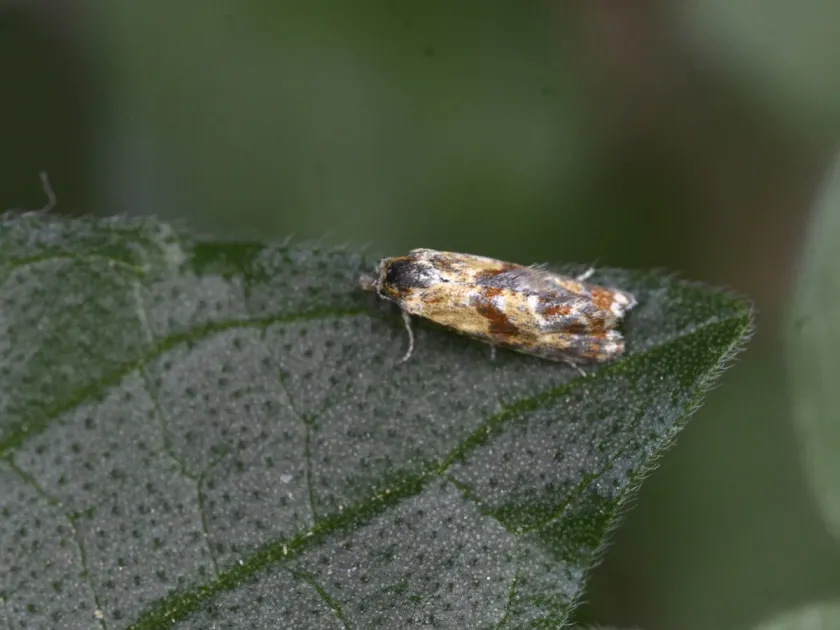
The adult moths have a wingspan of approximately 12–16 mm, with forewings that typically display an ochre or yellowish ground color with brown markings.
The larvae are small, cylindrical caterpillars that are usually pale in color with a dark, hardened head capsule, typical for the Cochylini tribe.
Accurate identification of this species is essential for managing its population, especially in habitats where related moths might also be present.
As nocturnal or crepuscular insects, adults are rarely seen during the day, remaining camouflaged on the stems or leaves of their host plants.
What it damages
The larvae of Aethes williana primarily feed on plants within the Asteraceae family, often targeting wild thistles and related species.
In agricultural settings, these larvae bore into the flower heads and buds, consuming the developing reproductive tissues and seeds.
This feeding behavior results in damaged or hollowed-out flower heads, which significantly reduces the plant's ability to produce viable seeds.
While often considered a minor pest in large fields, high densities of these larvae can cause substantial damage to seed crops or ornamental plantings.
The internal damage caused by the larvae also leaves the plant vulnerable to moisture accumulation and subsequent fungal infections within the flower head.
When it appears
The flight period of the adult moths generally occurs during the summer months, with the exact timing driven by local temperature and weather patterns.
Females typically lay their eggs directly onto or near the flower buds of host plants to ensure the larvae have immediate access to food upon hatching.
Larval development proceeds through several instars while feeding inside the floral structures, where they remain protected from predators.
Pupation occurs within the plant tissue or sometimes in the soil debris, serving as a survival mechanism against extreme weather conditions.
The number of annual generations can vary by region, with warmer climates potentially supporting more than one brood per growing season.
Signs of infestation
The presence of fine, silken webbing around the flower buds is one of the most reliable indicators of larval infestation.
Frass (larval excrement), appearing as dark granular pellets, is often found near the entry holes on the exterior of the flower head.
Distorted flower buds, premature wilting, or a stunted appearance of the inflorescence are common signs of internal feeding activity.
In some cases, the flower head may fail to open correctly, or the florets may appear necrotic due to the destruction of the central tissues.
- Visible webbing between floral parts.
- Accumulation of larval frass at the base of the bud.
- Deformation of the flower head.
- Internal galleries found upon dissection of the flower.
Control measures
Cultural control, such as removing wild Asteraceae weeds from field margins, effectively reduces the pest population's primary breeding grounds.
Biological control methods, including the use of Bacillus thuringiensis sprays, are effective against young larvae and are safer for beneficial insects.
Chemical control should be reserved for periods of peak infestation, utilizing targeted applications to prevent unnecessary exposure of pollinators.
Pheromone monitoring systems are highly recommended to determine the optimal timing for intervention, ensuring treatments align with the flight of adult moths.
Regular field scouting and physical removal of highly infested flower heads can help suppress local outbreaks before they reach critical levels.
Taxonomy
- Latin name
- Aethes williana
- Order
- Lepidoptera (butterflies)
- Family
- Tortricidae
- EPPO code
- AETEWI
Discussion
No discussions yet — be the first.