
Juniper webworm
Aethes rutilana
Description
How to identify
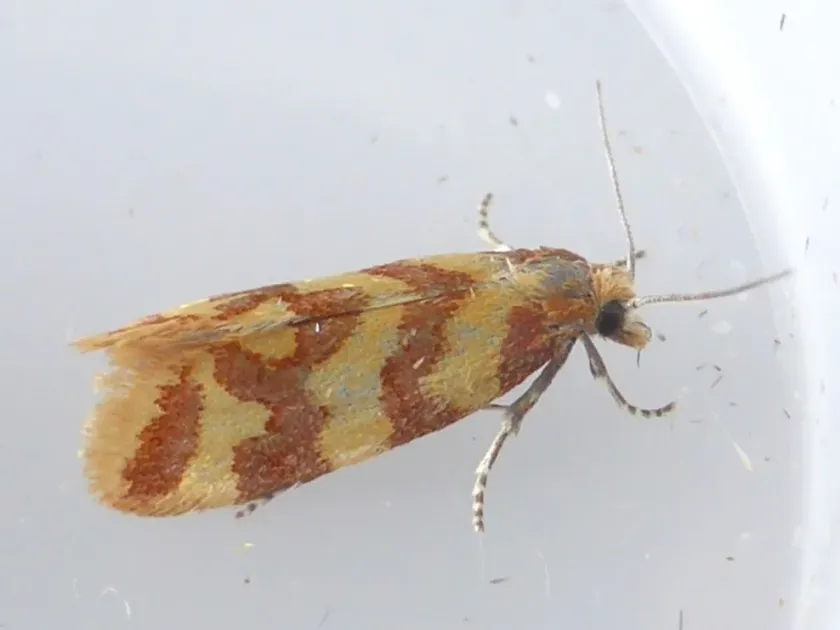
The Juniper webworm (Aethes rutilana) is a moth species belonging to the Tortricidae family. The adult moth is relatively small, with a wingspan ranging from 12 to 15 mm.
The forewings of the moth are characterized by an orange-yellow to ochre coloration with fine, dark markings, providing excellent camouflage against the bark and foliage of host plants.
The larvae, or caterpillars, are the most recognizable stage regarding plant damage; they typically grow to about 10 mm in length and possess a dark head.
These moths are primarily nocturnal, which explains why they are rarely seen by homeowners during the day unless they are disturbed from their hiding spots.
The life cycle is largely dependent on the availability of its preferred host, Juniperus species, where it undergoes a complete metamorphosis from egg to adult.
What it damages
This pest specifically targets plants within the Cupressaceae family, with a strong preference for various species and cultivars of Juniper.
The larvae feed on the needles and the tender bark of young shoots, spinning silk webbing that binds the needles together into protective clusters.
Feeding damage causes the affected foliage to turn brown and eventually wither, which can lead to significant aesthetic damage to ornamental shrubs.
In cases of severe infestation, the foliage may drop entirely, leaving the branches bare and significantly weakening the plant's structural integrity.
While mature, healthy junipers can often withstand some level of infestation, young or stressed plants are at a much higher risk of permanent decline.
When it appears
Adult moths emerge in early to mid-summer, typically active during June and July, when they mate and lay eggs on the foliage.
The larval stage is the longest part of the life cycle, with caterpillars feeding actively throughout the late summer and early autumn months.
As temperatures begin to drop in late autumn, the larvae retreat into the damaged shoots to enter a period of dormancy, surviving the winter as caterpillars.
Activity resumes in early spring, as the overwintered larvae emerge to feed once more before transitioning into the pupal stage.
Pupation occurs in late spring, usually within the silk-lined tunnels created by the larvae, leading to the emergence of the next generation of adults.
Signs of infestation
The presence of fine, grayish webbing between juniper needles is the most prominent indicator of an active infestation.
- Needles turning yellow or brown due to larval mining.
- Accumulation of small, dark frass (droppings) trapped within the silk webs.
- Clusters of dead needles that remain attached to the branch longer than usual.
- Dieback of terminal branch tips that look stunted or broken.
- General thinning of the juniper's foliage density compared to healthy shrubs.
In many cases, gardeners notice the damage only after the needles have dried out, as the early feeding stages are well-concealed.
Regular inspection of the interior branches is crucial, as the larvae prefer to start their feeding in protected areas of the canopy.
Control measures
Integrated pest management (IPM) is the most effective approach to handling Juniper webworm outbreaks in garden environments.
Physical removal of infested branches during the dormant season is a highly effective way to reduce the overwintering population.
Chemical treatments should be timed precisely to coincide with the period when larvae are young and most vulnerable to systemic insecticides.
Maintaining proper cultural conditions, such as adequate watering and soil drainage, helps the juniper recover faster from minor larval damage.
Beneficial insects, such as parasitic wasps, often provide natural control, so minimizing the use of broad-spectrum pesticides is recommended when possible.
Taxonomy
- Latin name
- Aethes rutilana
- Order
- Lepidoptera (butterflies)
- Family
- Tortricidae
- EPPO code
- AETERU
Discussion
No discussions yet — be the first.