
Aethes moth
Aethes
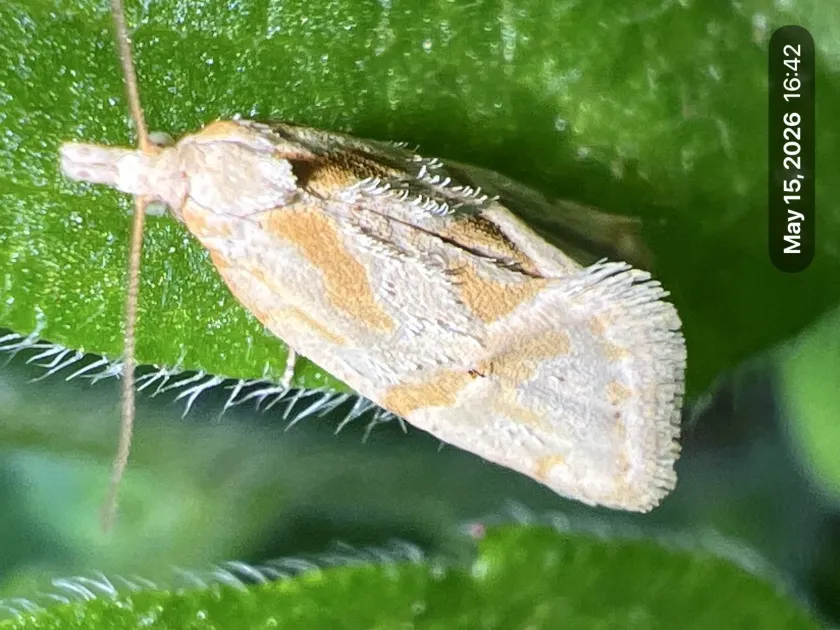
Description
How to identify
The Aethes moth belongs to the Tortricidae family and the order Lepidoptera. These are small moths with a wingspan of approximately 15–20 mm, typically exhibiting camouflaging patterns.
Adult moths are primarily nocturnal or crepuscular, making them difficult to detect in open fields without the use of pheromone or light traps.
The larvae are cylindrical, usually dirty-white or yellowish in color with a brown head, which is a common characteristic for many species within this family.
Precise identification at the species level is essential, as the host plant preference of various Aethes species can vary significantly based on the local ecosystem.
A distinctive feature of the adult moth is the way its wings are held at rest, forming a bell-shaped or truncated cone appearance that covers the insect's abdomen.
What it damages
Aethes moths primarily target plants of the Asteraceae family. They pose a significant threat to sunflower crops, where they can cause substantial yield losses.
The larvae develop inside the flower heads, consuming buds and developing seeds, which negatively impacts both total yield and the quality of the harvested grain.
Beyond cultivated crops, many Aethes species can thrive on wild weeds like thistles and mugwort, providing them with a steady food source during the off-season.
The damage caused by larvae includes the physical destruction of reproductive plant tissues, which often facilitates secondary infections by fungi and bacteria.
Under high population density, these pests can lead to losses of 20-30% of the sunflower seed yield, especially in years when plants are already under environmental stress.
When it appears
The life cycle involves complete metamorphosis: egg, larva, pupa, and adult. Most regions see one or two generations per growing season depending on local climate.
The flight of the first-generation adults usually aligns with the active budding phase of the host plants, typically occurring in late spring and early summer.
Females lay eggs directly on the bracts or the surface of the flower heads, ensuring that newly hatched larvae have immediate access to their primary food source.
The pest typically overwinters as a mature larva or pupa, hiding within plant debris, soil, or the stems of host weeds.
The timing of emergence in the spring is strictly dependent on the accumulation of active temperatures, meaning the pest's activity can fluctuate annually.
Signs of infestation
The primary sign of infestation is the presence of larval frass (often called "sawdust" or "boring dust") on the surface of sunflower heads, tangled in silk webbing.
By opening a damaged head, one can observe tunnels and larvae actively feeding on flower tissues and developing seeds inside the structure.
Visual inspection of the crop may reveal deformed buds or premature wilting of specific sectors of the flower head, often accompanied by decay.
During the flight period of adults, their presence can be confirmed by conducting night surveys with a flashlight, as the moths are highly active after dark.
- Webbing within the flower head.
- Entry holes in the bracts.
- Accumulation of frass beneath the scales.
- Tissue darkening at feeding sites.
Control measures
The primary management strategy is crop rotation, which prevents planting sunflowers in the same field for several consecutive years.
Crucial agrotechnical practices include the thorough eradication of weeds from the Asteraceae family, which serve as reservoirs for the pest outside of cultivated fields.
Deep autumn plowing is effective for destroying overwintering pupae, significantly reducing the pest population for the following growing season.
Chemical control involves the application of systemic or contact insecticides during the peak larval hatching period, based on established economic thresholds.
Integrated pest management, including the use of biological control agents and biopesticides, is recommended to minimize chemical residues and protect local biodiversity.
Taxonomy
- Latin name
- Aethes
- Order
- Lepidoptera (butterflies)
- Family
- Tortricidae
- EPPO code
- AETESP
Discussion
No discussions yet — be the first.