
Aegorhinus vitulus weevil
Aegorhinus vitulus
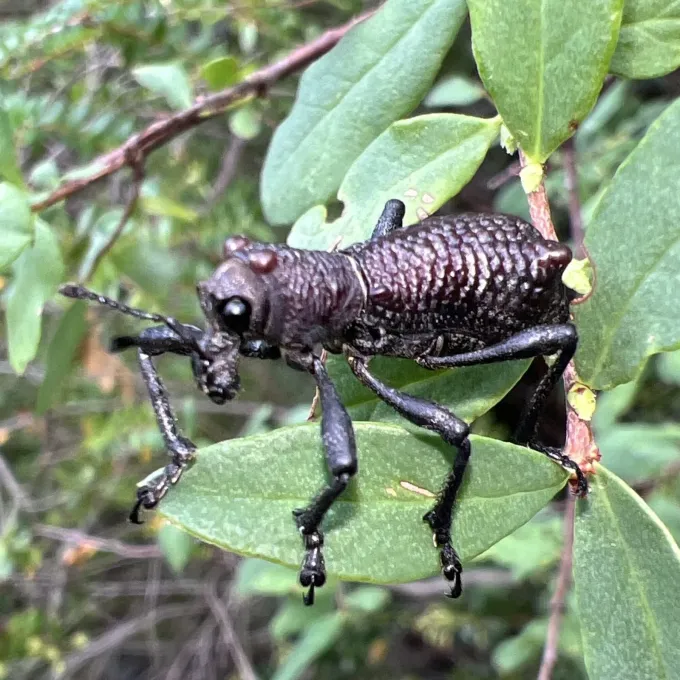
Description
How to identify
The Aegorhinus vitulus is a species of beetle belonging to the family Curculionidae, commonly known as true weevils.
The adult beetle is characterized by its elongated snout (rostrum), which is a diagnostic feature used in entomological identification.
Its coloration and body texture are adapted to camouflage against the bark of host trees, making them difficult to spot during the day.
Larvae are legless, fleshy, and typically reside within plant tissues, which provides them protection and food sources.
The life cycle encompasses four distinct stages: egg, larva, pupa, and adult, with each stage requiring specific environmental conditions.
What it damages
This weevil primarily impacts fruit-bearing plants, specifically targeting buds, leaves, and inner woody tissues.
Larval feeding creates tunnels within branches, causing disruption to the flow of nutrients and moisture through the tree.
Adult feeding results in damaged leaves and buds, which significantly reduces the photosynthetic capacity of the tree.
Severe infestations lead to fruit drop, structural weakening of branches, and general physiological decline of the plant.
If left unmanaged, the cumulative damage can result in the death of significant portions of the tree or the entire plant.
When it appears
The emergence of overwintering adults typically begins in early spring as temperatures rise, signaling the start of the growth season.
Adult activity is highly correlated with the development of buds, as this is a primary food source for emerging beetles.
Oviposition occurs throughout the spring and early summer, as females search for suitable sites on the tree bark.
Larval development takes place throughout the summer, peaking when the host plant is actively photosynthesizing.
Depending on the climatic zone, the pest may remain active well into the fall, continuing to feed on succulent parts of the plant.
Signs of infestation
The most common sign of infestation is irregular, notched patterns along the margins of leaves caused by adult feeding.
The presence of fine wood shavings or "frass" on the bark surface indicates that larvae are actively boring into the tree.
Wilting of isolated shoots or branches during the summer months is a strong indicator of internal damage by larvae.
Discoloration of the bark or small entry/exit holes in the wood suggest that the weevil population is well-established.
General tree stress, characterized by poor foliage density and reduced fruit production, often follows sustained infestation.
Control measures
Effective management involves an integrated approach combining sanitation, mechanical barriers, and targeted chemical applications.
Routine removal of deadwood and the scraping of loose bark can significantly reduce the number of sites available for egg-laying.
Sticky bands applied to tree trunks are highly effective in trapping adult beetles as they migrate to the canopy.
Chemical control should be timed with the peak emergence of adults to minimize the overall impact of the pest population.
- Sanitary pruning of infested and dying branches.
- Use of pheromone traps for population monitoring.
- Application of systemic insecticides during early budding.
- Encouraging natural predators and beneficial insects.
Taxonomy
- Latin name
- Aegorhinus vitulus
- Order
- Coleoptera (beetles)
- Family
- Curculionidae
- EPPO code
- AEGOVI
Discussion
No discussions yet — be the first.