
Chilean beetle
Aegorhinus superciliosus
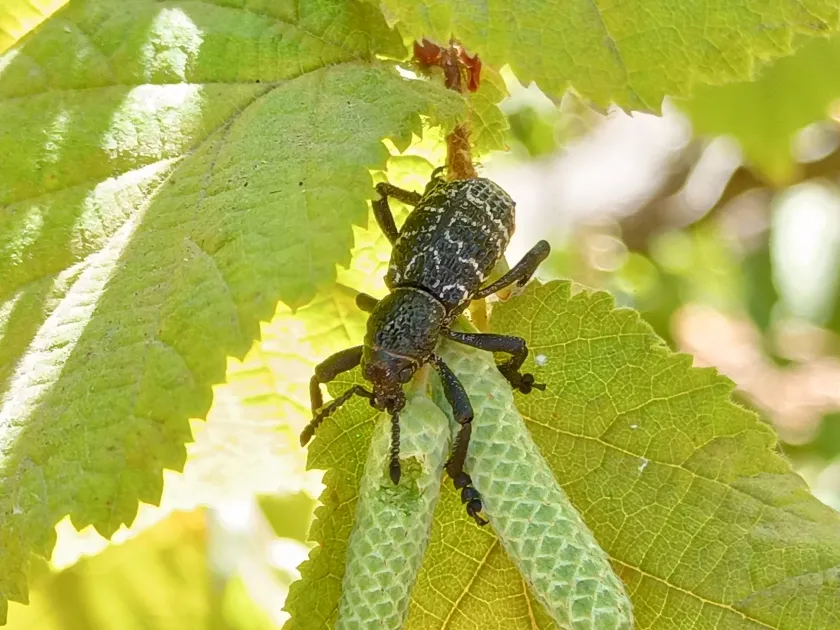
Description
How to identify
The Chilean beetle (Aegorhinus superciliosus) is a destructive pest belonging to the Curculionidae family. Known as a serious threat to fruit production, it possesses a sturdy body typical of weevils, with a distinct rostrum.
Adult beetles are typically 7–10 mm long, featuring a dark brown to black coloration. Their bodies are covered in scales that provide excellent camouflage against soil and woody plant surfaces, making them difficult to spot during the day.
The larvae are legless, C-shaped, and creamy white. They reside primarily underground, feeding on the root systems of host plants, which makes them essentially invisible until significant damage has occurred.
This species is nocturnal, meaning adults remain hidden near the plant base or in soil debris during daylight hours. They only emerge to feed on leaves under the cover of darkness.
Native to South America, the beetle has become a significant concern for international fruit trade due to its ability to survive in various conditions and its wide range of host plants.
What it damages
The Chilean beetle is a polyphagous pest, though it is most economically damaging to berries such as blueberries, blackberries, raspberries, and strawberries. It targets both the foliage and the root system of these crops.
Adult beetles feed on leaves, creating distinct notches or semi-circular cuts along the leaf margins. While these injuries are aesthetic, they indicate the presence of a colony that likely has damaging larvae at the roots.
The primary damage is caused by the larvae, which consume root fibers and bark on the lower stem. This prevents the plant from absorbing necessary water and nutrients, leading to progressive decline.
As the root system is decimated, the above-ground part of the plant starts to yellow and wilt. Without intervention, entire bushes can perish, leading to significant yield losses in commercial plantations.
Furthermore, damaged roots become entry points for various soil-borne pathogens, which complicates the recovery of the plants and necessitates additional phytosanitary measures.
When it appears
Adult activity of the Chilean beetle begins in late spring, as temperatures rise, signaling the transition from wintering sites to active feeding and reproduction.
The peak emergence of adults occurs in late spring and early summer. During this time, they engage in intense feeding and mating, followed by oviposition near the base of the target crops.
Larval development spans the warm season and extends into the autumn. Once the eggs hatch, larvae immediately move into the soil to begin feeding on roots, staying active for several months.
Overwintering occurs in two stages: adults hide in soil crevices or under leaf litter, while larvae remain protected in the soil, often deep enough to avoid lethal surface frosts.
Management strategies must be timed with these biological phases, focusing specifically on the period when adults emerge from the soil before they can deposit new eggs.
Signs of infestation
The most recognizable sign of an infestation is the presence of irregular, notched cuts on the leaves. Finding these marks suggests that a nocturnal feeding cycle is underway.
Sudden wilting of healthy-looking bushes is a critical red flag. This symptom usually suggests that the root system has been severely compromised by larval activity.
Inspecting the base of the stem often reveals physical damage to the bark or even the presence of larval galleries, confirming that the pest is established in the root zone.
In infested areas, digging around the roots of symptomatic plants will usually reveal the presence of creamy-white larvae, providing definitive evidence of the infestation.
Clusters of dying plants that expand annually indicate that the colony is growing and spreading through the plantation, requiring immediate and aggressive control measures.
Control measures
Controlling the Chilean beetle requires an integrated pest management (IPM) strategy that combines physical, biological, and chemical techniques to reduce population numbers.
- Monitor adult populations using sticky traps or night-time inspections to determine the best window for treatment.
- Use entomopathogenic nematodes (such as Heterorhabditis spp.) as a biological control agent to target larvae in the soil.
- Remove and destroy severely infested plants, including the entire root ball, to eliminate the local breeding site.
- Apply systemic insecticides during the peak adult emergence phase to prevent egg-laying and further population growth.
- Maintain weed-free environments to remove secondary food sources and hiding spots for adult beetles.
Chemical applications should be carefully timed to avoid harming beneficial pollinators and natural enemies of other garden pests, ensuring environmental safety.
Consistent monitoring is essential for long-term management, as complete eradication on a plantation scale often requires a multi-year effort of persistent vigilance and intervention.
Taxonomy
- Latin name
- Aegorhinus superciliosus
- Order
- Coleoptera (beetles)
- Family
- Curculionidae
- EPPO code
- AEGOSU
Discussion
No discussions yet — be the first.