
Aegorhinus nodipennis
Aegorhinus nodipennis
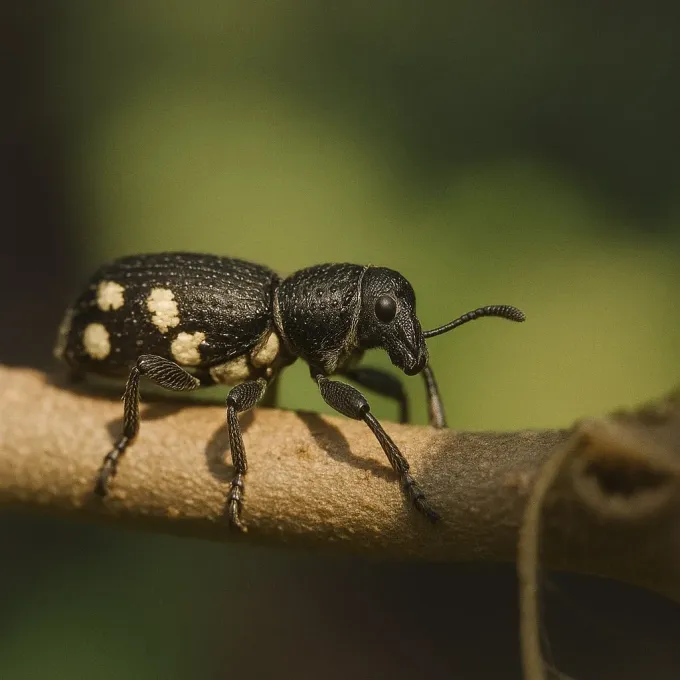
Description
How to identify
Aegorhinus nodipennis is a species of weevil (Curculionidae family) that presents a significant challenge in fruit orchards. Adult beetles measure about 8–12 mm in length, characterized by a dark, often nodular or bumpy exoskeleton that provides effective camouflage on tree bark.
The insect possesses a prominent snout (rostrum), which is a diagnostic feature of the Curculionidae family. This rostrum is utilized both for feeding on plant tissues and for boring into the wood to deposit eggs securely.
The larval stage consists of legless, creamy-white grubs with a dark, hardened head capsule. These larvae are typically concealed within roots, trunks, or branches, making them difficult to detect until substantial damage has already occurred.
The pupal stage occurs either within the plant tissue or in the surrounding soil. The life cycle is intricately linked to the host plant's physiology, ensuring the species thrives in stable woody environments.
Originally described in South American regions, this beetle has become a noted pest in commercial orchards, requiring robust management strategies to prevent widespread infestation.
##damage##The primary hosts for Aegorhinus nodipennis are fruit-bearing trees, specifically those belonging to the Rosaceae family. This includes important commercial crops like apples, pears, and cherries.
The pest often targets young saplings and trees with weakened root systems. The larvae are particularly destructive as they burrow through the bark into the vascular tissues, effectively girdling the tree.
Adult beetles contribute to the damage by consuming buds, leaves, and tender shoots, which reduces the photosynthetic capacity of the tree and impairs its overall development.
In addition to direct physical damage, the wounds created by the feeding activities of adults and the boring of larvae serve as entry points for secondary pathogens, such as fungal and bacterial infections.
Left unmanaged, an infestation can lead to significant tree mortality, resulting in heavy economic losses and the necessity for costly orchard replanting efforts.
##season##The activity of adult Aegorhinus nodipennis typically peaks during the spring when temperatures rise, signaling the beginning of the growing season. This is when they emerge to feed on developing buds.
Mating and oviposition occur throughout the spring and early summer. Females are selective, laying eggs in areas where larvae will have immediate access to food sources, such as soil near the base or bark crevices.
The larval period is protracted, with grubs feeding continuously through the warmer months. Depending on the local climate and temperature, a single generation may take one or more years to complete its development.
Overwintering usually takes place in the larval or adult stage, hidden deep within the wood or sheltered in the soil, allowing the species to survive harsh seasonal fluctuations.
Eclosion and the emergence of the next generation of adults usually coincide with the budding phase of host trees, ensuring that food is immediately available for the newly emerged beetles.
##signs##Early identification of an infestation often begins with observing wilted or yellowing leaves on specific branches, which is a classic symptom of damaged or girdled vascular tissues.
Upon closer inspection of the base of the trunk, one may find boreholes or accumulated frass, which resembles sawdust. These are clear indicators of larval activity beneath the bark.
Reduced shoot growth and dieback of terminal branches are significant indicators of a systemic problem. If left untreated, entire sections of the tree may succumb to the internal damage caused by the larvae.
During the evening hours, adult beetles can sometimes be spotted on the trunk or foliage. They are known for their defensive behavior of dropping to the ground and remaining motionless when disturbed.
Root system inspections often reveal extensive tunneling and tissue destruction, which explains why infected trees often struggle to absorb water and nutrients even when moisture is abundant.
##control##Effective management requires an integrated approach. The most critical step is the removal and destruction of heavily infested trees to eliminate breeding sites and prevent the spread of the pest.
The use of physical barriers, such as sticky bands around the base of the trunk, can prevent adult beetles from climbing up to feed on the foliage.
Chemical control programs often involve the application of systemic insecticides, specifically timed to coincide with the period when adults emerge from their overwintering sites.
- Regular monitoring of orchard blocks for early signs of tree stress.
- Application of soil-applied insecticides around the base to target larvae.
- Utilization of biological control agents, such as entomopathogenic nematodes, to combat larval populations in the soil.
Maintaining high orchard hygiene, including the removal of weeds and debris around the base of trees, helps eliminate alternative habitats for the beetle and simplifies the management process.
Taxonomy
- Latin name
- Aegorhinus nodipennis
- Order
- Coleoptera (beetles)
- Family
- Curculionidae
- EPPO code
- AEGONO
Discussion
No discussions yet — be the first.