
Long-tailed tit
Aegithalos
Description
How to identify
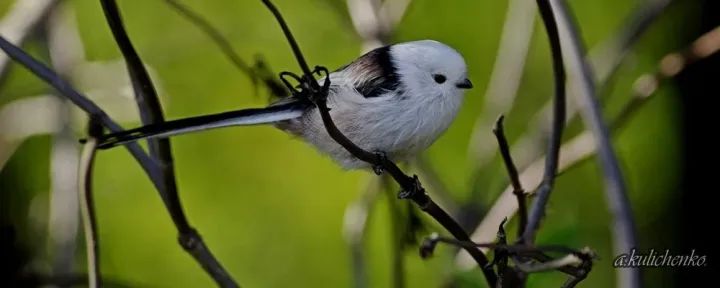
The long-tailed tit (Aegithalos caudatus) is a small bird easily recognized by its exceptionally long tail and fluffy appearance. They move in restless, social flocks and are highly active throughout the day.
Their plumage consists of black, white, and pinkish shades, making them stand out as they acrobatically cling to thin branches. They are known for their social bonds, rarely appearing in isolation.
These birds construct elaborate nests made of moss, lichen, and spider webs, often camouflaging them within tree branches. Their feeding habits involve constant movement through the canopy.
While they provide some benefits by consuming insect pests, their behavior in fruit orchards during late winter can be detrimental to agricultural goals.
Understanding their social behavior and movement patterns is essential for orchard managers looking to mitigate potential damage before the spring growth season.
What it damages
The primary damage caused by long-tailed tits in orchards is the consumption of fruit buds. During food shortages, they target the buds of apple, pear, and stone fruit trees.
By pecking out the generative buds, the birds significantly reduce the potential blossom and subsequent fruit set, leading to direct economic losses.
Beyond buds, they may also damage young shoots by stripping bark in search of over-wintering insects, which creates pathways for secondary fungal infections.
In berry patches, they can impact yield by damaging developing flower buds, which is particularly problematic in early spring when the plant is just beginning its cycle.
The impact is cumulative: a large flock moving through an orchard can cause substantial thinning of buds, significantly lowering the plant's overall productivity.
When it appears
Long-tailed tits are most problematic in orchards during late winter and early spring, specifically in February and March, when natural insect food is scarce.
As temperatures begin to fluctuate and buds start to swell, the nutritional value of the buds becomes highly attractive to these small birds.
This critical period lasts until insects become active again, allowing the birds to return to their primary animal-based diet.
Late autumn may also see minor activity if the weather is harsh and the birds search for sheltered insects on tree bark, causing incidental damage to the tree's exterior.
The intensity of the damage is highly correlated with the severity of the winter; milder winters often result in less damage due to a wider variety of available food.
Signs of infestation
The most visible sign of infestation is the presence of hollowed-out or snapped-off buds on the branches, often accompanied by debris on the ground below.
Branches will appear frayed or partially stripped, especially in the upper canopy where the birds prefer to feed due to their agility.
Close inspection of the bark might reveal tiny claw marks or scratches, indicating where the birds have been searching for wintering insect larvae.
The presence of a small, restless flock vocalizing in the trees during the morning is a clear indicator of their activity in the orchard.
It is important to differentiate this damage from that of rodents; bird damage is typically focused on the higher, thinner branches and buds, rather than the base of the tree.
Control measures
Protecting an orchard involves integrated strategies that deter birds without causing them permanent harm or ecological disruption.
Visual deterrents such as reflective tape or holographic discs are effective at creating a hostile environment for flocks, discouraging them from landing.
Physical barriers, such as bird-proof netting, are the most effective way to protect high-value fruit trees during the critical pre-blossom phase.
Acoustic repellents, including those that mimic predatory bird calls, can be successful in keeping flocks away from sensitive areas of the orchard.
- Applying non-toxic, bitter-tasting repellents to tree buds to discourage feeding.
- Maintaining healthy orchards through pruning that discourages excessive bird nesting sites.
- Providing dedicated feeding stations away from the orchard to lure flocks to a non-damaging environment.
Taxonomy
- Latin name
- Aegithalos
- Family
- Aegithalidae
- EPPO code
- AEGISP
Discussion
No discussions yet — be the first.