
Adoxophyes privatana
Adoxophyes privatana
Description
How to identify
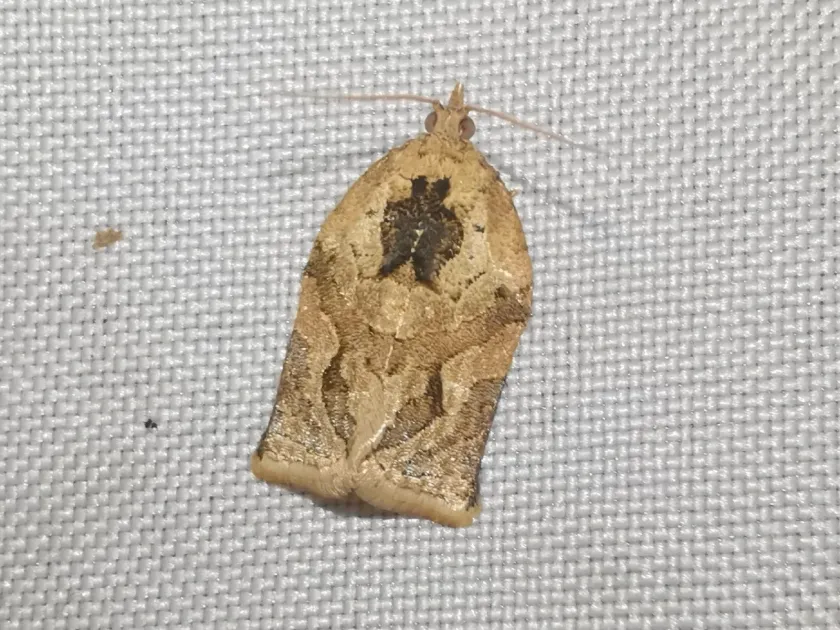
Adoxophyes privatana is a species of moth in the family Tortricidae. These moths are relatively small, with a wingspan typically ranging from 15 to 20 millimeters.
The forewings of the adults display a pattern of light brown to yellowish-tan colors, usually marked with darker, distinct transverse bands. The hindwings are generally paler, often appearing in shades of greyish-brown.
The larvae, or caterpillars, undergo several instar stages. They are typically olive-green to light green, often possessing a distinct brownish or ochre-colored head capsule which aids in identification.
Females deposit their eggs in characteristic batches on the upper surface of leaves. These egg masses appear as glossy, overlapping scales, protected by a specific secretion that hardens upon exposure to air.
Pupation occurs within the folded leaves or inside silk-lined nests, which serve as a protective chamber. The pupae transition from light brown to a deeper mahogany color as they approach maturity.
What it damages
This pest is a significant polyphagous insect, causing severe economic losses primarily to tea plantations (Camellia sinensis) and various fruit-bearing trees in tropical and subtropical regions.
Larvae primarily consume tender leaves, buds, and growing shoots. By feeding on the apical meristem, they stunt the plant's growth and directly impact the yield quality, which is critical for tea production.
Damage to fruits includes superficial tissue consumption, which often leads to skin scarring and creates entry points for secondary pathogens, such as fungi and rot-inducing bacteria.
Heavy infestations result in substantial loss of leaf area, reducing the plant's photosynthetic capacity and weakening its overall health, making the crop more susceptible to environmental stress.
In cases of severe outbreaks, the cumulative damage can lead to significant reductions in market value, especially when the appearance of fresh produce or the quality of tea leaves is compromised.
When it appears
The life cycle of Adoxophyes privatana is heavily influenced by ambient temperature, allowing the moth to remain active and reproduce throughout the year in warm, tropical climates.
The development from egg to adult takes approximately 30 to 45 days, facilitating multiple overlapping generations within a single growing season, which makes control efforts more complex.
Peak larval activity is typically observed during the flush of new vegetative growth, particularly in spring and early summer, when food quality and availability are optimal for larval development.
In hot summer months, the metabolic rate increases, accelerating the life cycle, although extreme heat combined with low humidity can occasionally increase mortality rates among eggs.
As temperatures decline, the population may transition into a state of semi-diapause, with larvae often seeking shelter in bark crevices or among plant debris to survive less favorable conditions.
Signs of infestation
The most immediate sign of infestation is the presence of leaves that have been rolled or tied together using thin, fine strands of silk, which act as hiding spots for the larvae.
Visible feeding damage includes irregular patches and "window-pane" holes in the leaves, where the upper epidermis is eaten, leaving behind brown, dry tissue that eventually withers.
The discovery of the characteristic scale-like, glossy egg masses on the foliage serves as an early warning sign that a new generation of caterpillars is about to hatch.
The accumulation of frass (caterpillar excrement) trapped within silk webbing is a strong indicator of an active and growing population that requires immediate monitoring and management.
- Rolled or folded leaf tips tied with silk.
- Webbing over growing buds.
- Irregular feeding holes on leaves.
- Visible frass inside webbed nests.
- Surface scarring on developing fruits.
Control measures
Pheromone traps are essential tools for monitoring adult moth populations, providing data that allows agronomists to determine the precise timing for intervention before larval damage escalates.
Biological control strategies often include the application of Bacillus thuringiensis (Bt), which targets the larval stages specifically while preserving beneficial predatory insects and parasitoids.
In high-pressure scenarios, systemic or contact-action insecticides are used. It is vital to strictly adhere to pre-harvest intervals to ensure safety and quality standards, particularly in food crops.
Cultural management practices, including the regular removal of weeds and infested plant parts, help reduce the overwintering capacity of the pest and break the life cycle chain.
Integrating biological control agents, such as egg parasitoids and predatory bugs, into the crop protection program helps maintain the pest population below the economic injury level.
Taxonomy
- Latin name
- Adoxophyes privatana
- Order
- Lepidoptera (butterflies)
- Family
- Tortricidae
- EPPO code
- ADXPPR
Discussion
No discussions yet — be the first.