
Adoxophyes furcatana
Adoxophyes furcatana
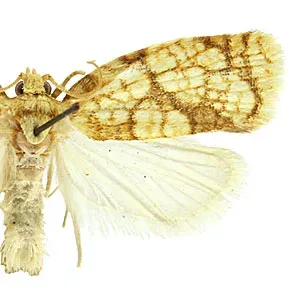
Description
How to identify
Adoxophyes furcatana is a species of moth belonging to the family Tortricidae. It is a known pest in various agricultural regions, recognized for its ability to infest fruit-bearing trees.
The adult moth features a wingspan of approximately 15–20 mm. Its forewings are characterized by shades of ochre and brown with complex dark transverse markings that serve as camouflage.
Larvae (caterpillars) progress through five instars, typically presenting a light green to olive body color with a dark, sclerotized head capsule that is clearly visible.
Pupation occurs within sheltered areas, usually inside rolled or webbed leaves. The pupa is protected by a silken cocoon, which adds a layer of defense against environmental factors.
The life cycle is closely linked to temperature, allowing the pest to produce multiple generations per year under favorable warm-climate conditions.
What it damages
The primary hosts of Adoxophyes furcatana include members of the Rosaceae family, such as apple and pear trees, as well as various ornamental and tea plants.
Larval feeding activity initially focuses on the tender tissues of young leaves and shoots. They weave leaves together with silk, creating protective nests while feeding on the leaf surface.
The most significant economic damage occurs when larvae feed on developing fruit. They burrow into the skin, creating unsightly scars and increasing the risk of secondary fungal infections.
High infestation levels can lead to substantial yield losses due to fruit drop and the rejection of damaged fruit during the grading and packing process.
Prolonged feeding on terminal buds can stunt the growth of young trees, resulting in reduced vegetative vigor and long-term yield reduction.
When it appears
Adult moths emerge in early spring, synchronized with the onset of favorable temperatures that support mating and oviposition on the host plants.
The flight period is typically prolonged, with overlapping generations often present throughout the summer, making continuous monitoring essential for effective control.
Larval populations peak during the rapid growth stages of trees, coinciding with bud break and fruit development, which are the most critical times for damage prevention.
Overwintering occurs at the larval stage, tucked deep within the bark crevices of host trees or in sheltered vegetation residues, awaiting the next spring cycle.
Monitoring using synthetic sex pheromone traps is the industry-standard method for determining the start of the moth flight and timing insecticide applications correctly.
Signs of infestation
The most prominent sign of infestation is the presence of webbed or tightly rolled leaves, which appear crumpled and discolored compared to healthy foliage.
- Skeletonized leaf patches where the epidermis has been consumed.
- Small dark fecal pellets (frass) accumulated inside the leaf nests or on the fruit skin.
- Superficial "feeding pits" or scars on the surface of young fruits.
- Stunted growth of apical buds due to internal feeding by young larvae.
- Presence of pupal exuviae protruding from the leaf rolls after adult emergence.
Control measures
Cultural control measures involve the pruning and destruction of infested terminal shoots during the dormant season to reduce the overwintering population.
Biological control includes the release of parasitoid wasps, such as Trichogramma species, which target the eggs of the moth before they hatch into larvae.
Chemical control should be implemented based on economic injury thresholds, utilizing selective insecticides that target larvae while preserving beneficial insect populations.
Applying mating disruption techniques using pheromone dispensers can effectively reduce the population density in large orchard blocks by confusing the males.
Always practice integrated pest management (IPM) by rotating products with different modes of action to mitigate the risk of the pest developing insecticide resistance.
Taxonomy
- Latin name
- Adoxophyes furcatana
- Order
- Lepidoptera (butterflies)
- Family
- Tortricidae
- EPPO code
- ADXPFU
Discussion
No discussions yet — be the first.