
Summer fruit tortrix
Adoxophyes
Description
How to identify
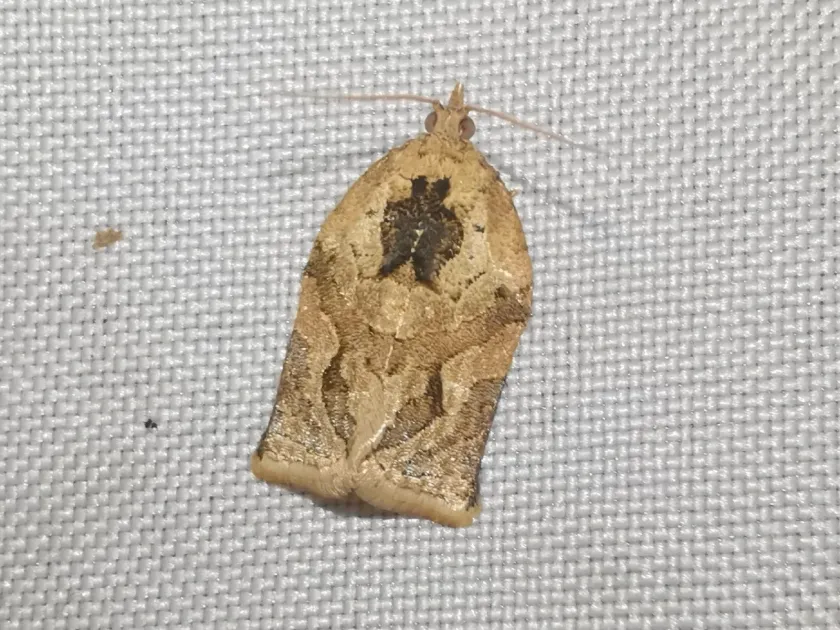
The summer fruit tortrix (Adoxophyes orana) is a moth belonging to the Tortricidae family. The adult moths are small, with a wingspan of 15–22 mm, characterized by an ochre-brown color.
The forewings feature a distinctive pattern of darker, net-like transverse bands and spots, which is why it is commonly referred to as the summer fruit tortrix moth.
Larvae (caterpillars) are the damaging stage; they are typically green with a pale brown head capsule. Fully grown larvae reach approximately 18–20 mm in length.
Eggs are laid in clusters, overlapping like roof tiles. A protective, transparent, varnish-like secretion covers these egg masses, which are initially pale green and darken over time.
The pupae are dark brown, usually found within folded leaves or spun webs on the surface of fruit, making them difficult to spot during routine garden inspections.
What it damages
This species is highly polyphagous, causing significant damage to various fruit crops, particularly apples, pears, and stone fruits like cherries and plums.
The primary damage is caused by larvae feeding on leaves and fruit. They spin silk webs to tie leaves together, creating shelters where they feed on the leaf tissue, causing skeletonization.
Fruit damage manifests as shallow, irregular cavities on the skin. While these wounds are rarely deep, they ruin the fruit's aesthetic value and create entry points for secondary infections.
In nursery plants, the larvae frequently attack the terminal shoots, destroying the apical buds. This leads to stunted growth and permanent deformation of the young tree structure.
Economic losses arise not only from direct physical damage to the fruit but also from increased susceptibility to post-harvest decay during cold storage.
When it appears
The summer fruit tortrix overwinters as second or third-instar larvae within silk cocoons located in bark crevices or protected sites on tree branches.
As temperatures rise in the spring, larvae emerge to feed on budding leaves and developing fruitlets. This is a critical window for early-season pest management.
Moths are active in multiple flights throughout the growing season, typically with two or three generations depending on the climate and accumulated heat units.
Peak emergence of adults and subsequent egg-laying periods occur throughout the summer months, necessitating continuous monitoring with pheromone traps.
By late autumn, larvae of the final generation seek out overwintering sites, entering a period of diapause to survive the winter conditions until the following spring.
Control measures
Integrated pest management (IPM) is essential. This includes the use of pheromone traps to monitor adult flight patterns and determine the optimal timing for interventions.
Biological control options involve the application of Bacillus thuringiensis sprays, which target young larvae and are selective, helping to preserve beneficial insect populations.
Chemical control should focus on stages of larval development that are most vulnerable, using growth regulators or contact insecticides specifically approved for the crop.
Good orchard hygiene, including the removal of damaged leaves and fruit, helps reduce the population density within the canopy for the following season.
- Consistent monitoring with pheromone lures.
- Use of selective bio-insecticides for early-instar larvae.
- Encouraging natural predators and parasitoids in the orchard ecosystem.
Taxonomy
- Latin name
- Adoxophyes
- Order
- Lepidoptera (butterflies)
- Family
- Tortricidae
- EPPO code
- ADXPSP
Discussion
No discussions yet — be the first.