
Orchid weevil
Acythopeus aterrimus
Description
How to identify
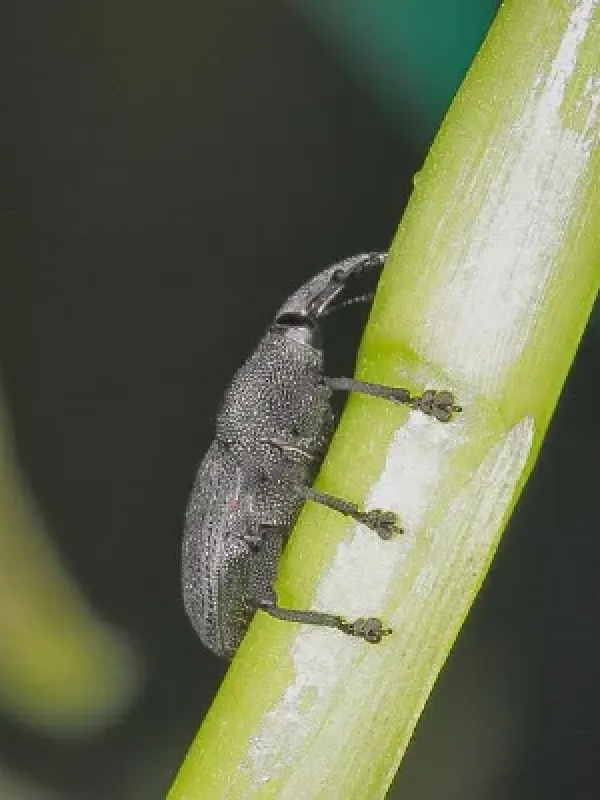
The orchid weevil (Acythopeus aterrimus) is a member of the Curculionidae family. These insects are specialized pests that specifically target orchid species, posing a significant risk to collections.
The adult beetle is small, typically characterized by a dark black or brown, shiny exoskeleton. Like other weevils, they possess a prominent rostrum, or snout, which they use to feed on plant tissue.
Larvae are small, legless, and curved, usually found burrowing within the orchid's stem or pseudobulbs. Their cryptic nature makes them particularly difficult to detect before significant damage has occurred.
Life cycles are continuous in controlled environments like greenhouses. The beetle can progress through all growth stages within the host plant, allowing populations to expand rapidly without detection.
Identification is best achieved through persistent monitoring. Checking the crevices of leaves and the junction between leaves and the pseudobulb is essential for finding adults during their nocturnal activity.
What it damages
Orchid weevils primarily attack epiphytic orchids, including popular genera such as Dendrobium, Vanda, and Phalaenopsis. They feed on the succulent tissues of both leaves and stems.
Adults create small, distinct circular feeding holes on the leaves. These punctures not only ruin the appearance of the foliage but also serve as entry points for bacterial and fungal pathogens.
The larval stage is the most destructive, as they tunnel through the plant's core. This tunneling interrupts nutrient and water transport, leading to the yellowing and eventual collapse of the affected plant parts.
Severe infestations often cause the death of pseudobulbs, which are vital energy stores for the plant. If the rhizome is attacked, the entire plant is at high risk of rapid decline and death.
Secondary infections are a major concern associated with weevil damage. Often, a plant may appear to be suffering from a rot disease, while the underlying cause is actually the stress and physical injury inflicted by the weevils.
Signs of infestation
The most visible sign of an orchid weevil infestation is the presence of tiny, pin-prick size holes across the leaves. These marks are often clustered, indicating where the beetle has been feeding.
A sudden, unexplained loss of turgor in the leaves, even when the substrate is moist, indicates internal damage to the stem or rhizome caused by the presence of larvae tunneling inside.
Frass, which looks like fine brown sawdust, can often be found near the base of the plant or on the surface of the growing medium, indicating active feeding by the larvae.
Adult weevils are often found hiding in leaf axils or deep within the plant structure. Observing the plants with a flashlight at night can help reveal the adults when they emerge to feed or mate.
- Pin-prick holes on leaf surfaces.
- Loss of plant turgor and wilting.
- Brown frass near the base.
- Soft or hollowed-out pseudobulbs.
Control measures
Isolation is the first line of defense. Any plant suspected of harboring weevils should be quarantined immediately to prevent the spread of the pest to healthy plants in the collection.
Manual removal of adults is effective for light infestations. Weevils are prone to feigning death when touched, making them easier to collect and destroy, especially if done during their active hours.
Systemic insecticides are generally required to manage established infestations. Products containing systemic agents allow the poison to circulate within the plant, targeting larvae feeding internally.
Repotting the orchid is a critical step. By discarding the old substrate and sterilizing the root system and container, you remove potential pupation sites and prevent re-infestation.
Ongoing surveillance and strict quarantine procedures for new acquisitions are essential to keeping an orchid collection free from this invasive and destructive pest.
Taxonomy
- Latin name
- Acythopeus aterrimus
- Order
- Coleoptera (beetles)
- Family
- Curculionidae
- EPPO code
- ORCHAT
Discussion
No discussions yet — be the first.