
Orchid stem borer
Acythopeus
Description
How to identify
The orchid stem borer (genus Acythopeus) is a small weevil belonging to the family Curculionidae that specifically targets tropical orchid species.
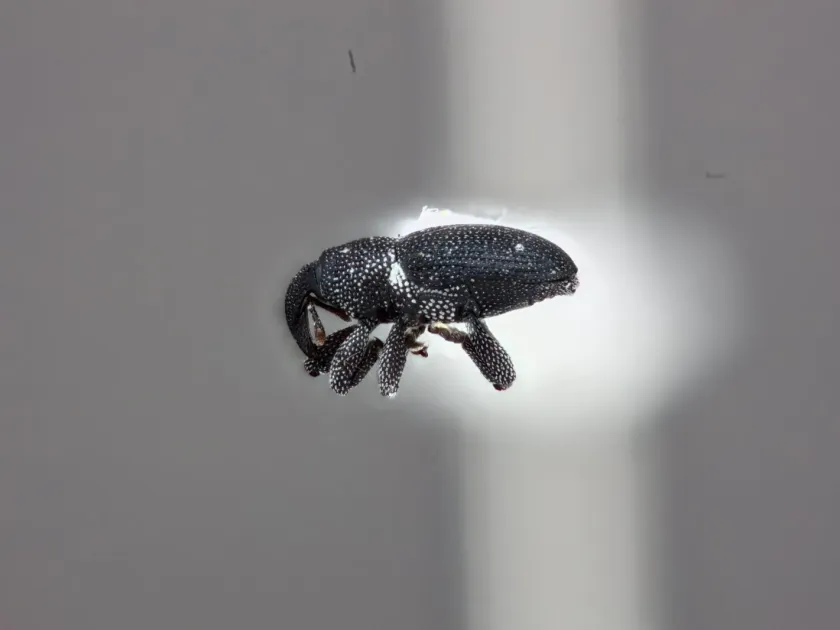
Adult beetles are characterized by a long, slender snout (rostrum) used for piercing plant tissues to feed and deposit eggs into the stem.
Their bodies are typically dark in color, often black, which provides excellent camouflage against the bark or foliage of host plants.
The larval stage is the most destructive, as larvae live and feed internally within the stems or pseudobulbs, making them difficult to detect.
Adults are rarely seen during the day and are most active at night, requiring careful observation or the use of specific traps to identify their presence.
What it damages
These pests primarily infest orchid genera such as Dendrobium, Cattleya, and Vanda, causing significant structural damage.
Larvae consume the internal tissue of the plant, often destroying the vascular system and preventing the transport of water and nutrients.
The physical damage caused by the borer leads to stunted growth, yellowing of the leaves, and eventual collapse of the affected stems or pseudobulbs.
Severe infestations can result in the death of the entire plant if the larvae destroy the plant's apical meristem or primary growth points.
In addition to direct structural harm, the feeding tunnels created by the borer often serve as entry points for bacterial and fungal pathogens.
When it appears
In controlled greenhouse environments, Acythopeus can remain active and reproduce throughout the entire year if conditions are stable.
Peak activity levels usually correlate with the warmer growing seasons when orchids are in their most vigorous stage of development.
The lifecycle consists of egg, larva, pupa, and adult stages, with the entire development cycle occurring on or inside the host plant.
Multiple generations can occur within a single year if the pest is not managed promptly, leading to rapid population growth within a collection.
New infestations are almost always introduced via contaminated plant material brought into the greenhouse without proper inspection.
Signs of infestation
The earliest sign of an infestation is the appearance of tiny, pin-prick sized holes on the surface of stems, leaves, or pseudobulbs.
These holes are often surrounded by small discolored or necrotic spots, which indicate where the adult beetle has fed or oviposited.
Frass, which looks like fine sawdust or wood shavings, may be found accumulating at the base of the plant or in the surrounding medium.
General wilting or yellowing of the foliage, despite adequate watering, suggests that internal damage has disrupted the plant's water supply.
Soft or hollow areas on the stems are a classic indication that larvae have bored through the interior, leaving the outer skin intact but weak.
Control measures
The most important control measure is a strict quarantine of all new plants for at least 30 days to ensure no pests are introduced.
Once an infestation is confirmed, affected plants should be isolated immediately, and damaged tissues should be surgically removed if possible.
Systemic insecticides are the only effective method for reaching larvae protected deep within the orchid’s stem tissues.
It is recommended to maintain a regular monitoring schedule and apply treatments consistently, rotating chemical classes to prevent resistance.
- Clean and sanitize all cutting tools between plants to prevent spread.
- Keep the growing area clean and remove debris where adults might hide.
- Dispose of heavily infested plants to protect the rest of your collection.
Taxonomy
- Latin name
- Acythopeus
- Order
- Coleoptera (beetles)
- Family
- Curculionidae
- EPPO code
- ACYTSP
Discussion
No discussions yet — be the first.