
Acropolitis rudisana
Acropolitis rudisana
Description
How to identify
Acropolitis rudisana belongs to the order Lepidoptera and the family Tortricidae. It is a moth species characterized by a secretive lifestyle, making its early detection in agricultural environments quite challenging.
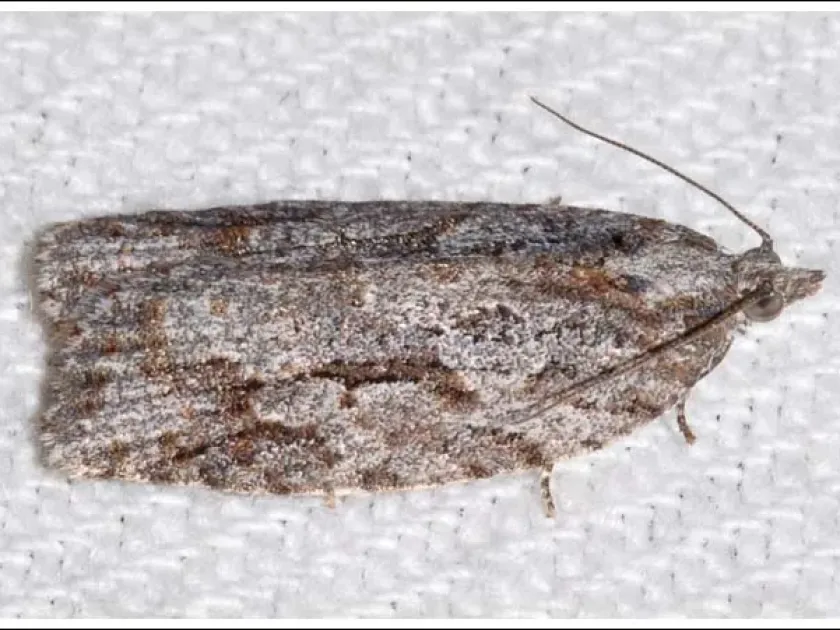
The adult moth possesses camouflage-colored wings that help it blend into tree bark or dry plant debris. When at rest, the insect folds its wings into a typical roof-like shape, which is a common trait among many tortricid moths.
The larvae go through several developmental stages (instars). As they grow, their body size increases, and their pigmentation changes, preparing them for the pupal stage within the plant canopy.
Development involves complete metamorphosis: egg, larva (caterpillar), pupa, and imago. The larval stage is the primary period during which the insect consumes significant amounts of plant tissue.
Accurate identification of this species often requires professional morphological analysis of the genital structures, as many species within the Tortricidae family share similar external characteristics.
What it damages
This pest affects a wide range of agricultural and horticultural crops, with a clear preference for young shoots and soft leaves. It poses a significant threat to young orchards and vegetable plantations.
Larvae feed on the leaf parenchyma, skeletonizing the leaf blades and creating tunnels. This significantly reduces the photosynthetic surface, leading to weakened plant vigor and stunted growth.
In cases of high infestation, the pest damages generative organs, including buds and developing fruits, which directly leads to reduced yields and lower market quality of the harvest.
Damaged plant tissues serve as entry points for secondary fungal and bacterial infections. These opportunistic pathogens can cause severe diseases that further compromise the plant's health.
In intensive farming, Acropolitis rudisana can locally destroy up to 30% of foliage in specific areas, necessitating prompt intervention from agronomy staff to prevent further spread.
When it appears
Adult activity is primarily observed during the spring and summer months when weather conditions are optimal for mating and oviposition on host plants.
The life cycle is closely synchronized with the phenological stages of the host plants. Larval feeding typically peaks during the most active growth phases of the vegetation.
The insect typically overwinters in the pupal or late larval stage in protected sites, such as tree bark crevices, leaf litter, or the upper layers of the soil, ensuring survival in colder temperatures.
The number of generations per year depends on the local climate; in warmer regions, the pest may complete multiple cycles within a single agricultural season.
Monitoring for the presence of this pest should begin at the start of bud break, utilizing pheromone traps to track population density and forecast potential outbreaks.
Signs of infestation
The most distinctive sign of infestation is the presence of curled or rolled leaves, which caterpillars bind together with silk to create protective shelters for feeding.
Surface leaf damage is characterized by irregular holes, "windows," and skeletonized areas where only the primary veins remain after the larvae have consumed the tissue.
The presence of frass (larval excrement) within the rolled leaves or near the base of stems is a clear indicator of active feeding by this pest.
Visible silk webbing on branches and leaves is a strong symptom, as the larvae use these threads for both structural protection and movement between plant parts.
Early wilting of young shoots and deformation of emerging buds are critical signs that warrant immediate field inspection to assess the severity of the infestation.
Control measures
Effective management relies on an Integrated Pest Management (IPM) approach that combines cultural, biological, and chemical methods to minimize environmental impact.
- Pruning and removal of infested plant parts and destruction of weed hosts.
- Application of biological insecticides based on Bacillus thuringiensis during early larval stages.
- Use of systemic insecticides only when the economic injury level is reached.
- Conservation of natural enemies and predatory insects that help suppress pest populations.
Chemical treatments must be precisely timed based on the moth's life cycle to ensure maximum effectiveness during the vulnerable larval stages.
Pheromone-based monitoring allows for the optimization of pesticide applications, reducing the overall chemical load and supporting a more sustainable agroecosystem.
Taxonomy
- Latin name
- Acropolitis rudisana
- Order
- Lepidoptera (butterflies)
- Family
- Tortricidae
- EPPO code
- ACRZRU
Discussion
No discussions yet — be the first.