
Hazelnut leaf roller
Acrobasis comptoniella
Description
How to identify
The hazelnut leaf roller (Acrobasis comptoniella) is a moth species belonging to the Pyralidae family, known to impact various species of the Corylus genus.
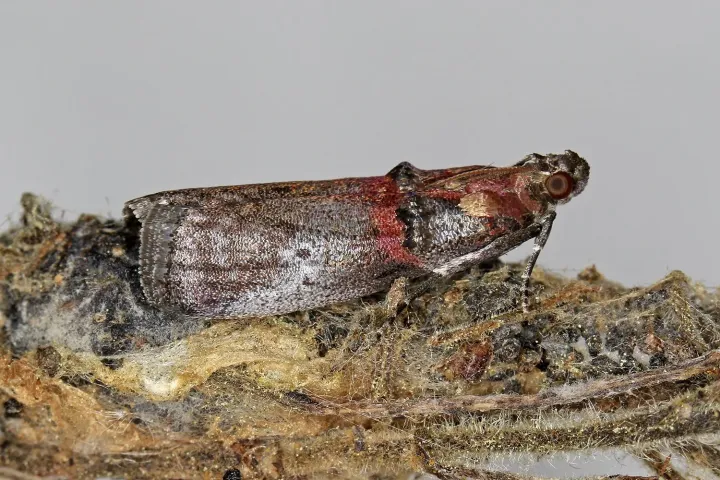
Adult moths typically have a wingspan ranging from 15 to 20 mm, featuring grey to brownish forewings with distinctive darker transverse bands.
The larvae are small caterpillars that transition through several instars, changing color from pale yellow to a deeper olive-green as they mature.
These moths are primarily nocturnal, making them elusive during the daytime when they rest on the bark of host trees, blending in perfectly.
The lifecycle is well-adapted to the phenology of hazelnut trees, ensuring that the larvae emerge precisely when the first green tissues become available.
What it damages
The larvae primarily target the buds, young leaves, and catkins of hazelnut trees, causing significant stress to the developing plant.
By feeding on the insides of buds and rolling leaves with silk threads, they disrupt the normal photosynthetic process of the plant.
Severe infestations can lead to stunted growth of new shoots and, in extreme cases, a significant reduction in the annual nut yield.
The feeding sites often result in leaf deformation, necrosis, and premature drop, which weakens the overall vigor of the orchard.
Open wounds left by the larvae can serve as entry points for various bacterial and fungal pathogens, complicating orchard health management.
When it appears
The life cycle begins in early spring as larvae emerge from their overwintering cocoons to feed on the swelling buds of hazelnut trees.
Spring activity coincides with the bud break stage, which is the most vulnerable time for the trees regarding reproductive development.
Pupation typically occurs in late spring to early summer within the protective structures of rolled leaves, secured with dense silk webbing.
Moth flight and subsequent egg-laying take place during the early to mid-summer period, following the emergence of the first generation.
The species overwinters as a young larva inside a small silk hibernaculum situated in crevices of the bark or near dormant buds.
Signs of infestation
The most prominent sign is the presence of tightly rolled leaves, webbed together by silk, which harbor the developing larvae inside.
Small, dark, granular frass accumulation inside the webbed areas is a clear indicator that the larvae are actively feeding within the canopy.
Early-season wilting of terminal shoots often points to larval feeding at the tip of the branch, preventing proper development.
Browned or non-opening buds during the early spring inspection are characteristic of larvae that have consumed the internal bud tissue.
The presence of overwintering cocoons, appearing as small, camouflaged nodules on the branches, is a sign that potential infestation persists.
Control measures
Cultural control involves the early detection and manual pruning of infested shoots, which should be immediately destroyed to reduce the pest population.
Chemical intervention should be timed specifically to the larval stage before they become protected by the rolled leaves or enter buds.
Biological control agents, including parasitic wasps and predatory insects, can play a significant role in maintaining the population below economic thresholds.
Maintaining orchard hygiene by removing leaf litter and pruning debris helps eliminate secondary overwintering sites for the larvae.
- Use of pheromone traps for monitoring moth activity and determining the optimal timing for protective applications.
Taxonomy
- Latin name
- Acrobasis comptoniella
- Order
- Lepidoptera (butterflies)
- Family
- Pyralidae
- EPPO code
- ACBACM
Discussion
No discussions yet — be the first.