
Garden rose tortrix
Acleris variegana
Description
How to identify
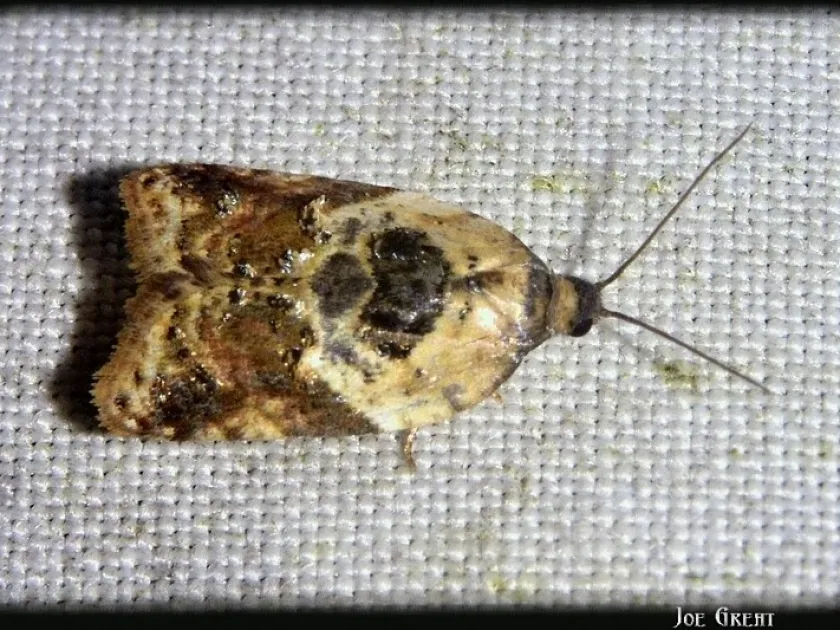
The garden rose tortrix (Latin: Acleris variegana) is a species of moth belonging to the family Tortricidae, known for being a common pest in various horticultural settings.
Adult moths typically have a wingspan of 18–22 mm. Their forewings feature a distinctive mottled pattern of white, grey, and brown, providing excellent camouflage against bark.
Larvae, or caterpillars, undergo several developmental stages, shifting from pale green to brownish with a dark head, reaching maturity at around 15–18 mm in length.
Pupation occurs within sheltered sites, usually inside leaves rolled together with silk threads or within small crevices in the bark of host plants.
Due to their cryptic coloration and habit of hiding within folded leaves, these insects are often overlooked until significant damage becomes visible to the eye.
What it damages
This pest is highly polyphagous, targeting a wide range of plants, particularly those belonging to the Rosaceae family, including apple, pear, plum, and cherry trees.
Berries such as raspberries, blackberries, and currants are also frequent targets, where larvae feed on the foliage and occasionally on the ripening fruits.
As the name suggests, rose bushes are a preferred host, where the tortrix can cause severe aesthetic damage by devouring both leaves and flower buds.
Infestations on young fruit trees are particularly critical, as extensive defoliation stunts development and reduces the overall vigor of the plant.
In addition to direct feeding, the damage creates entry points for fungal infections and other pathogens, further impacting the health and yield of the garden.
When it appears
The species typically overwinters in the egg stage, with eggs deposited singly or in small clusters on the twigs and bark of host trees and shrubs.
Larval emergence in the spring is synchronized with bud burst, allowing caterpillars to immediately begin feeding on tender new growth and developing flower buds.
The moth generally completes one or two generations per year, depending on the climatic conditions and regional temperatures throughout the growing season.
Adult flight usually occurs during the summer months, during which mating and subsequent egg-laying take place to propagate the next generation.
By late autumn, the cycle concludes as overwintering eggs are secured on woody stems, remaining dormant until the following spring's temperature rise.
Signs of infestation
The earliest signs of infestation are damaged buds in spring, which may appear partially hollowed out and loosely webbed together by silken strands.
The most recognizable symptom is the leaf-rolling behavior, where larvae spin leaves into tight rolls or tubes to create a protected feeding environment.
Visible defoliation is common, with leaves showing irregular holes or skeletal patterns where only the main veins remain intact after heavy feeding.
Fruit damage often appears as surface scarring or small, shallow pits caused by larvae feeding near the site where a leaf is attached to the fruit.
- Presence of silken webs on branch tips.
- Rolled or folded leaves held together by silk.
- Irregular holes in leaves or skeletonized foliage.
- Small brown scars on developing fruit skin.
Control measures
Cultural control involves pruning and removing infested shoots during the growing season, which helps to mechanically reduce the active caterpillar population.
Effective winter management includes cleaning loose bark from trunks and removing leaf litter, which helps destroy eggs or pupae before they emerge in spring.
Pheromone traps are highly recommended for monitoring the adult flight activity, allowing gardeners to precisely time any necessary protective treatments.
Biological control agents, including parasitic wasps and predatory insects, play a crucial role in maintaining populations at manageable levels in balanced ecosystems.
Chemical applications should be reserved for periods of high pressure, preferably targeting the early larval stages when they are most susceptible to insecticide treatments.
Taxonomy
- Latin name
- Acleris variegana
- Order
- Lepidoptera (butterflies)
- Family
- Tortricidae
- EPPO code
- ACLRVR
Discussion
No discussions yet — be the first.