
Viburnum leafroller
Acleris schalleriana
Description
How to identify
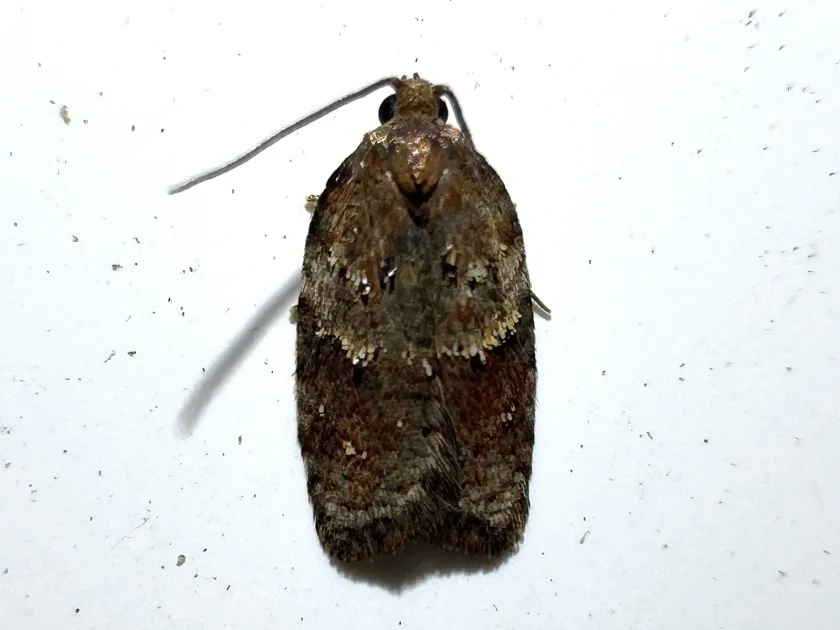
The Viburnum leafroller (Acleris schalleriana) belongs to the Tortricidae family of moths. The adult is a small moth with a wingspan of approximately 15–20 mm, exhibiting cryptic coloration that provides camouflage against tree bark.
The species undergoes complete metamorphosis: egg, larva (caterpillar), pupa, and adult. The lifecycle is synchronized with the phenology of its host plant, ensuring that the larvae emerge precisely when young, tender leaves are available.
Adult moths are nocturnal. During the day, they remain stationary in shaded areas, making them difficult to spot. Their wings feature intricate patterns of brown and cream, which break up their outline against the textures of the Viburnum branches.
The larvae are typically pale green or yellowish with dark head capsules. They are highly active and exhibit a characteristic behavior of wiggling or dropping on a silk thread when disturbed by a predator or gardener.
The insect typically overwinters in the adult stage. Following the onset of spring, the females lay eggs on the bark or young shoots, which hatch as temperatures rise, signaling the beginning of the larval feeding period.
What it damages
The primary host for Acleris schalleriana is the Viburnum genus. Larvae feed primarily on the foliage, showing a strong preference for the succulent, developing leaves of the current season's growth.
Damage is characterized by irregular holes and skeletonization of the leaf tissue. When a larva feeds, it draws the leaf edges together or rolls the leaf, securing it with silk strands to create a protective shelter.
The feeding activity often results in the distortion of terminal growth. When the apical buds are consumed, the shoot can stop growing straight or exhibit stunted, crooked development, impacting the shrub's aesthetic.
In high populations, the damage becomes cumulative. Extensive feeding can lead to severe defoliation, which reduces the plant's ability to store energy through photosynthesis, weakening the shrub for the following year.
While mature shrubs can usually withstand some level of infestation, young plants or nursery stock can suffer significant growth delays, which may result in a loss of vigor and increased susceptibility to other biotic or abiotic stresses.
Signs of infestation
The most diagnostic sign of infestation is the presence of rolled or folded leaves bound together with visible webbing. These "nests" are easy to spot upon close inspection of the branch tips.
Tiny granular pellets, known as frass, are frequently found inside the rolled leaves or on the leaves immediately below the infestation site. This is a clear indicator that larvae are actively feeding nearby.
Affected leaves often turn brown or wither prematurely. This discoloration is a direct result of the larvae destroying the leaf tissues and disrupting the internal transport of water and nutrients within the leaf.
Presence of fine, silvery silk webbing stretched across the leaf surfaces or between shoots is a major indicator that the larvae have been active in the area and are currently building or maintaining their shelters.
Observing small, pale moths fluttering around Viburnum bushes in the twilight hours of late spring or early summer suggests mating and egg-laying activity, indicating that control measures may be required.
Control measures
Manual removal of infested leaves is an effective cultural control for small gardens. By pinching or cutting off the rolled leaves containing the caterpillars, you can stop the local population from growing.
Biological control using *Bacillus thuringiensis* (Bt) is highly recommended. This bacterium specifically targets the digestive tracts of lepidopteran larvae while remaining safe for beneficial pollinators, predators, and the environment.
Promoting a healthy garden ecosystem is vital. Encouraging natural predators, such as spiders, lacewings, and parasitic wasps, provides a natural check on the leafroller population and prevents outbreaks.
Chemical intervention should be considered a last resort, reserved for severe infestations where the shrub's health is at stake. When using insecticides, choose products that are selective and apply them during the early larval stages.
Maintaining plant health through adequate watering and proper nutrition helps shrubs recover quickly from minor feeding damage. A robust plant is less likely to be targeted by pests than one already under environmental stress.
Taxonomy
- Latin name
- Acleris schalleriana
- Order
- Lepidoptera (butterflies)
- Family
- Tortricidae
- EPPO code
- ACALSC
Discussion
No discussions yet — be the first.