
Robinson's leafroller
Acleris robinsoniana
Description
How to identify
Robinson's leafroller (Acleris robinsoniana) is a moth species belonging to the family Tortricidae. This insect is primarily known for its association with rose plants.
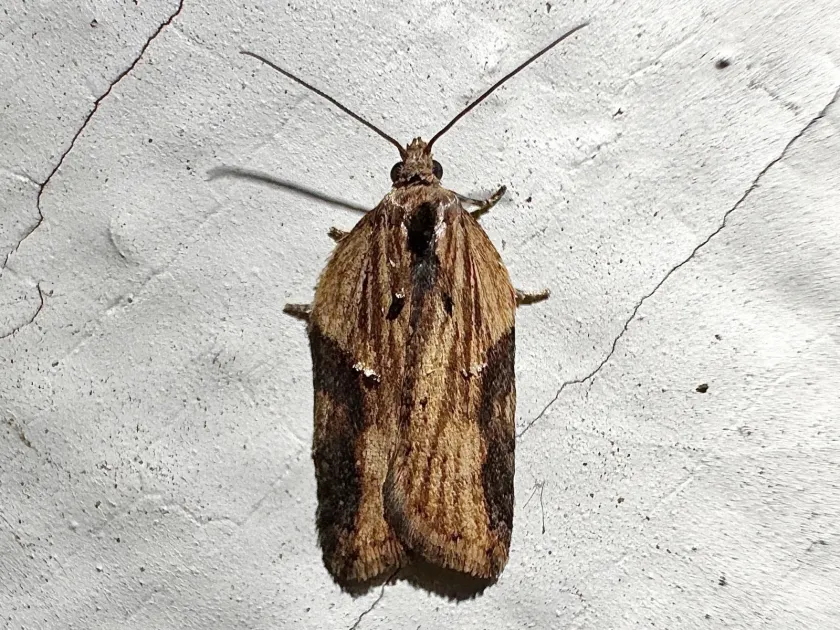
The adult moth has a wingspan ranging from 15 to 20 mm. Its forewings exhibit a characteristic mottled brown or yellowish-brown pattern, providing excellent camouflage against bark and leaves.
The larvae, or caterpillars, are the primary feeding stage. They typically display a light green to yellowish color with a darker head capsule, allowing them to blend in with foliage.
As members of the Lepidoptera order, they undergo complete metamorphosis, passing through the stages of egg, larva, pupa, and adult throughout their life cycle.
The species is well-adapted to environments where their host plants, particularly wild and cultivated roses, are abundant and provide necessary resources for their development.
What it damages
Robinson's leafroller primarily attacks plants within the Rosaceae family. Its presence is most noticeable on roses, where it consumes the young leaves and buds.
The larvae feed on the tender tissue of newly emerged leaves, causing skeletonization and irregular holes, which significantly impact the overall health and aesthetics of the plant.
By webbing together terminal leaves, the caterpillar creates a protected environment for feeding, which often leads to the death of the apical growth point of the shoot.
Flower buds are also prone to infestation; larvae often burrow into the bud, rendering the flowers malformed or preventing them from blooming entirely.
In high-density infestations, the damage can weaken the host plant, leaving it susceptible to secondary pathogens and reducing the overall vigor of the rose bush.
When it appears
The activity of Robinson's leafroller is seasonal, typically beginning in the early spring as soon as the first buds on the host plants begin to swell and open.
Larval emergence is closely synchronized with the phenology of the host plant, ensuring that the young larvae have immediate access to succulent, high-energy tissue.
Peak larval activity occurs during the late spring and early summer months, which is when the most significant damage to the plant canopy is observed.
Adult moths emerge in mid-to-late summer, and they are responsible for laying eggs that may either overwinter or produce a partial second generation depending on the region.
Overwintering usually occurs in the egg or pupal stage, strategically positioned on the stems or within crevices of the plant to survive the winter temperatures.
Signs of infestation
The most distinctive sign of a Robinson's leafroller infestation is the presence of webbed or tightly rolled leaves that contain the feeding larva.
Small, pellet-like frass (droppings) accumulate near the sites of damage, often found on the leaves or webbing surrounding the caterpillar's hiding spot.
Affected shoots often show signs of stunted growth or wilting, as the larvae frequently consume the developing stem tissue inside the leaf rolls.
Early-season signs include small, translucent windows in the leaves, created by young larvae grazing on the epidermis before they become large enough to eat through the entire leaf.
Visible silk threads connecting leaves are a definitive indicator of leafroller presence, especially when examined during the morning hours when dew highlights the webs.
Control measures
Mechanical control is effective in small gardens: gardeners can identify rolled leaves and hand-pick or prune the infested portions to remove larvae manually.
Biological control options include the application of Bacillus thuringiensis (Bt), which targets the larvae specifically while sparing beneficial pollinator insects.
Chemical insecticides should be applied as a last resort during the period of maximum larval activity, choosing products that offer systemic protection.
- Regular inspection of rose bushes starting in early spring.
- Using sticky traps to monitor the flight of adult moths.
- Removing and destroying infested plant material promptly.
- Encouraging natural predators such as lacewings and parasitic wasps.
Maintaining proper plant nutrition and watering regimes helps the plants cope with the stress of infestation and facilitates faster recovery from larval feeding damage.
Taxonomy
- Latin name
- Acleris robinsoniana
- Order
- Lepidoptera (butterflies)
- Family
- Tortricidae
- EPPO code
- ACLRRO
Discussion
No discussions yet — be the first.