
Red-brown leafroller
Acleris notana
Description
How to identify
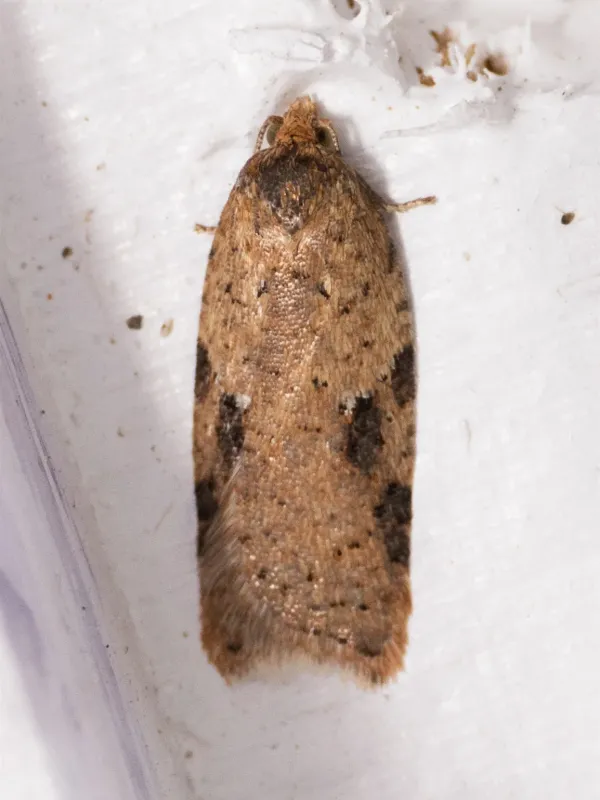
The adult red-brown leafroller is a small moth with a wingspan ranging from 18 to 22 mm. Its forewings exhibit a characteristic reddish-brown or rusty coloration, which provides excellent camouflage against bark.
Taxonomically, this species belongs to the order Lepidoptera, family Tortricidae. Adults are known for their phenotypic plasticity in wing patterns, common among many members of the genus Acleris.
The larvae are typically light green with a dark-colored head capsule. They are known for their habit of rolling or folding leaves to create protective shelters where they feed and develop.
Pupae are usually found inside silk-lined cocoons, securely hidden within damaged foliage or crevices in the tree bark. This life stage is generally sessile and protected from many environmental factors.
Monitoring for adults can be conducted using pheromone traps or by visual inspection of the orchard during dusk when the moths are most active.
What it damages
This species primarily targets plants in the Rosaceae family, including apple and pear trees. While it is a common pest in fruit orchards, it can also affect various deciduous ornamental trees.
The larvae use their chewing mouthparts to consume young leaves, developing buds, and fruitlets. This feeding behavior often leads to significant defoliation of the host plant.
In cases of high infestation, the larvae can damage the surface of fruits, causing deep pits or scarring. This damage compromises the aesthetic quality of the fruit and promotes secondary infections.
The removal of leaf area by the larvae hinders the photosynthetic capacity of the tree, which can lead to weakened growth and reduced long-term productivity.
In young trees, heavy infestation can disrupt proper branch development and increase the tree's susceptibility to environmental stressors and diseases.
When it appears
The life cycle of the red-brown leafroller typically involves one or two generations per year, depending on the climatic conditions of the region where they reside.
Adult moths usually overwinter in sheltered locations such as bark cracks or under dead leaves. Emergence begins in the spring as soon as temperatures rise, usually coinciding with bud break.
The larvae of the first generation emerge in late spring to feed on developing foliage. This period is critical for tree health and requires vigilant scouting.
Summer generations develop more rapidly due to warmer conditions, leading to potential population peaks in mid-to-late summer. Lifecycle overlaps can make persistent control difficult.
As autumn arrives, the moths enter diapause. Understanding the specific phenology of local populations is essential for timing orchard protection measures effectively.
Signs of infestation
The most prominent sign of an infestation is the presence of rolled or folded leaves fastened together with silk. These shelters are highly indicative of leafroller activity.
Feeding damage often manifests as irregular holes in leaves or entire sections of foliage being consumed. In severe cases, the tree canopy may appear ragged and thin.
Frass (larval excrement) is often trapped inside the rolled leaves, which can serve as a diagnostic feature when examining suspected damage sites.
Deformed or damaged fruit with surface scarring is another clear sign of a significant infestation. In some instances, affected buds may fail to open or may die prematurely.
Inspecting branches for silk webbing is a reliable way to detect early activity before the damage becomes extensive across the orchard.
Control measures
Cultural control methods include regular bark cleaning to remove overwintering sites for the moths. Additionally, pruning damaged twigs and removing leaf litter can reduce populations.
Biological control options involve the application of products containing Bacillus thuringiensis, which target the larvae while sparing beneficial predatory insects.
Chemical control should be timed to coincide with the period of larval hatching. Systemic or contact insecticides should be applied before the larvae retreat into rolled leaves for protection.
- Use of pheromone traps for population monitoring.
- Sanitary pruning of infested branches.
- In-season application of biorational insecticides.
- Encouraging natural predators and parasitoids in the orchard.
Always rotate insecticide modes of action to manage resistance. Follow local regulatory guidelines regarding pre-harvest intervals when applying treatments to food-producing crops.
Taxonomy
- Latin name
- Acleris notana
- Order
- Lepidoptera (butterflies)
- Family
- Tortricidae
- EPPO code
- ACLRNO
Discussion
No discussions yet — be the first.