
Snow-white leafroller
Acleris nivisellana
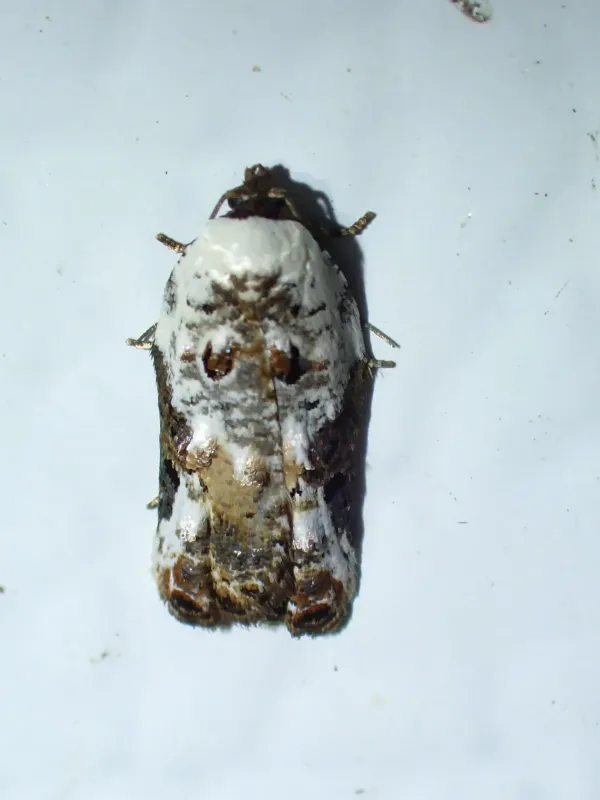
Description
How to identify
The Snow-white leafroller (Acleris nivisellana) is a moth belonging to the family Tortricidae, known for its cryptic coloration and leaf-rolling behavior.
The adult moth has a wingspan of approximately 15–20 mm, with forewings that are characteristically light or white, often featuring darker markings.
The larvae are small, agile caterpillars, typically ranging from light green to olive in color, featuring a dark head capsule.
They are known for their habit of tying leaves together with silk, which provides them with a secure shelter while they feed on the leaf tissue.
Pupation occurs within these leaf-rolls or deep inside bark crevices, where the insect constructs a protective cocoon to survive until the next stage.
What it damages
This pest is primarily associated with rosaceous plants, causing significant economic damage in apple and pear orchards.
Larvae feed voraciously on young, tender leaves, buds, and occasionally developing fruit, causing stunted growth and poor fruit formation.
High infestation levels can lead to severe defoliation, which reduces the tree's overall photosynthetic capacity and weakens its vigor.
When buds are attacked early in the season, the resulting yield reduction can be substantial, particularly in susceptible fruit varieties.
Beyond damage to leaves, the pest can cause cosmetic damage to fruit through surface feeding, which significantly reduces the market value of the harvest.
When it appears
The life cycle is closely synchronized with the phenology of host plants, starting with the emergence of larvae in early spring.
Adult moths usually emerge in the early summer, engaging in mating and oviposition on the undersides of leaves and young shoots.
Development speed is heavily influenced by ambient temperatures, with the entire cycle from egg to adult often spanning a few weeks.
The pest typically overwinters in the pupal stage, seeking refuge under loose bark or in leaf litter near the base of the host tree.
Regular monitoring starting from bud burst is crucial for orchard managers to predict peak activity periods and timing of interventions.
Signs of infestation
The most diagnostic sign of an infestation is the presence of leaves that are tightly rolled or folded and webbed together with fine silk.
Examining these leaf-rolls often reveals the presence of larvae or their distinct, dark-colored frass (droppings) inside the shelter.
Damaged flower buds and blossoms that are tied together with silk and fail to open properly are indicators of early larval feeding.
Irregular, skeletonized leaf patches where larvae have scraped the tissue are common symptoms seen on the foliage during the summer months.
The presence of increased bird activity in the orchard canopy may also serve as a non-obvious indicator of larval concentrations.
Control measures
Effective management requires an integrated approach that focuses on minimizing pesticide use while maintaining economic thresholds.
Manual removal of infested leaves during the early season can be highly effective in small-scale orchards and nurseries to prevent population buildup.
Biological controls, including the application of B. thuringiensis, provide an excellent tool for targeting larvae without harming beneficial insects.
- Installing pheromone traps to monitor adult flight and population density.
- Maintaining healthy orchards through proper pruning and removal of debris.
- Encouraging natural predators like parasitic wasps and predatory birds.
Chemical control should be reserved for periods of peak infestation, using selective insecticides that target the larval stage of the pest.
Taxonomy
- Latin name
- Acleris nivisellana
- Order
- Lepidoptera (butterflies)
- Family
- Tortricidae
- EPPO code
- ACLRNV
Discussion
No discussions yet — be the first.