
Garden Rose Tortrix
Acleris laterana
Description
How to identify
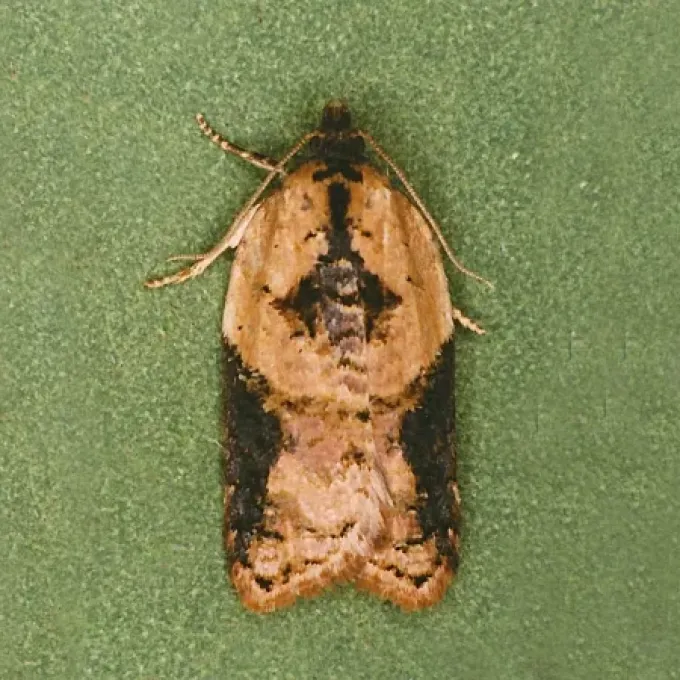
The Garden Rose Tortrix, scientifically known as Acleris laterana, belongs to the Lepidoptera order and the Tortricidae family. Adults are small moths with a wingspan of approximately 15–20 mm.
The forewings display a distinctive mottled pattern with shades of gray, brown, and ochre, providing effective camouflage against tree bark during the day.
Larvae, commonly referred to as leafrollers, typically exhibit a yellowish-green or bright green body with a dark head capsule and sparse body hairs.
Pupae of this species are notable for their mobile abdomen, a defensive mechanism that allows them to wiggle out of their leaf rolls when disturbed.
The life cycle encompasses four distinct stages: egg, larva (caterpillar), pupa, and adult, with the number of generations per year varying by local climate.
What it damages
This pest acts as a polyphage, causing significant economic damage to a wide range of horticultural, orchard, and ornamental plant species.
Primary host plants include pome fruits like apple and pear, as well as stone fruits such as plum and cherry, which are particularly susceptible to larval feeding.
In wild environments, larvae are frequently found on willows, birches, and other deciduous trees, which serve as natural reservoirs for pest infestations.
The damage is primarily caused by larvae feeding on leaves, which reduces the total photosynthetic area and weakens the overall health of the tree.
In severe infestations, larvae may also consume young fruit and buds, leading to premature fruit drop and reduced market quality of the harvest.
When it appears
Larval emergence typically coincides with the spring bud-burst phase, providing the newly hatched caterpillars with immediate access to nutritious young foliage.
Pupation generally occurs inside rolled leaves or within protected bark crevices during the mid-summer period, depending on prevailing temperature trends.
The flight of the second generation of adults usually occurs in late summer, leading to egg-laying for the subsequent life cycle phase or overwintering.
The insect typically overwinters in the egg stage, which the female deposits on smooth bark or near vegetative buds to survive until the following spring.
Agronomists monitor population peaks using pheromone traps placed within the canopy, which help determine the optimal timing for intervention and control.
Signs of infestation
The most diagnostic sign of an infestation is the presence of leaves rolled into tubes or clusters, bound together by dense, sticky silk webbing.
Inside these silken shelters, one can easily locate the larvae, which display an escape response by wiggling violently when their protective roll is opened.
Leaves affected by Acleris laterana show significant damage, including irregular, ragged edges and necrotic patches where the tissue has died back.
Traces of frass (larval excrement) can often be found near the leaf rolls or on the branches below, indicating the intensity of the feeding activity.
In severe cases, the canopy appears sparse, and shoot development is stunted due to the larvae destroying the terminal growing points of the branches.
Control measures
Mechanical control is effective for small-scale gardens and involves the manual picking and destruction of rolled leaves before the larvae reach maturity.
Biological management strategies often incorporate the use of Bacillus thuringiensis, a naturally occurring bacterium that targets the larvae without harming beneficial insects.
Chemical control focuses on applying targeted insecticides during the most vulnerable stages of the pest's development, specifically at the time of larval hatch.
- Apply insecticide treatments before the tree starts to bloom.
- Deploy pheromone traps to monitor and suppress adult populations.
- Conduct dormant pruning to remove overwintering egg sites.
- Encourage natural predators, such as birds and parasitic wasps, in the orchard.
It is essential to rotate between different modes of action to prevent the development of insecticide resistance within the local moth population.
Taxonomy
- Latin name
- Acleris laterana
- Order
- Lepidoptera (butterflies)
- Family
- Tortricidae
- EPPO code
- ACLRLA
Discussion
No discussions yet — be the first.