
Acleris moth
Acleris
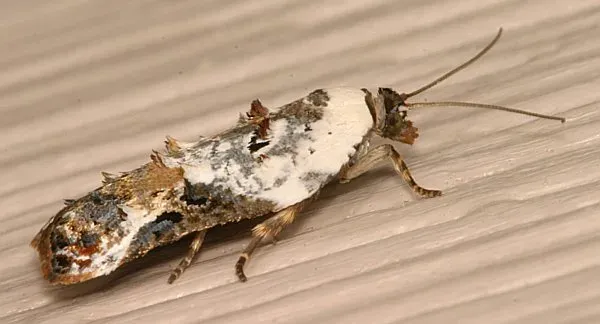
Description
How to identify
The genus Acleris belongs to the Tortricidae family within the Lepidoptera order. These moths, often known as leafrollers, typically have a wingspan of 15 to 22 mm.
Adult moths are characterized by their bell-shaped resting position and variable wing coloration, ranging from brownish to ochre, which provides excellent camouflage.
The life cycle begins with eggs laid singly or in small clusters on leaf surfaces or bark, which are flattened and change color as the embryo matures.
Larvae develop through five instars, starting as small green caterpillars and eventually growing into more robust, brownish or olive-green insects.
Pupation occurs within curled leaves or sheltered crevices in the bark, where the larvae spin silken cocoons to protect themselves during the transformation process.
What it damages
Acleris species are polyphagous pests that primarily target fruit-bearing trees belonging to the Rosaceae family, including apples, pears, and plums.
The larvae are responsible for the damage, feeding on developing buds, fresh leaves, blossoms, and the surface of the fruit as it grows.
Extensive feeding reduces the tree's overall vigor by compromising its photosynthetic capacity and depleting energy reserves needed for fruit development.
Damage to the fruit skin leads to scars, depressions, and malformations, which significantly downgrade the commercial value of the harvest.
Severe infestations can lead to premature fruit drop and an increased risk of fungal infections entering through the feeding sites.
When it appears
These moths typically overwinter as adults, finding shelter in bark fissures, leaf litter, or other protected areas during the cold season.
Activity resumes in early spring when temperatures rise, coinciding with the bud break stage of fruit trees, which is the start of the first generation.
Depending on the region and climatic conditions, Acleris can produce one to three generations per year, creating a prolonged window of risk.
The mid-summer generations are particularly dangerous, as the larvae emerge while fruit is rapidly developing and vulnerable to injury.
As autumn approaches, the final generation of adults seeks winter hibernation sites to survive the dormant season until the next spring.
Signs of infestation
The most distinctive symptom of an Acleris infestation is the rolling or folding of leaves, which are secured with dense strands of silk.
In the orchard, you may observe feeding tunnels on the fruit surface, which initially appear as small grazings and later as deeper, scab-like wounds.
- Presence of silken webs in flower clusters and on terminal shoots.
- Accumulation of frass (caterpillar excrement) trapped within the rolled leaves.
- Premature fruit drop of small or damaged fruitlets.
- Skeletal leaf damage where the green tissue is consumed, leaving only the veins.
If you disturb an infested tree, adult moths may be seen fluttering briefly before quickly landing and blending into the foliage or bark.
Control measures
Effective management begins with orchard sanitation, such as scraping loose bark and removing leaf litter to eliminate overwintering sites.
Pheromone traps are essential for monitoring adult populations, helping growers determine the precise timing for insecticide applications.
Biological control options, including Bacillus thuringiensis (Bt) treatments, are effective against young larvae while preserving beneficial insect populations.
Chemical intervention should be strategically timed, particularly targeting the periods following petal fall when the first larvae hatch.
Rotating insecticide modes of action is critical to preventing the development of resistance within the Acleris population.
Taxonomy
- Latin name
- Acleris
- Order
- Lepidoptera (butterflies)
- Family
- Tortricidae
- EPPO code
- ACLRSP
Discussion
No discussions yet — be the first.