
Aclees weevil
Aclees
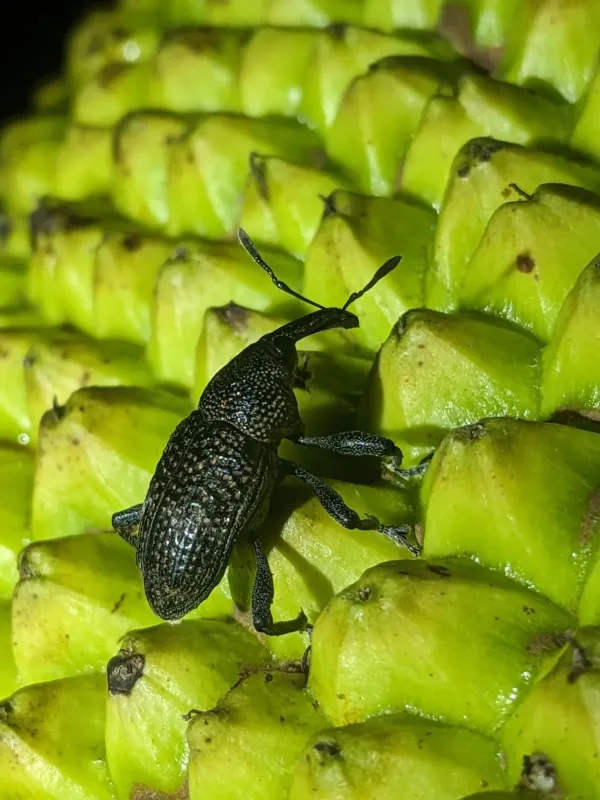
Description
How to identify
The Aclees genus comprises several species of large weevils belonging to the Curculionidae family, known for their significant impact on wood health.
These insects are characterized by a pronounced snout and a robust exoskeleton, often displaying dark, cryptic coloration that allows them to blend in with tree bark.
The elytra, or wing covers, frequently feature a rough or bumpy texture, which serves as a defensive adaptation and a specific taxonomic trait.
Larvae of these weevils are apodous (legless), fleshy grubs with a well-developed head, specifically adapted for boring into wood tissue.
Due to their nocturnal habits and camouflage, these weevils are often difficult to detect during the day, requiring careful inspection of trees.
What it damages
The primary host for Aclees species, particularly Aclees cribratus, is the fig tree (Ficus carica), where they cause devastating damage.
Larval activity involves tunneling through the trunks and branches, which effectively disrupts the tree's nutrient and water transport systems.
As the galleries formed by the larvae expand, the structural integrity of the tree is compromised, leading to limb breakage and eventual tree mortality.
Adults also contribute to the damage by feeding on buds, leaves, and tender shoots, which puts stress on the overall health of the tree.
Young plants are especially susceptible, and a small infestation can prove fatal to a sapling within a single growing season.
When it appears
The life cycle and activity of the Aclees weevil are heavily influenced by ambient temperature, with peak activity occurring during the warm summer months.
Adult weevils emerge from their wintering sites in early spring, initiating a period of feeding and reproduction as temperatures rise.
Eggs are typically deposited in small slits created by the female in the bark of the host tree, ensuring that the larvae have immediate access to food.
The larval stage lasts for a significant duration, and in many regions, the life cycle is synchronized with the vegetative growth of the fig trees.
As autumn approaches, the adult population begins to decline, and surviving individuals seek sheltered sites to enter diapause for the winter.
Signs of infestation
The most prominent sign of infestation is the presence of sawdust-like frass (excrement and wood shavings) near the base of the trunk or on the ground.
Small entry and exit holes on the bark are clear indicators that weevils have been boring into the interior of the tree.
Progressive canopy dieback or wilting of individual branches often points to internal structural damage caused by the feeding larvae.
In some cases, sap flow may be seen leaking from the small egg-laying wounds, which can attract secondary pests or fungal pathogens.
If the bark is carefully peeled back in affected areas, the distinctive serpentine tunnels created by the larvae will be clearly visible.
Control measures
Effective management begins with strict phytosanitary measures to prevent the movement of infested plant material across regional borders.
Mechanical control, which involves pruning and destroying heavily infested branches or removing entire dead trees, is crucial for reducing the local population.
Systemic insecticides can be applied during the periods of adult activity to manage the population before they have a chance to lay new eggs.
Trunk treatments with specialized coatings may act as a deterrent, making it more difficult for females to find suitable sites for oviposition.
Cultural practices, such as maintaining optimal tree vigor through proper fertilization and irrigation, help trees withstand and recover from pest pressure.
Taxonomy
- Latin name
- Aclees
- Order
- Coleoptera (beetles)
- Family
- Curculionidae
- EPPO code
- ACEESP
Discussion
No discussions yet — be the first.