
Needle snail
Acicula
Description
How to identify
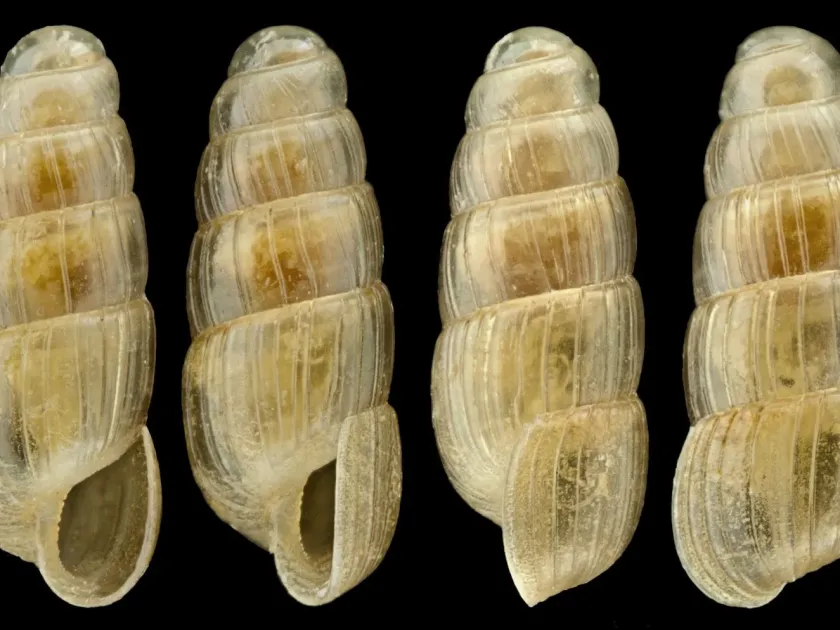
The needle snail, scientifically known as Acicula, belongs to the family Aciculidae and the order Architaenioglossa. These are microscopic terrestrial mollusks characterized by their slender, needle-like shells.
These creatures are elusive and primarily inhabit moist soil environments, leaf litter, or decaying organic matter. Their tiny size, usually just a few millimeters in length, makes them difficult to detect during standard garden inspections.
The body of the snail is typically translucent or pale, while the shell exhibits a fine, delicate ribbing. This unique shell structure allows them to move through soil pores and remain protected from environmental fluctuations.
Needle snails thrive in stable, humid conditions. They remain active within the top layers of the soil, moving rhythmically to find food sources, which include decaying organic matter and, in cases of high population density, living plant roots.
Their life cycle is highly dependent on environmental moisture. During dry spells, they retreat deep into the soil profile, entering a state of dormancy until favorable, moist conditions return to the surface.
What it damages
Needle snails pose a significant threat to young seedlings and transplants. They target the root systems and the root crown, causing plants to wilt, stunt, or perish due to the physical damage of the primary root tissues.
In greenhouse settings, these mollusks can multiply rapidly, as the environment provides ideal humidity and year-round food availability. This can result in significant losses for commercial vegetable and ornamental plant production.
Damage is often characterized by the destruction of root hairs and the formation of small lesions on the stems of young plants. These lesions often become secondary entry points for opportunistic soil-borne pathogens like fungi and bacteria.
Because the snails feed in the subterranean or surface-adjacent layers, their damage is often misidentified as nutrient deficiency or environmental stress, leading to delayed application of control measures.
Ornamental gardens with heavy mulching are particularly susceptible, as the mulch provides the perfect microhabitat for the snails to thrive and move safely toward the roots of preferred plants.
Signs of infestation
A primary sign of infestation is the unexplained wilting of young seedlings despite adequate soil moisture. If the plant is gently uprooted, microscopic damage to the fine root system may be visible.
The presence of fine, shiny slime trails on the soil surface or the base of stems, especially in the early morning, is a definitive indicator of mollusk activity in the area.
Small, irregular holes or necrotic patches on the leaves of low-growing plants that come into contact with the soil are frequently caused by nocturnal feeding by these tiny pests.
A visible reduction in seedling vigor and delayed growth compared to unaffected plants in the same bed suggests a localized population of Acicula feeding on the root zones.
Discovering empty, needle-shaped shells on the soil surface or near plant bases after irrigation provides direct evidence of the presence of this specific mollusk in your growing medium.
Control measures
Mechanical control through regular soil cultivation is highly effective. Tilling or hoeing disrupts the snails' habitat, destroys their tunnels, and exposes them to desiccation and sunlight.
Improving soil drainage and managing irrigation schedules to avoid persistent surface wetness can significantly reduce the attractiveness of the area for needle snails.
Barriers composed of abrasive materials like wood ash, diatomaceous earth, or crushed gravel can effectively deter these mollusks from reaching the stems of delicate young plants.
Biological control agents, such as parasitic nematodes specifically targeting terrestrial mollusks, offer an environmentally friendly approach to suppressing populations without chemical residue.
For severe infestations, the application of iron phosphate-based molluscicides can be used. These baits should be applied lightly around the base of the plants, following safety instructions to ensure effective control.
Taxonomy
- Latin name
- Acicula
- Order
- Molluscs
- Family
- Aciculidae
- EPPO code
- ACICSP
Discussion
No discussions yet — be the first.