
Accuminulia buscki
Accuminulia buscki
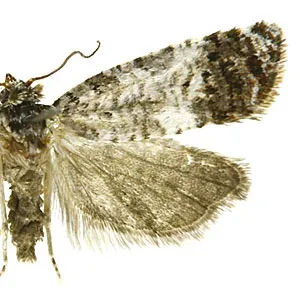
Description
How to identify
Accuminulia buscki belongs to the Gelechiidae family, order Lepidoptera. This micro-moth is often difficult to detect during early infestation stages due to the small size of the adults and the cryptic behavior of the larvae.
The adult moth has a wing structure typical of the Gelechiidae family. Their coloration is often cryptic, allowing the pest to camouflage itself on the surface of host leaves.
The life cycle consists of egg, larva (caterpillar), pupa, and adult stages. The caterpillar is the primary destructive stage, passing through several instars while actively feeding on plant tissues.
Field identification is challenging, so professionals recommend using pheromone traps to monitor adult population density during the growing season.
In field conditions, distinguishing this species from other gelechiids requires microscopic examination of wing venation and genital structures.
What it damages
This pest primarily specializes in damaging members of the Solanaceae family, although its host range may expand depending on regional environmental conditions.
Accuminulia buscki larvae cause damage by burrowing into leaf blades and creating mines. This disrupts photosynthesis and leads to premature drying of the leaves.
Beyond leaves, at high population densities, the pest can damage buds and young shoots, significantly reducing overall crop yield.
Economic impact includes not only direct loss of leaf surface but also the creation of entry points for phytopathogenic fungi and bacteria that cause secondary infections.
In commercial settings, massive outbreaks can lead to decreased product quality and significant financial losses for agricultural enterprises.
When it appears
The peak activity period for this pest occurs in the second half of spring and summer, when daily temperatures are favorable for the development of all insect stages.
Pests typically overwinter as pupae or adults in plant debris, soil, or sheltered areas on nearby lands, which determines their survival rate before the season begins.
The emergence of the first generation often coincides with the onset of active growth in host crops, allowing larvae to quickly find a food source.
The number of generations per season depends on the climatic zone; in warmer regions, several overlapping generations may occur.
Monitoring for the pest should begin immediately after stable warm weather is established, guided by cumulative effective temperature data.
Signs of infestation
The first sign of infestation is the presence of typical mines on leaves, which may be serpentine or blotch-shaped depending on the larva's age.
Upon inspection, one may notice the presence of larval excrement (frass) inside the mines, which distinguishes this pest from damage caused by diseases or nutrient deficiencies.
Curling or deformation of leaf edges in areas where larvae have been feeding is a characteristic visual indicator of the insect's presence.
Gradual yellowing and shedding of affected leaves indicate a critical level of plant damage, requiring immediate corrective action.
- Presence of leaf mining tunnels.
- Web-like threads on damaged areas.
- Accumulation of frass in damage sites.
- Deformation of young leaves and shoots.
Control measures
Control systems must be based on an integrated pest management (IPM) approach, combining agrotechnical, chemical, and biological methods.
An important measure is the destruction of plant debris after harvest and deep autumn plowing to destroy pupal overwintering sites.
When the economic threshold is reached, selective insecticides targeting larval stages should be used to minimize impact on beneficial entomophages.
Biological control involves the use of products based on Bacillus thuringiensis, which are effective against early-instar larvae.
Regular monitoring with pheromone traps allows for precise timing of protective sprays, minimizing total pesticide application levels.
Taxonomy
- Latin name
- Accuminulia buscki
- Order
- Lepidoptera (butterflies)
- Family
- Tortricidae
- EPPO code
- ACCUBU
Discussion
No discussions yet — be the first.