
Accuminulia
Accuminulia
Description
How to identify
Accuminulia belongs to the group of phytophagous insects. Systematically, this genus is part of the Gracillariidae family, order Lepidoptera.
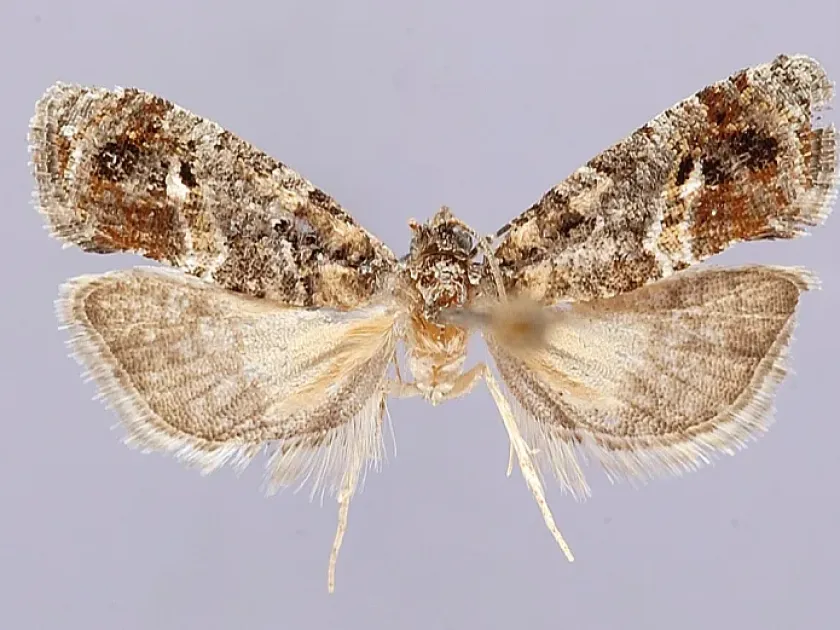
Adults are small moths with narrow wings covered in a characteristic pattern that helps them camouflage on bark or leaf surfaces. Species identification is often difficult due to the microscopic size of the imago.
The larval stage is characterized by caterpillars that lead a hidden lifestyle inside plant tissues. Their bodies are usually flattened, adapted to living in the narrow spaces between leaf cells.
The life cycle includes complete metamorphosis: egg, caterpillar, pupa, and imago. The pest often overwinters in the pupal stage within a cocoon hidden in plant debris or bark crevices.
Reproduction occurs in several generations per season, which causes high population spread rates under favorable weather conditions.
What it damages
The main affected objects are various species of trees and shrubs, as well as some vegetable crops. Damage manifests as a weakening of the plant's overall immune system.
Accuminulia caterpillars feed on leaf parenchyma, eating tunnels under the epidermis, which disrupts photosynthesis. This negatively impacts yield and fruit quality.
During mass outbreaks, premature leaf drop is observed, which depletes the plant and reduces its cold hardiness during the autumn-winter period.
Damaged tissue areas become entry points for secondary infections, including fungal and bacterial diseases that develop in the tunnels.
Economic damage is particularly noticeable in young seedlings and nursery plants, where leaf damage slows down vegetation and biomass growth.
Signs of infestation
The first sign of infestation is specific mines — light or brown winding lines and spots on the leaf surface left by the caterpillars.
In the places where larvae live, one can often notice accumulations of excrement in the form of small dark dots filling the tunnels inside the leaf.
Leaves heavily infested with the pest begin to deform, curl, and turn yellow prematurely, acquiring a «marbled» look due to cavities inside the tissue.
Visual inspection of the underside of the leaf often reveals cocoons or traces of pupation, which look like dense whitish formations along the veins.
In the evening, it is possible to observe the flight of adults near host plants, which serves as a signal to start monitoring the crop condition.
Control measures
The main control method is an agro-technical approach, including timely removal and destruction of fallen leaves, where pupae may overwinter.
The use of pheromone traps allows for accurate tracking of moth flight periods and timely implementation of protection measures aimed at destroying adults.
An effective control method is the use of biological insecticides based on entomopathogenic fungi or bacteria that target young caterpillar instars.
- Preventive spraying with systemic preparations.
- Attraction of natural entomophages (parasitic Hymenoptera).
- Pruning and burning of heavily damaged branches.
Chemical insecticide treatment is recommended only when the economic threshold is exceeded, while it is important to rotate products to prevent population resistance.
Taxonomy
- Latin name
- Accuminulia
- Order
- Lepidoptera (butterflies)
- Family
- Tortricidae
- EPPO code
- ACCUSP
Discussion
No discussions yet — be the first.