
Acanthotomicus
Acanthotomicus
Description
How to identify
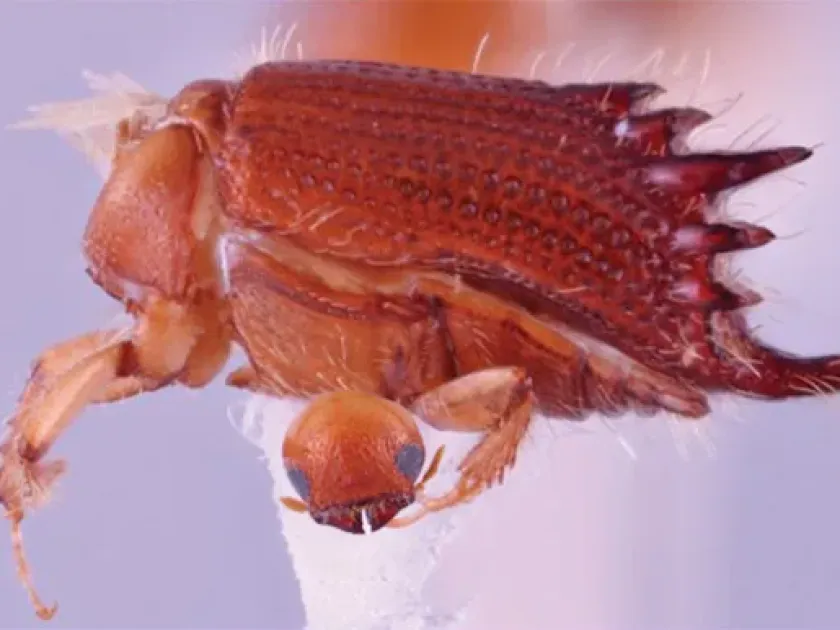
Acanthotomicus is a genus of beetles belonging to the subfamily Scolytinae (bark beetles). These insects are relatively small, typically cylindrical, and are anatomically specialized for boring into the phloem and cambium layers of woody plants.
Morphologically, these beetles are characterized by their dark coloration and specific structures on the elytral declivity. Many species possess a distinct arrangement of teeth at the rear of their wing covers, which serves as a mechanical aid for clearing frass from their tunnels.
Their life cycle consists of the typical holometabolous stages: egg, larva, pupa, and adult. The entire development usually takes place under the bark of weakened trees, where the microclimate is favorable for their growth and protection from predators.
Adults are capable fliers, actively searching for suitable host trees during the spring and summer months. They often rely on chemical cues, such as tree volatiles and pheromones, to aggregate and overwhelm the tree's natural defense systems.
This genus plays a significant role in forest ecology, acting as both a primary decomposer of dead wood and, under certain conditions, a serious pest that can contribute to the decline of forest stands.
What it damages
The primary hosts of Acanthotomicus are coniferous trees, particularly spruce, pine, and fir species. In some regions, they may also affect broad-leaved trees if the plants are experiencing physiological stress due to environmental factors.
Damage is caused by the adults and larvae tunneling through the inner bark. These galleries sever the vascular tissues, specifically the cambium and phloem, which halts the flow of water and nutrients, eventually leading to tree mortality.
In addition to physical destruction, Acanthotomicus serves as a vector for various wood-decaying fungi and blue-stain fungi. These pathogens penetrate the wood, accelerating the decay process and significantly reducing the economic and structural value of the timber.
Outbreaks often occur following natural disturbances such as droughts, windstorms, or fires, which leave trees in a weakened state. Once the beetle population hits a certain threshold, they can successfully attack even healthy trees through mass colonization.
The total loss of forest biomass and the necessity for extensive salvage logging are the primary negative economic impacts associated with large-scale infestations of this genus.
Signs of infestation
The most prominent sign of an infestation is the presence of boring dust (frass) around the base of the tree or caught in bark crevices. This material is expelled by the beetles as they excavate their entrance tunnels.
Small, round entry holes in the bark are visible upon closer inspection. Often, resin flow (pitch tubes) may be observed where the tree is attempting to repel the beetles; however, successful colonization typically results in the drying of these resinous spots.
Under the bark, complex gallery patterns are found. These consist of a main parental gallery, from which larval tunnels radiate, creating a signature design unique to each specific beetle species.
Crown symptoms, such as chlorosis (yellowing of needles or leaves), are signs of advanced infestation. When the foliage turns brown or red, it indicates that the tree's internal circulation system has been compromised beyond repair.
Increased woodpecker activity on a specific tree is a reliable biological indicator of a bark beetle infestation. The birds strip away bits of bark to access the larvae, leaving behind distinctively scarred patches on the trunk.
Control measures
The most effective management strategy is rigorous forest hygiene. This involves the prompt identification and removal of infested or fallen trees before the next generation of beetles can emerge and spread to healthy stands.
The use of trap trees is a traditional and highly effective silvicultural method. By placing freshly cut logs in strategic locations, managers can attract beetles to a single site, where they can be destroyed before their offspring complete development.
Pheromone traps are widely used for monitoring population levels and as a control tool in high-value areas. These traps target the beetles' aggregation signals, effectively reducing the density of adults during the flight period.
Chemical control, while usually restricted in large forest landscapes, may be employed in ornamental nurseries or urban settings. Systemic or contact insecticides can be applied to the bark to prevent successful colonization by the beetles.
Encouraging natural biological controls, such as predatory beetles, parasitoid wasps, and insectivorous birds, is crucial for long-term sustainability. Maintaining a diverse forest structure helps preserve these natural antagonists, keeping pest populations in check.
Taxonomy
- Latin name
- Acanthotomicus
- Order
- Coleoptera (beetles)
- Family
- Curculionidae
- EPPO code
- ACTTSP
Discussion
No discussions yet — be the first.