
Striped cucumber beetle
Acalymma albovittatum
Description
How to identify
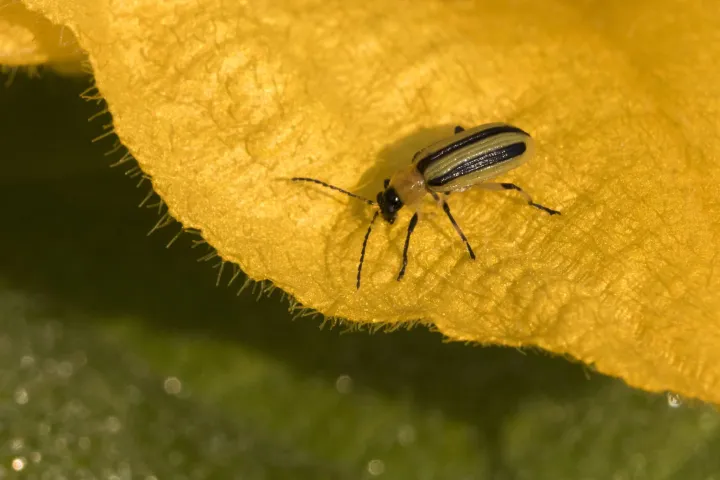
The striped cucumber beetle Acalymma albovittatum belongs to the leaf beetle family (Chrysomelidae) within the order Coleoptera. Adults are easily recognized by their yellowish-green elytra adorned with three longitudinal black stripes.
The adult beetle typically measures between 5 and 7 mm in length. It possesses long antennae and a head that is characteristically dark, often black in color.
Larvae have a slender, cream-white appearance with a hardened, dark head capsule. They spend their entire developmental period in the soil where they thrive.
The life cycle encompasses complete metamorphosis: egg, larva, pupa, and adult. The overwintering stage usually consists of adults hidden in soil debris or protected areas.
Seasonal emergence is synchronized with the spring warming of the soil, triggering the adults to emerge and begin searching for suitable host plants.
What it damages
This pest is a major threat to crops within the Cucurbitaceae family, including cucumbers, squash, pumpkins, melons, and gourds.
Adult beetles cause significant damage by consuming the foliage, flowers, and developing fruits, which often results in severe defoliation of the plants.
Larval damage is primarily focused on the root system. By feeding on roots and the base of the stems, larvae disrupt the plant's nutrient uptake capabilities.
Seedlings are particularly vulnerable; heavy larval infestation can cause the plant to wilt rapidly and fail to establish, leading to total stand loss.
Furthermore, feeding wounds created by the beetles serve as entry points for various soil-borne pathogens, leading to secondary bacterial wilt infections.
Signs of infestation
Foliage damage appears as small, irregular holes or intricate feeding patterns that eventually result in a skeletonized leaf surface.
Wilting of vines during the heat of the day, despite adequate irrigation, is a classic diagnostic sign of root damage caused by larvae.
Adult beetles are often visible on the undersides of leaves or hiding within the blossoms of the host plants during the early morning hours.
Stunted plant growth and yellowish foliage are indicators that the root system has been compromised by ongoing larval activity.
Lesions or necrotic spots on the hypocotyl or lower stem tissue are visible signs of previous adult or larval feeding activity near the soil line.
Control measures
Integrated pest management strategies begin with sound crop rotation, ensuring cucurbits are not planted in the same area for multiple seasons.
Using physical barriers such as floating row covers during the seedling stage effectively prevents adult beetles from colonizing the crop.
Chemical control measures should be applied based on scouting and economic threshold levels to minimize impact on the environment.
- Implementing fall tillage to expose pupae in the soil to freezing temperatures and natural predators.
- Sanitation practices, including the removal of weeds that can host the beetles throughout the season.
- Deploying yellow sticky traps to monitor population spikes and guide application timing for insecticides.
Always prioritize the safety of pollinators by applying chemical treatments outside of peak bloom hours and choosing selective products where possible.
Taxonomy
- Latin name
- Acalymma albovittatum
- Order
- Coleoptera (beetles)
- Family
- Chrysomelidae
- EPPO code
- ACAYAL
Discussion
No discussions yet — be the first.