
Acalles costifer
Acalles costifer
Description
How to identify
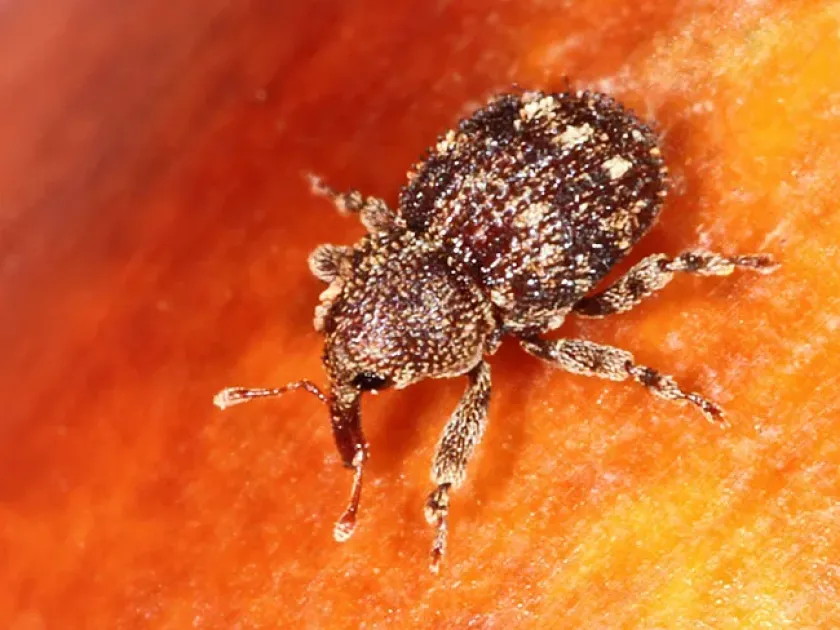
Acalles costifer is a species of weevil belonging to the family Curculionidae. These small beetles are known for their ability to blend perfectly with bark, making them difficult to detect without careful inspection.
The adult beetle typically measures between 3 and 5 mm in length. Its body is covered with dense, textured scales that provide excellent camouflage against woody surfaces.
The larvae are legless, white, and have a distinct dark head capsule. They spend their entire developmental period inside the host plant's tissues, protected from external factors.
This species is distributed across various temperate regions, often inhabiting orchards and woodlands where they seek out hosts with suitable bark conditions.
Adults overwinter in protected areas such as leaf litter, soil crevices, or deep inside the bark of old trees, waiting for warmer temperatures to emerge.
What it damages
Acalles costifer primarily affects various fruit trees, including pome and stone fruits. It is particularly attracted to trees that are already suffering from stress or mechanical damage.
The primary damage is caused by the larvae, which tunnel through the cambium and phloem layers. This disrupts the tree's nutrient transport system, leading to branch dieback or total tree decline.
Adult beetles contribute to the damage by feeding on buds, young leaves, and tender bark. This feeding can weaken the tree's vigor early in the growing season.
Entry points created by the larvae often facilitate the invasion of wood-decay fungi and opportunistic bacterial pathogens, worsening the overall condition of the host.
In cases of high infestation, the outer bark may loosen or fall off, revealing extensive larval tunneling beneath and significantly impacting the tree's structural health.
When it appears
Adults emerge from their overwintering sites in early spring, synchronized with the onset of bud break in their host plants, which provides them with initial food sources.
The egg-laying phase occurs during the spring. Females select crevices in the bark, often near the base of the trunk or at branch junctions, to deposit their eggs.
Larval activity spans the warmer months of the year. During this time, they feed extensively and carve out galleries that can become quite long and complex within the woody tissue.
Pupation typically takes place at the end of the summer or early autumn. The larvae construct a dedicated pupation cell within their tunnel system to undergo metamorphosis.
The new generation of adults emerges in late summer or early fall. They engage in light feeding before seeking out secure locations to survive the winter season.
Signs of infestation
One of the earliest signs of infestation is the appearance of tiny entry holes in the bark, sometimes accompanied by sap or gum exudation in healthy trees.
Removing loose bark often reveals complex, winding tunnels filled with frass, which is the powdery mixture of chewed wood and waste left by the larvae.
Crown symptoms include the sudden or gradual yellowing and subsequent wilting of individual branches, often mistakenly attributed solely to environmental stress.
During twilight hours or early morning, adults may be found resting on the bark, often feigning death (thanatosis) when disturbed as a defensive strategy.
Significant peeling of the bark or cracked sections on the main trunk are clear indicators that the infestation has reached a mature and damaging stage.
Control measures
Cultural control is the most effective approach: maintaining tree vigor through proper fertilization and watering makes the host less attractive to the weevils.
Sanitation is crucial; removing and burning heavily infested branches or clearing away dead, loose bark significantly reduces the local population of the pest.
Applying trunk washes or whitewashing the lower parts of the tree in early spring can help deter adults from laying eggs and provide a chemical barrier.
Targeted insecticide applications should be timed carefully, ideally when adults are emerging in the spring but before they begin significant egg-laying activity.
Regular monitoring of the orchard using visual inspections and trap bands helps identify the presence of the beetle early, allowing for timely intervention before severe damage occurs.
Taxonomy
- Latin name
- Acalles costifer
- Order
- Coleoptera (beetles)
- Family
- Curculionidae
- EPPO code
- AAESCO
Discussion
No discussions yet — be the first.