
Acalles weevil
Acalles
Description
How to identify
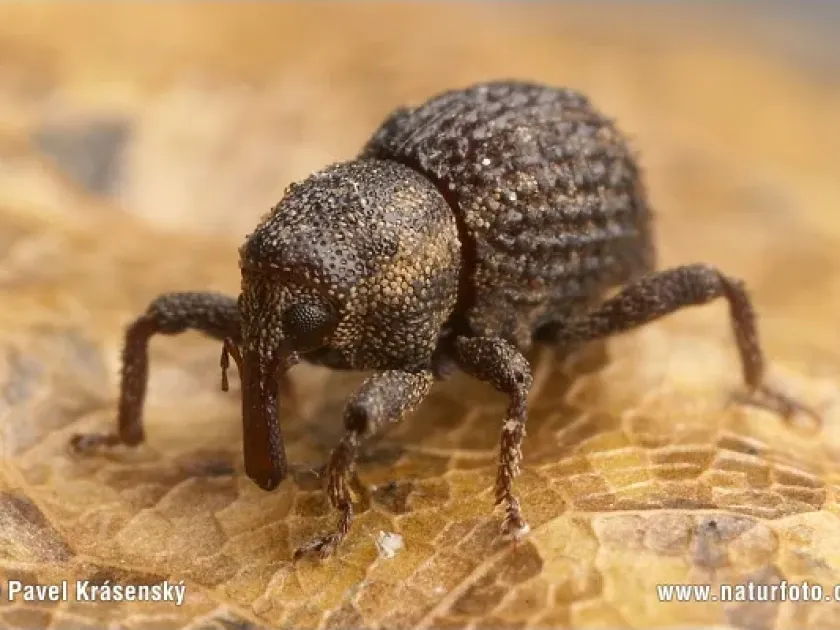
The Acalles weevil belongs to the large family Curculionidae (true weevils). These beetles are characterized by their small size and bodies covered with specialized scales and bristles.
These features provide excellent camouflage, making them resemble bark, moss, or woody debris, which helps them hide in plain sight on tree trunks and branches.
They possess a typical snout (rostrum) that is generally short and curved, allowing them to navigate crevices in the bark of their host plants with ease.
When disturbed, these beetles demonstrate a defense mechanism known as thanatosis, where they pull their legs in and drop to the ground, appearing dead to avoid predators.
The larvae are typically legless, cream-colored, and equipped with strong mandibles adapted for boring into wood, where they live and feed throughout their development.
What it damages
Acalles weevils primarily target deciduous and coniferous trees, favoring those that are already stressed, damaged, or suffering from underlying fungal infections.
The larvae are the primary source of damage as they tunnel into the shoots, branches, or trunks, disrupting the plant's vascular system, specifically the phloem and xylem.
This boring activity leads to the gradual decline of affected branches, characterized by yellowing, wilting, and eventual dieback of the distal parts of the tree.
Young saplings in nurseries are particularly vulnerable, as their smaller trunks can be easily girdled or significantly deformed by the larval galleries.
Furthermore, the physical damage created by the larvae provides an entry point for secondary wood-rotting fungi, which can exacerbate the tree's deterioration over time.
When it appears
Adult Acalles weevils typically emerge from their overwintering sites during the early spring, once temperatures are sufficiently high to resume metabolic activity.
The main dispersal and mating period occurs throughout late spring and early summer, during which the females seek out suitable hosts to lay their eggs.
Larval development happens predominantly during the summer months, a period of intensive feeding and growth within the woody tissues of the host tree.
Pupation generally takes place by the end of the summer, either within the woody galleries or in the leaf litter near the base of the host tree.
As autumn approaches, the newly emerged adults prepare for the winter by seeking shelter in soil, under bark scales, or within dense plant debris to survive the cold season.
Signs of infestation
Detection is often first indicated by small, circular entry holes in the bark, frequently accompanied by fine frass (wood dust) piling up near these exit points.
Visible signs of localized wilting, flagging of branches, or an overall unthrifty appearance of the tree often suggest internal larval boring activity.
Bark abnormalities, such as cracks, small necrotic lesions, or areas where the bark seems slightly depressed, can reveal where the larvae are active beneath.
During the day, adults may be seen sitting motionless on the bark, blending perfectly with the texture and color of their surroundings.
Inspecting fallen or dying branches often reveals internal galleries filled with brownish waste, confirming the presence of the weevil population.
Control measures
The most effective cultural practice is the immediate removal and destruction of infested branches, which helps eliminate the brood before adults can emerge.
Maintaining vigorous tree growth through proper irrigation, balanced fertilization, and avoiding mechanical damage to the trunk reduces susceptibility to attack.
For severe infestations, systemic insecticides can be applied; these products are absorbed by the plant and target the larvae feeding within the wood.
Sanitary management, including cleaning up leaf litter and debris around the base of trees, minimizes favorable overwintering sites for the beetles.
Encouraging natural predators, such as insectivorous birds and parasitic wasps, plays a vital role in maintaining the pest population below an economic injury level.
Taxonomy
- Latin name
- Acalles
- Order
- Coleoptera (beetles)
- Family
- Curculionidae
- EPPO code
- AAESSP
Discussion
No discussions yet — be the first.