
Sugarcane cyst nematode
Heterodera sacchari
The sugarcane cyst nematode (Heterodera sacchari) is a member of the Nematoda phylum and the class Chromadorea. It is an obligate parasite known for producing protective structures called cysts.
What the section contains
Sugarcane cyst nematode
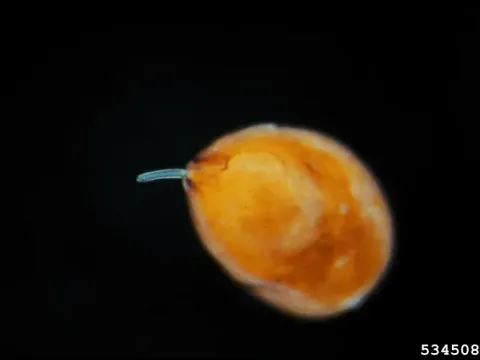
The adult females adopt a lemon-like shape. After death, their body wall toughens to form a cyst, which acts as a durable vessel to protect eggs and larvae from hostile environmental conditions.
Males are vermiform (worm-like) and remain mobile in the soil to locate females, while the sedentary females remain attached to the root tissues to feed.
The life cycle encompasses eggs, four larval stages, and adults. Because of the cyst's durability, the pathogen can survive for several years in soil in the absence of a host crop.
This species is found primarily in tropical and subtropical regions where sugarcane is a staple crop, thriving in warm and moist soil conditions.
The primary host for this pathogen is sugarcane (Saccharum officinarum). The nematode infects the root system, causing significant physiological stress to the plant.
Several other grass species can act as alternative hosts, which makes it challenging to eradicate the nematode once it is established in an agricultural field.
By feeding on root cells, the nematodes cause damage that inhibits nutrient and water uptake, often leading to stunted growth and reduced vigor of the host plant.
The resulting root lesions often facilitate secondary infections by opportunistic soil fungi and bacteria, leading to root rot and complete loss of functionality.
Infected plantations show a marked reduction in sugar yield, as the plants struggle to sustain themselves under the combined pressure of nutrient deficiency and tissue damage.
Infested plants typically display patches of chlorosis, where leaves turn yellow due to the compromised root system's inability to provide sufficient minerals.
Stunting is a key indicator of infestation; in fields with high nematode pressure, entire clusters of sugarcane plants may be visibly shorter than neighboring healthy stands.
Examination of the root system often reveals necrosis, excessive branching, and the presence of small, white to dark-brown bodies—the visible females and cysts.
In advanced cases, the compromised root structure fails to anchor the stalks properly, leading to increased lodging during windy conditions.
The disease often spreads in uneven, patchy patterns across the field, reflecting the localized distribution of cysts in the soil profile.
Integrated pest management (IPM) is essential, starting with crop rotation using non-host crops to starve out the nematode population in the field.
Deep plowing and efficient removal of all root residues after harvest are critical to reducing the reservoir of cysts in the soil before the next planting cycle.
Breeding and planting resistant sugarcane cultivars remains the most sustainable approach to minimizing the impact of Heterodera sacchari on overall yields.
In cases of severe infestation, soil-applied nematicides can be utilized, provided they are applied in accordance with environmental safety guidelines.
Strict quarantine and phytosanitary measures are necessary to prevent the transport of contaminated soil or infested sugarcane cuttings to unaffected areas.