
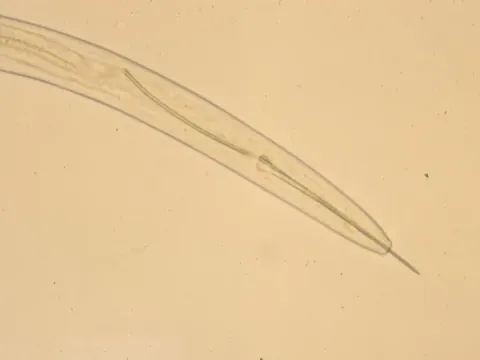
American dagger nematode
Xiphenema americanum
The American dagger nematode, Xiphinema americanum, is a microscopic plant-parasitic roundworm belonging to the family Longidoridae. It is widely recognized as a significant soil-borne pathogen that affects various agricultural and horticultural crops worldwide.
What the section contains
American dagger nematode
The nematode is characterized by its long, slender body and a well-developed feeding apparatus called an odontostyle (a dagger-like stylet). This structure allows it to puncture the root cells of host plants. Adults typically measure between 1.5 and 2.5 mm in length, making them invisible to the naked eye.
The host range of Xiphinema americanum is extremely broad, including many fruit trees, ornamental shrubs, and vegetable crops. It is particularly damaging to vineyards, apple orchards, strawberries, and various forestry nursery stocks, where it feeds on the root tips.
In addition to direct physical damage caused by feeding, the nematode is a primary vector for several nepoviruses (nematode-transmitted polyhedral viruses). By introducing these viruses into the root system, it causes systemic diseases that severely impact yield and plant health.
Above-ground symptoms of an infestation include stunting, yellowing of foliage (chlorosis), and general loss of vigor. In severe cases, the affected plants may exhibit significant wilting during periods of moisture stress due to the impaired root system.
Root symptoms are often localized at the root tips, which may appear swollen, necrotic, or stunted. This inhibition of root growth prevents the plant from effectively absorbing water and essential nutrients, leading to reduced overall productivity.
The transmission of viruses by Xiphinema americanum often leads to distinct symptoms like ringspots, leaf mottling, and deformation. Once a vineyard or orchard is infected with both the nematode and a nepovirus, the disease complex becomes extremely difficult to eradicate.
Management of the dagger nematode requires an integrated approach. The most critical step is the use of nematode-free planting material, as this is the primary way the pest is introduced into new fields or orchards.
Cultural control practices include crop rotation with non-host crops and the use of green manure or cover crops that exhibit antagonistic effects against nematodes. Proper sanitation of farming equipment is also essential to prevent the spread of infested soil between fields.
Chemical control involving soil fumigation is a standard practice in high-value perennial crops, although it must be performed with caution. Soil testing prior to planting is strongly recommended to determine the population density and decide on the necessity of pre-plant treatment.