
U.S.’s screwworm fix is still a year away, risking more spread
The U.S. has detected screwworm in Texas cattle, but the country’s biggest sterile-fly facility will not deliver meaningful output until late 2027. That delay raises risks for the cattle herd, beef prices and producer costs.
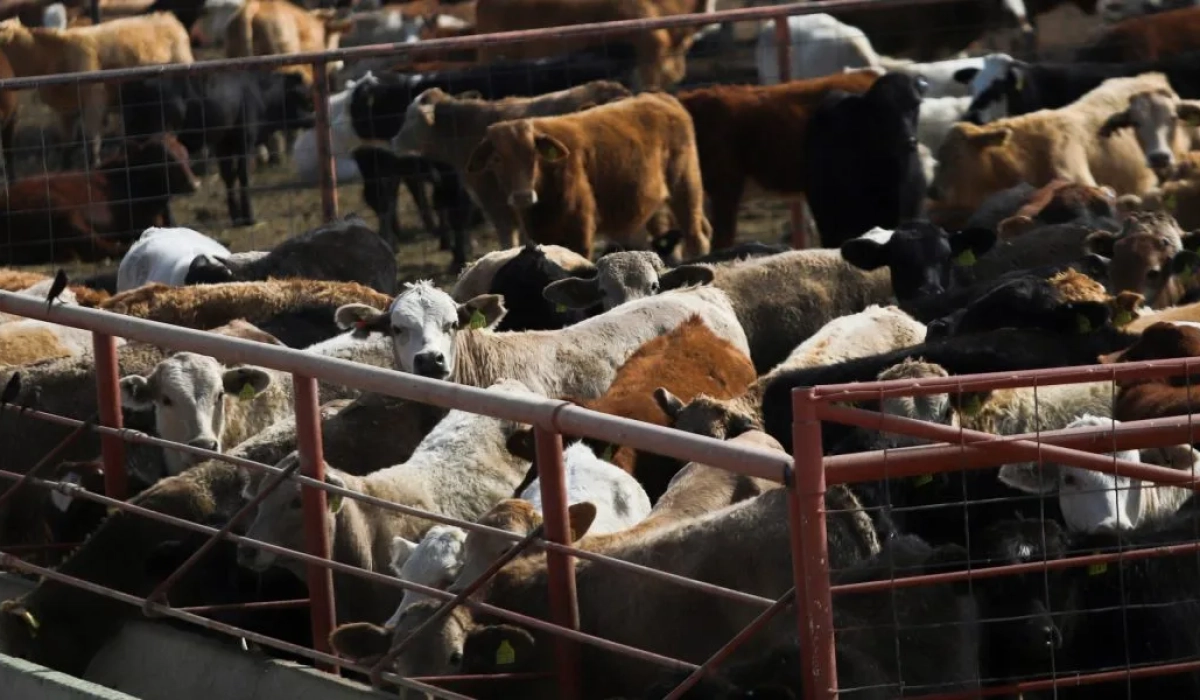
The United States is facing a renewed livestock threat after the New World screwworm reached the country, with the first confirmed cases in decades now identified in Texas cattle. Fortune, citing Bloomberg, reports that the pest has so far been detected in six cattle in Texas, but the country’s main long-term response tool is still far from full deployment. The core strategy relies on releasing sterile flies to interrupt the parasite’s reproductive cycle, yet the large U.S. production facility designed for that effort is not expected to provide meaningful output until November 2027.
Screwworm is a fly whose larvae infest the wounds of warm-blooded animals. The timing is difficult for the cattle industry because drought and high production costs have already reduced the U.S. herd to a 75-year low. These are the first screwworm cases in U.S. livestock since an outbreak roughly five decades ago, also centered in Texas. That earlier outbreak was eliminated only after years of sterile-fly releases, when the U.S. and Mexico eventually scaled production up to as many as 500 million insects per week.
Current capacity is much smaller. A facility in Panama is the only operational sterile-fly production site in North America and is producing 100 million insects per week. Another plant in Metapa, Mexico, could nearly double overall output when it comes online as early as this summer. But the main U.S. bet is the larger site under construction at Moore Air Base in Texas. It is expected to reach an initial 100 million flies per week only in November 2027, with full capacity of 300 million per week coming later. Agriculture Secretary Brooke Rollins has said the U.S. will be able to contain the outbreak in the meantime, but not eradicate it without those additional hundreds of millions of sterile flies.
That delay matters directly for producers. Ranchers will have to absorb the costs of more intensive herd monitoring and repeated treatments, adding labor and veterinary expenses at a time when cattle supplies are already tight. Analysts quoted in the report said the outbreak could push cattle and beef prices even higher and further discourage the rebuilding of the national herd. The prolonged supply crunch has already left beef processors under financial strain while consumer beef prices have climbed to record levels.
History shows how expensive a prolonged outbreak can become. The last major Texas episode affected nearly 1.5 million cattle and cost the state economy $375 million before sterile-fly releases finally pushed the pest back out of the United States and south toward Panama. U.S. senators are now pressing the Agriculture Department to accelerate sterile-fly production, including by examining powers under the Defense Production Act. Federal agencies are also using quarantines and drug supplies to slow the spread, but the biological control gap means the risk window for cattle producers remains open for at least another year.