
US Supreme Court weighs cancer warning dispute over Roundup labels
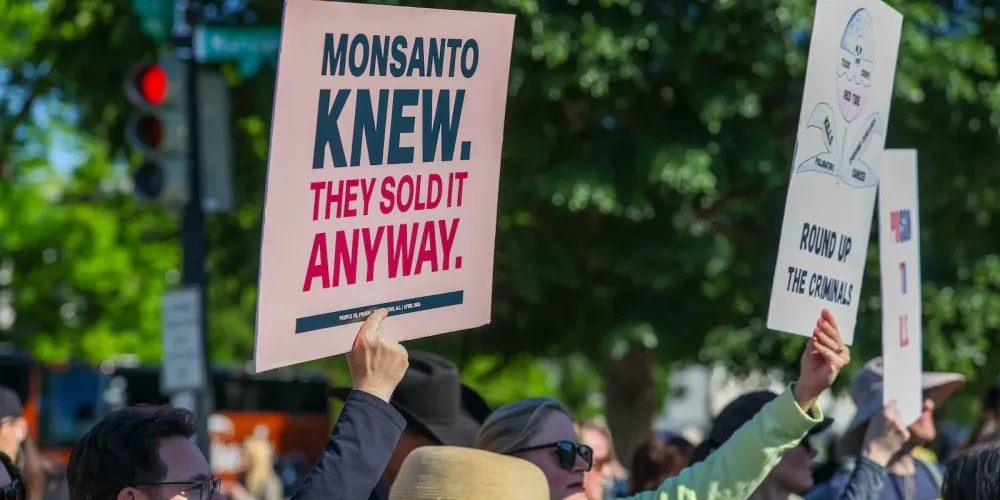
The US Supreme Court is hearing a case that could reshape label rules for one of the world’s best-known herbicides. At issue is whether US states may require cancer warnings on Roundup if the federal regulator has already approved the product label. According to Grist, Bayer has set aside billions of dollars since buying Monsanto in 2018 to settle claims that glyphosate, Roundup’s active ingredient, caused cancer and other health problems. More than 100,000 plaintiffs have sued in the United States, and in February 2026 Bayer agreed to a class action settlement worth $7.25 billion.
The case now before the court centres on John Durnell, who sued Monsanto in 2019 after saying he developed non-Hodgkin lymphoma following 20 years of regular Roundup spraying around his neighbourhood. In 2023, a Missouri jury found Monsanto liable for failing to warn users about the cancer risk and awarded Durnell $1.25 million in damages. The company has denied the allegations and continued to appeal.
The legal fight turns on the Federal Insecticide, Fungicide, and Rodenticide Act, or FIFRA, which gives the Environmental Protection Agency authority over pesticide sales and labelling. The law bars “misbranded” products but also limits states from imposing labelling requirements that differ from federal rules. Monsanto argues that because EPA registered Roundup and approved its label, Missouri’s failure-to-warn claim should be preempted. The Supreme Court must now decide whether EPA approval overrides state law in this area.
During oral arguments, the justices appeared divided. Justice Ketanji Brown Jackson questioned whether Monsanto’s argument would leave states powerless to respond when new research emerges between EPA reviews. Justice Amy Coney Barrett pressed the issue of whether failing to provide updated information to EPA could trigger regulatory consequences. Justice Brett Kavanaugh, by contrast, emphasised the risk that state-by-state warning standards could undermine national uniformity.
The case matters far beyond one lawsuit because glyphosate remains deeply embedded in crop production. Grist says more than 280 million pounds of glyphosate are applied each year across roughly 300 million acres of US farmland. EPA’s 2021 biological evaluation found that 1,676 endangered plant and animal species were likely to be harmed by the chemical. Advocacy groups argue EPA rarely places cancer warnings on pesticide labels even when its own reviews identify serious risks.
The policy backdrop is also shifting. EPA reapproved Roundup in 2020 on the grounds that its agricultural benefits outweighed broader harms, but that decision was overturned by the 9th US Circuit Court of Appeals in 2022 for serious errors in the human health analysis. EPA Administrator Lee Zeldin has told Congress that a new glyphosate ruling is expected by the end of this year. At the same time, the US House debated farm bill language that would have blocked states from setting label rules beyond federal labels, but those provisions were stripped out. The Supreme Court is expected to issue its decision this summer.
Not yet comments. Be the first!
Comments · 0