
UK Protein Transition Framed as a National Security Issue in New Analysis
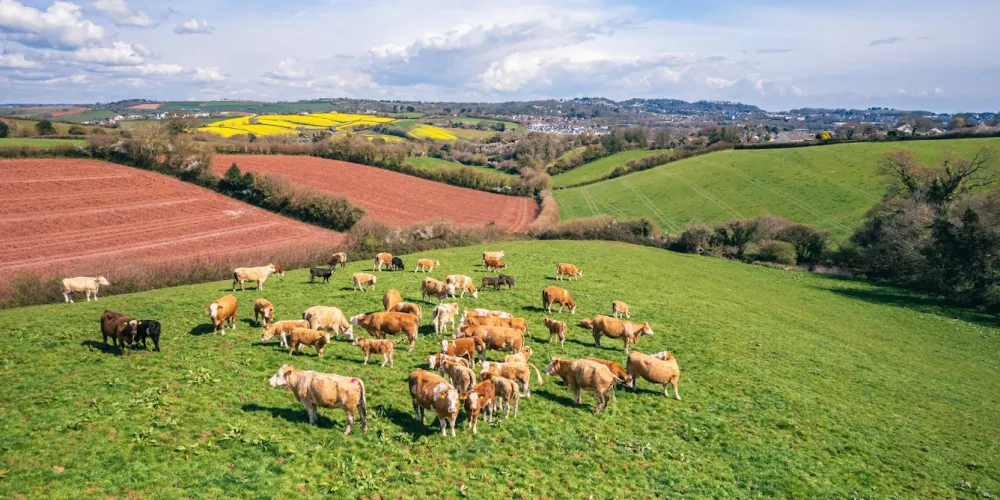
In a March 17, 2026 analysis published by The Conversation, University of Cambridge researcher Chris Macdonald argues that UK protein strategy should be treated as a national security priority. He describes the country’s land-use profile as imbalanced: roughly 5% of land is used for buildings and roads, around 10% for forest and woodland, about 20% for arable crops, and the largest share, around 50%, is tied to livestock. This distribution is presented as a core structural constraint on food resilience.
The article’s central efficiency claim is that producing protein via animal rearing, feeding and slaughter can use around ten times more land than obtaining protein directly from crops. Macdonald then points to newer production routes, especially cell cultivation and precision fermentation, as potentially far more land-efficient options. In his framing, these technologies could deliver comparable protein quantity and quality while using hundreds of times less land in some production contexts.
A second vulnerability in the analysis concerns import dependence. Despite allocating roughly half of national land to livestock and feed systems, the UK still produces only about 60% of the food it consumes, according to the data cited in the piece. The article says this leaves the country exposed to climate shocks, geopolitical disruptions and supply-chain instability. It also highlights continued reliance on millions of tonnes of imported feed, including flows linked to regions affected by ecosystem degradation and deforestation.
Macdonald further connects the current model to environmental and welfare trade-offs. He argues that animal agriculture contributes disproportionately to greenhouse-gas emissions, water pollution and biodiversity loss, while more intensive livestock systems can conflict with public expectations about animal welfare. In this framing, the policy challenge is not only technical productivity but also the social legitimacy of how protein is produced at scale.
For international comparison, the article points to the United States, naming companies such as Upside Foods, Good Meat and Wild Type in cultivated meat, and Perfect Day, The Every Company and Triton Algae Innovations in precision fermentation. These facilities are described as resembling brewery-style industrial plants with stainless-steel tanks, rather than conventional farm or slaughter infrastructure. The piece notes that the US has already approved and started limited cultivated-meat sales, while the UK remains in a regulatory-development stage with no authorised products for general human consumption yet.
The analysis also links protein strategy to wider agrifood infrastructure. It argues that indoor and controlled-environment farming, including automated vertical farms, can improve year-round predictability for fruit and vegetable output and reduce exposure to droughts, floods and external trade disruptions. The closing argument is that a UK protein transition would require major investment, regulatory work and political coordination, but could ultimately improve food-system independence, reduce import risk and free land for biodiversity and ecosystem recovery.
Not yet comments. Be the first!
Comments · 0