
Satellite Technology: Distinguishing Palm Oil Plantations from Native Rainforests
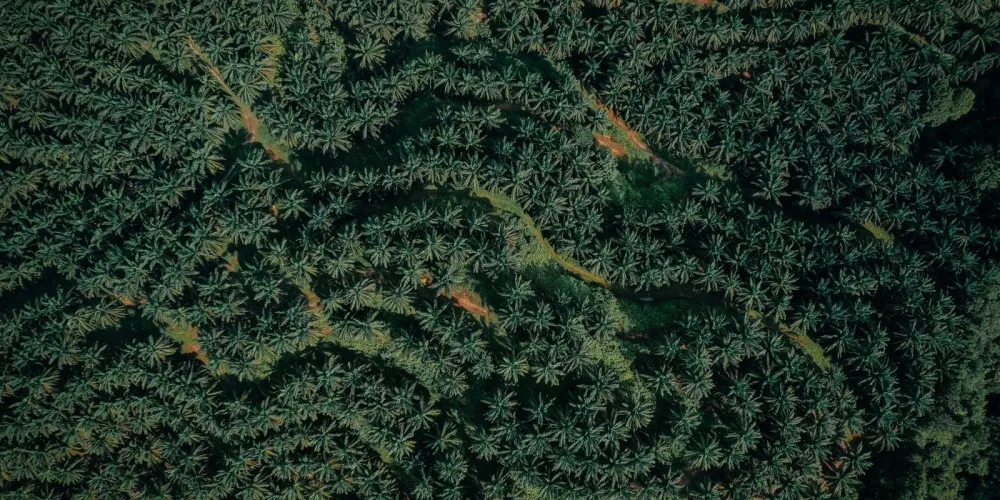
Modern satellite technologies have reached a level of detail that allows for the precise differentiation between industrial palm oil plantations and native rainforest areas. The key to this capability lies in the analysis of the precise angle at which plant fronds reflect sunlight. The structured, grid-like layout of industrial plantations creates a unique optical signature that contrasts sharply with the chaotic, layered arrangement of vegetation found in untouched wild forests.
This ability to analyze the architecture of forest cover has become the technological backbone for significant environmental initiatives. Specifically, the European Union's Deforestation Regulation (EUDR), adopted in 2023, relies heavily on this satellite data. The regulation mandates that companies must prove their products are not sourced from land that was deforested after a specified cutoff date, and these advanced remote sensing methods provide the necessary objective verification.
The distinction between human-made plantations and natural forests is easily captured by sensors due to the mathematical precision of the planting lattice. While a natural rainforest acts as a complex, multi-tiered ecosystem with an unpredictable canopy distribution, palm oil plantations exhibit nearly perfect symmetry. Machine learning algorithms, processing satellite telemetry, read this pattern, allowing experts to obtain an accurate view of land usage from orbit.
For the global palm oil industry, this represents the end of an era for unregulated or "grey" supply chains. The EU’s 2023 regulation demands supply chain transparency, and satellite monitoring serves as an incorruptible tool that cannot be bypassed with fraudulent documentation regarding the origin of the product. Government agencies and environmental watchdog organizations now have objective, empirical evidence at their disposal to ensure compliance with strict environmental standards.
Ultimately, the advancement of space technology is fundamentally altering the landscape of global commodity markets and environmental safety. The capacity to differentiate plantations from native forests based on the angle of light reflection is a prime example of how cutting-edge science aids in protecting planetary biodiversity. By transforming global Earth observation into an effective regulatory instrument, authorities are gaining unprecedented control over sustainable land management.
Not yet comments. Be the first!
Comments · 0