
Greece pushes circular agriculture as residues, compost and biogas move into farm policy
Greek farm policy is giving more weight to circular practices that return crop residues, livestock waste and bio-waste to the soil or use them in biogas systems, backed by CAP and local programmes.
Circular economy practices are moving closer to the centre of Greek agricultural policy as officials link them to lower waste, better soil quality, lower production costs and greater resilience to climate pressure on farms. Speaking to the Athens-Macedonian News Agency, Secretary General for Agricultural Development and Food Spyridon Protopsaltis said the sector is now being asked to produce more efficiently while using fewer inputs and protecting natural resources more effectively.
Protopsaltis argued that agriculture can no longer be separated from soil, water, biodiversity, climate and the quality of food that reaches consumers. In his words, the challenge is not simply to produce more, but to produce better, with less waste, fewer inputs, stronger protection of natural resources and more value for the producer. That framing places residues and organic waste at the centre of a broader production strategy rather than treating them as a disposal problem.
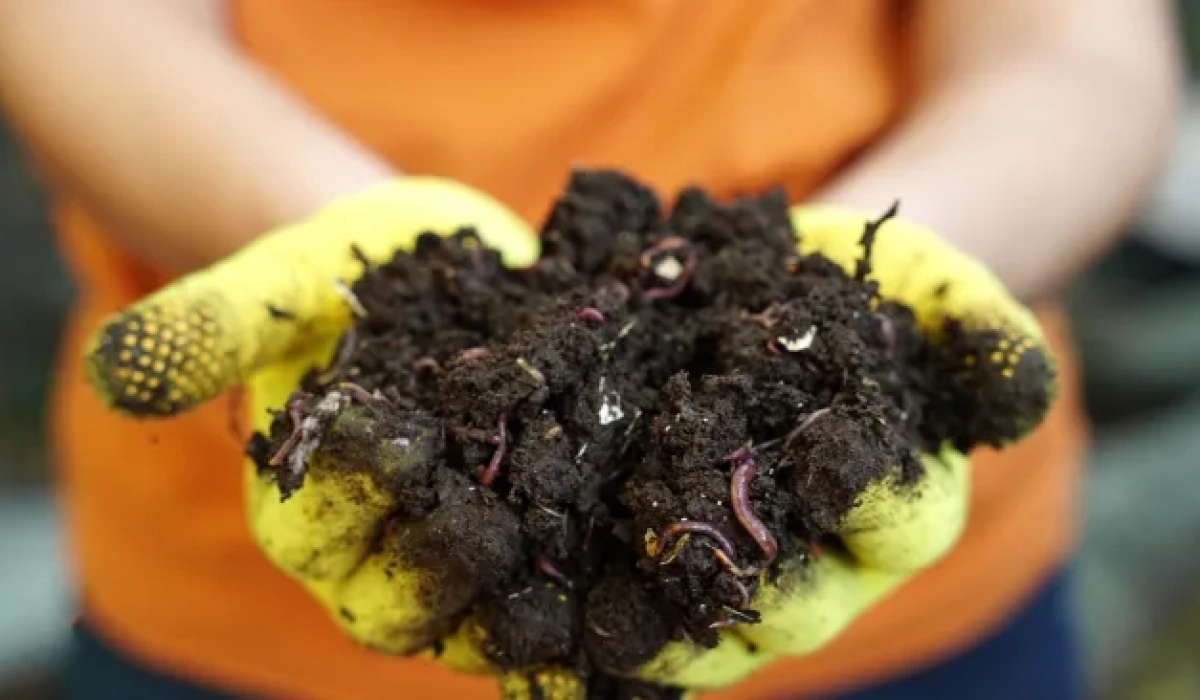
Under that approach, crop residues, pruning waste, green waste, livestock waste and other organic bio-waste can be collected, processed and returned to the land as organic matter, compost or soil conditioners. Protopsaltis said compost has direct agronomic value because it improves the soil’s ability to hold water and nutrients, enhances aeration, supports the gradual release of nutrients and reduces the need for chemical fertilisers.
The article also ties circular farming to the expansion of organic production. Greece increased the number of organic producers from 34,000 in 2020 to 119,000 in 2024, and €1.265 billion was allocated between 2017 and 2024 through programmes supporting organic farming methods. Even so, Protopsaltis warned that expansion on paper is not enough. Without credibility, inspections, traceability and clear rules, organic output loses value and honest producers are undercut.
Support for the transition is expected to come through the Strategic Plan of the Common Agricultural Policy. A programme is already in place to encourage biomass removed from fields to be returned to the soil as compost or through other sustainable practices. Additional backing is planned for composting equipment, waste-management systems, energy-related farm investments, the use of by-products and residues, biogas facilities and infrastructure aimed at cutting environmental impact while improving competitiveness.
Municipalities and local communities are also expected to play a practical role through the LEADER rural development programme. Protopsaltis said local projects can organise waste collection at source, connect farmers and cooperatives with composting or biogas facilities and adapt circular solutions to regional conditions. He described anaerobic digestion and biogas as a model with multiple payoffs: farmers and livestock breeders get rid of residues, energy is produced, and the processed material returns to the field as a soil improver.