
Punjab survey finds a major crop-insurance awareness gap despite rising climate risk
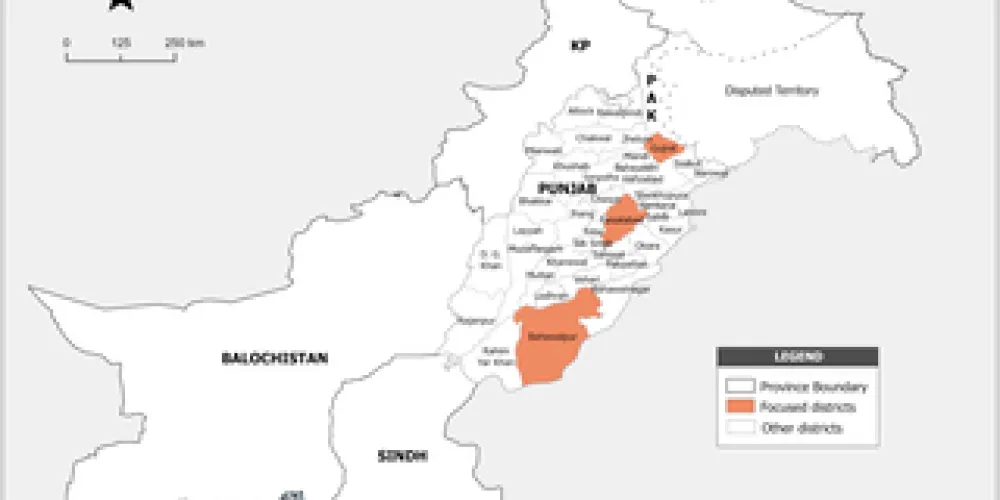
A research article published in PLOS ONE on March 18, 2026 assesses crop insurance as a climate-risk management tool in Pakistan’s farm economy. The study uses primary survey evidence from 324 farmers across 27 mouzas (villages) in three Punjab districts: Bahawalpur, Gujrat, and Faisalabad. The authors examine how farm households perceive climate shocks, how aware they are of insurance schemes, and what coping tools they actually use when losses occur.
The central result is a clear perception-adoption gap. While 84% of respondents describe climate hazards as a major threat to agriculture, only 21% report awareness of crop-insurance schemes, and fewer than 3% have ever purchased coverage. In practical terms, most producers recognize climate exposure but do not convert that risk awareness into participation in formal insurance markets.
Where formal insurance is absent, farmers rely mainly on informal credit networks. The paper reports that these networks are preferred because they are accessible, flexible, and trust-based at community level. But this fallback mechanism does not provide the same predictability as structured insurance in the face of repeated extreme weather events, leaving farm households exposed to cumulative shocks.
The econometric section uses logit and probit models and finds that education and financial inclusion significantly raise the likelihood of insurance awareness. The study links this to financial literacy: farmers who can better assess premium costs, coverage terms, and payout logic are more likely to treat insurance as a realistic adaptation option rather than a distant institutional product.
Beyond perception data, the article maps Pakistan and Punjab insurance architecture, including Crop Loan Insurance Scheme, Takaful Crop Insurance, weather-based products, and provincial programs. It argues that availability of schemes alone has not solved adoption: enrollment complexity, scope limits for some crops, and implementation frictions still reduce effective coverage. Punjab program details in the paper also show scaling attempts, including premium subsidies for smallholders in some schemes and broader geographic coverage.
The policy conclusion is that the core bottleneck is institutional linkage, not only product existence. The authors recommend localized awareness efforts, simpler enrollment and claims pathways, more credible delivery channels, and stronger public-private coordination. For agri-economics, the message is direct: without trust, literacy, and operational simplicity, crop insurance remains underused even where climate risk is widely acknowledged.
Not yet comments. Be the first!
Comments · 0