
NSW water curbs leave loophole for major Barwon-Darling irrigators
A dispute has opened in New South Wales over whether emergency water restrictions are really protecting the Darling system. Critics say large irrigators can still access river-fed off-river pools under existing licence conditions.
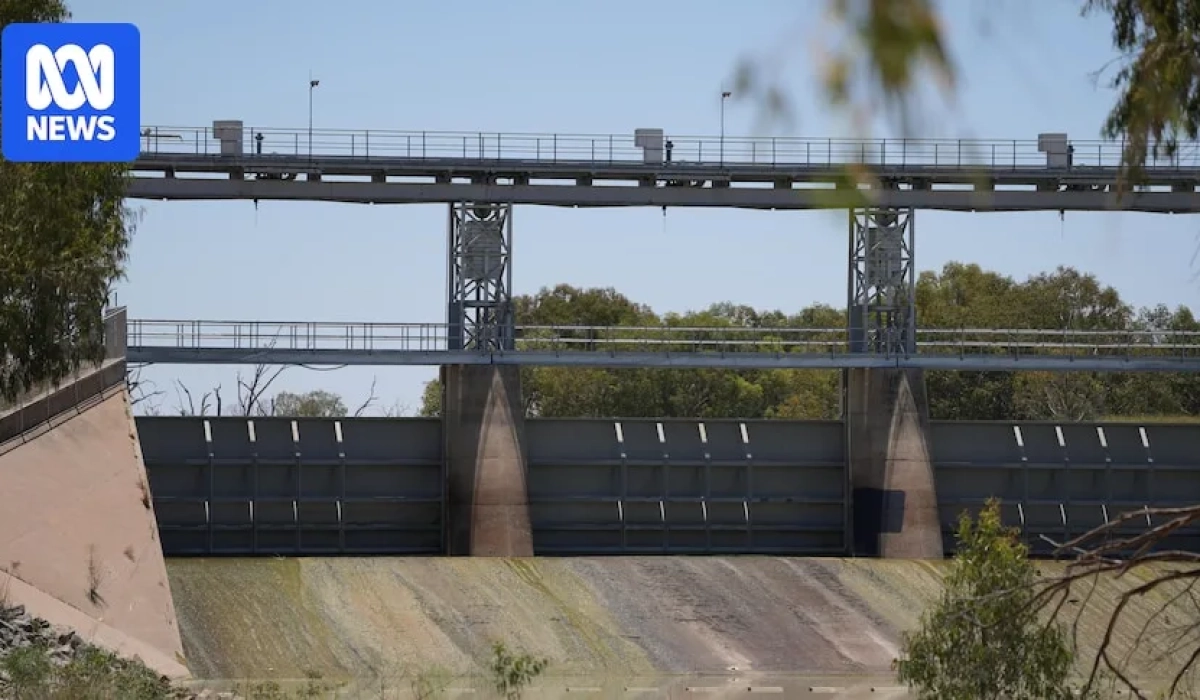
A dispute has opened in New South Wales over the effectiveness of temporary water restrictions after storage in the Menindee Lakes system fell to 250 gigalitres. That trigger level was previously negotiated as the point meant to preserve roughly 12 months of supply for downstream users and environmental needs. The state moved to restrict water take in order to conserve flows in the Darling River system and reduce the risk of ecological damage such as fish kills and turtle deaths.
Maryanne Slattery of the River Integrity Project says the restrictions still leave a major loophole. According to her, most floodplain harvesting licences in the Barwon-Darling contain a condition that allows water to be taken from natural off-river pools filled by the Darling River. In practice, she argues, that means some of the biggest operators can continue to access river-origin water even after the embargo has been activated.
The temporary order was introduced in April by the Department of Climate Change, Energy, Environment and Water under Section 324(1) of the Water Management Act 2000. It covers the Barwon-Darling, Gwydir, Namoi, Macquarie and Border Rivers valleys. Yet floodplain harvesting licences in the Barwon-Darling are treated differently, and about 70 per cent of those licences include access to off-river pools. Slattery says that undermines the policy because the largest users retain especially generous conditions.
Cotton Australia rejects that interpretation. General manager Michael Murray said the policy is extremely effective at limiting water access for irrigators and argued that any exemption tied to off-pool conditions would represent only a very small share of total flows. Even so, the dispute shows how contested water allocation remains across one of Australia’s most important agricultural basins, where irrigation, communities and environmental protection are all competing for the same shrinking resource.
The criticism gained extra force from a fresh report by Inspector-General of Water Compliance Troy Grant. He reviewed the Northern Basin Toolkit, a 2018 government commitment intended to recover 70 gigalitres for the environment in the northern basin, and found that the scheme had largely failed. Grant said water governance in New South Wales lacks cohesion, transparency and accountability and recommended a broader overhaul.
Grant also argued that the problem is no longer only about direct on-farm theft. He said large volumes of water continue to disappear from the balance sheet because of poor accounting and too much reliance on modelling instead of measuring actual take. For agriculture, that means the debate over irrigation rules, licence conditions and compliance in the Murray-Darling system is likely to intensify as conditions dry further.