
Mouse plague drives fresh crop losses for grain farmers in Western Australia
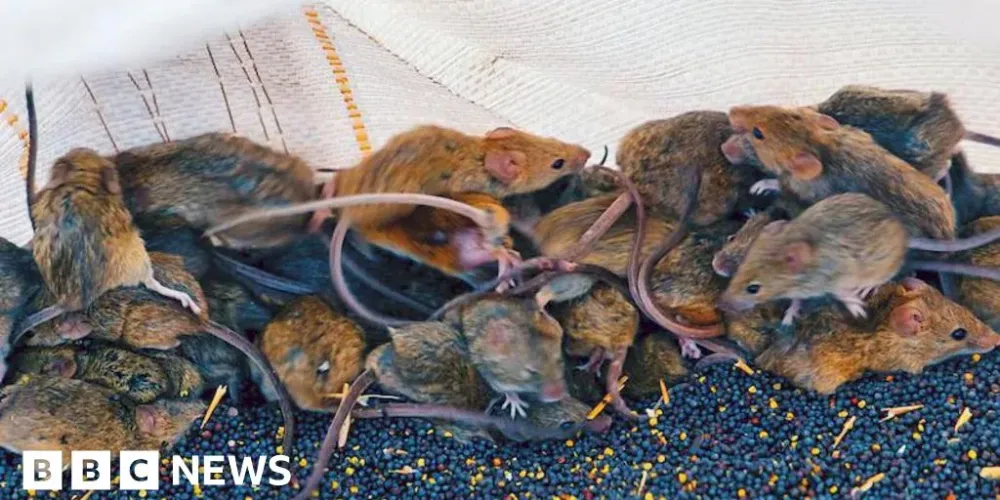
Grain farmers in Western Australia are facing a fresh round of losses from a severe mouse plague that has spread across major cropping districts. BBC reported that the rodents are damaging fields, eating freshly sown seed and infesting homes and sheds at a critical point in the autumn planting season.
Geoff Cosgrove, who runs a 14,000-hectare farm in Mingenew growing wheat, canola, lupin and barley, said he had only needed to bait twice in 25 years of farming, but this year is much worse than the 2021 outbreak. According to the report, farmers are spending hundreds of thousands of dollars either replanting crops that have already been eaten or laying sterile grain bait laced with poison. Cosgrove also described the psychological strain of hearing and smelling mice inside farm buildings.
Belinda Eastough, an agronomist and farmer on a 5,500-hectare property in Nolba about 80 kilometres northeast of Geraldton, linked the plague to last year's record harvest. Spilled grain left abundant feed in paddocks, and summer rain then produced fresh green shoots. On her canola land, she estimates there are about 8,000 to 10,000 mice per hectare.
CSIRO research officer Steve Henry said a plague is generally defined as 800 mice per hectare, but Western Australia is dealing with far higher numbers. On a recent visit, he counted 30 to 40 active burrows over a 100-metre by one-metre strip, which translates to at least 3,000 to 4,000 burrows per hectare. He said South Australia was seeing similar conditions.
The pressure is hitting farmers at the same time as input costs are rising. Eastough told BBC that diesel and fertilizer prices have surged since the Iran war began, and that farmers are paying about twice as much for fuel as they were two or three months earlier. In that setting, any delay between seeding and baiting gives mice time to eat seed directly out of the furrows overnight.
Some relief may finally be emerging. Farmers had spent months waiting for approval to use a stronger bait, and that authorisation has now been granted. Together with cooler and wetter winter weather, the new tool could help reduce populations, but the BBC report makes clear that the current outbreak has already become a significant threat to grain production and farm margins in Western Australia.
Not yet comments. Be the first!
Comments