
ICRISAT advances grain legume disease control with breeding, biocontrol and digital tools
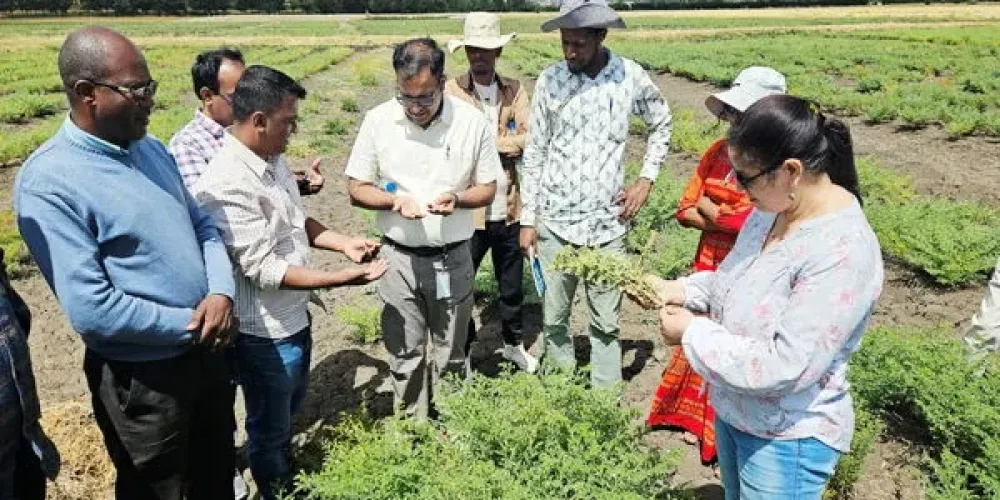
The International Crops Research Institute for the Semi-Arid Tropics, or ICRISAT, has set out a broad plant health strategy for grain legumes that combines disease resistance breeding, biological control and digital support for farmers. In its International Day of Plant Health feature, the institute noted that pests and diseases destroy up to 40% of global food crops each year and cause agricultural trade losses of more than US$220 billion.
ICRISAT argues that climate change is making the challenge more urgent. Rising temperatures and shifting weather patterns are helping pests and pathogens spread into areas where they were previously unknown. At the same time, global agriculture is expected to increase production by nearly 60% by 2050. That makes plant health a core food-security issue, especially across the drylands of Asia and Africa where ICRISAT focuses much of its work.
A central pillar of the approach is breeding for resistance. ICRISAT said scientists screened more than 13,500 chickpea accessions from 40 countries for resistance to fusarium wilt and identified 160 resistant lines. In a follow-up effort, another 5,084 accessions from the ICRISAT genebank and India’s National Bureau of Plant Genetic Resources were assessed under field and controlled conditions for resistance to fusarium wilt, ascochyta blight, Botrytis grey mould and dry root rot.
That work yielded 133 lines resistant to fusarium wilt, 33 to ascochyta blight, 34 to Botrytis grey mould and 74 to dry root rot. ICRISAT says these genetic resources are critical for breeding programmes worldwide and help reduce reliance on chemical interventions. The institute is also expanding biological control and integrated crop management work against soil-borne disease complexes, borers, miners and fall armyworm.
Digital agriculture is another major element. Through the SMART-CROP initiative with SBI Foundation, ICRISAT is using satellite imaging, AI and machine learning tools, weather forecasting and field monitoring to detect crop stress in chickpea and pigeonpea in real time. The programme has already digitally onboarded more than 4,800 farmers in Telangana and Karnataka within a year, giving them climate-smart advice on integrated pest and disease management.
The institute is also investing in physical infrastructure and capacity building. A new dry root rot phenotyping facility has been inaugurated at Patancheru in India, while a fusarium wilt screening facility has been established at Kibiko near Nairobi in Kenya. Combined with farmer training in places such as Ethiopia and Odisha, the effort shows how modern plant protection is shifting from single interventions to connected systems in which genetics, biology, data and extension all support more resilient legume production.
Not yet comments. Be the first!
Comments · 0