
India raises minimum support prices for 14 kharif crops for 2026-27
India’s Union Cabinet has approved higher minimum support prices for 14 kharif crops for the 2026-27 marketing season, with the government estimating payouts of ₹2.60 lakh crore to farmers.
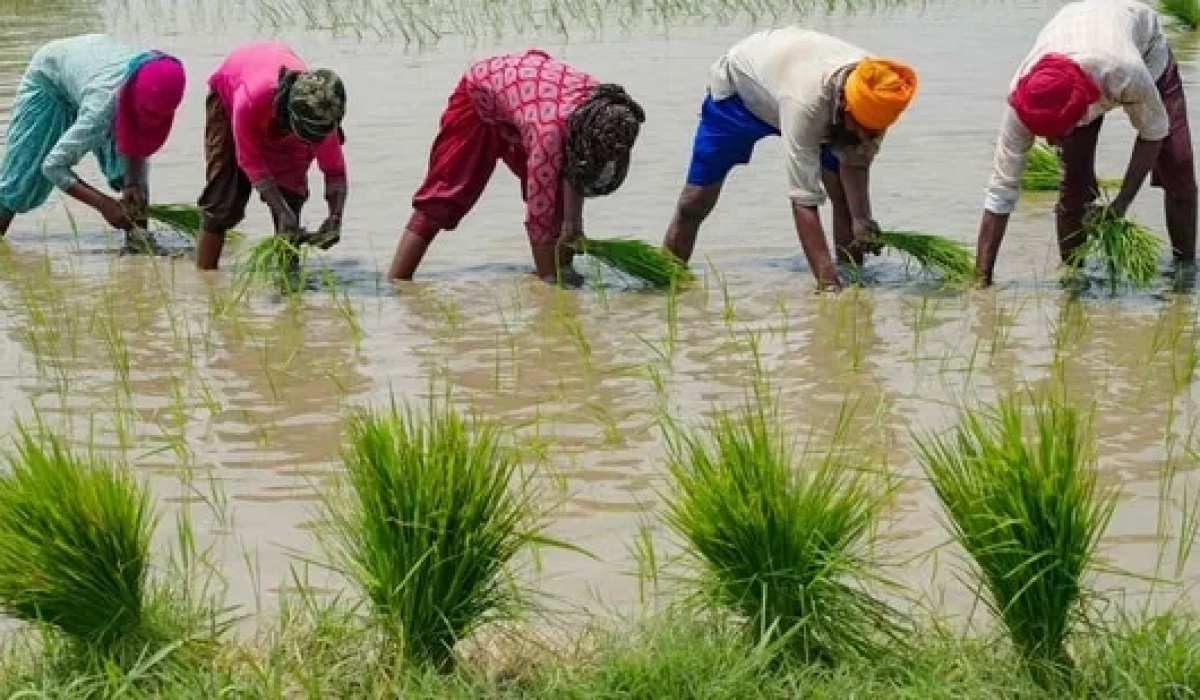
India’s Union Cabinet has approved higher minimum support prices, or MSP, for 14 kharif crops for the 2026-27 marketing season. The government said the decision corresponds to payouts of ₹2.60 lakh crore to farmers. Officials also linked the increase to the policy announced in the 2018-19 budget, under which MSP is to be fixed at least 1.5 times the all-India weighted average cost of production.
According to the official data cited in the report, the highest margin over production cost is for moong at 61%. Bajra and maize follow at 56% each, while tur, or arhar, is set at 54%. For the remaining crops, the estimated margin is 50%. That gives the announcement more than a simple price function: it also signals which crops the government most wants to support in terms of farm incomes and production incentives.
The new rates are detailed crop by crop. MSP for common paddy has been fixed at ₹2,441 per quintal, while Grade A paddy will be procured at ₹2,461. Among pulses, tur is set at ₹8,450 per quintal, moong at ₹8,780 and urad at ₹8,200. In oilseeds, the MSP stands at ₹7,517 for groundnut, ₹8,343 for sunflower seed, ₹5,708 for soybean and ₹10,346 for sesame. Those benchmarks matter because they shape farmer expectations well before the main procurement season gathers pace.
The government said it expects annual procurement of 824.41 lakh metric tonnes under the MSP regime. It also highlighted how sharply state procurement has expanded over the past decade. Paddy procurement in 2014-15 to 2025-26 reached 8,418 LMT, compared with 4,590 LMT in 2004-05 to 2013-14. Procurement of all 14 kharif crops rose from 4,679 LMT in the earlier period to 8,746 LMT in 2014-15 to 2025-26. Those figures are meant to show that MSP remains a large operational procurement system, not just a policy headline.
For Indian farm policy, the move has both an income and a production angle. It supports growers ahead of the next sowing and procurement cycle, while also reinforcing the government’s push toward pulses, oilseeds and so-called nutri-cereals, which officials say have been encouraged through higher MSPs in recent years. For the market, that means India’s pricing policy will continue to influence planting decisions, public grain buying and the supply balance across several major food crops.