
India and IFAD move into a new phase of climate-resilient rural development cooperation
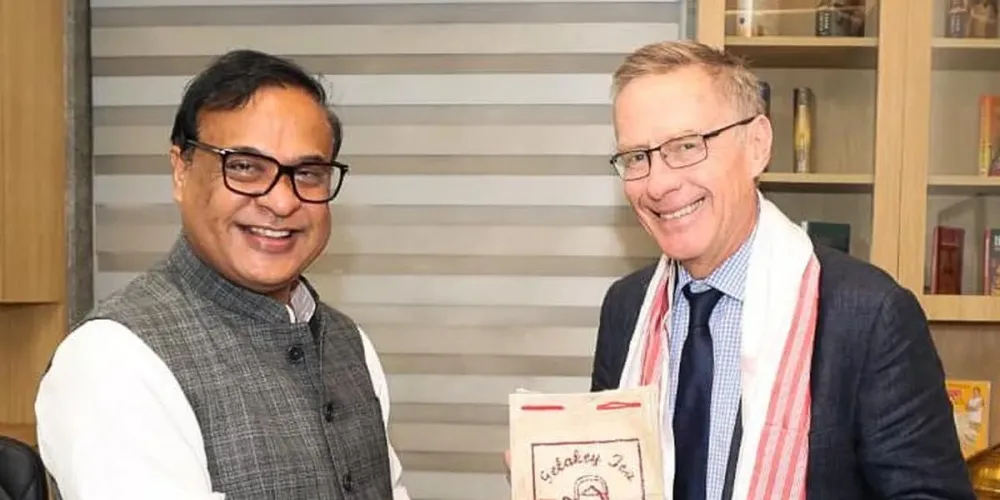
India and the International Fund for Agricultural Development have opened a new phase of cooperation on sustainable rural development, advancing an eight-year roadmap during a five-day visit by a senior IFAD delegation. The framework combines rural finance, value chains, climate resilience and enterprise development, signalling a broader push to connect agricultural productivity with stronger local institutions and more durable sources of rural income.
The delegation was led by Donal Brown, IFAD’s Associate Vice-President for the Department of Country Operations. He was joined by Reehana Raza, IFAD Regional Director for Asia and the Pacific, Marc de Sousa-Shields, IFAD Country Director for India, and senior officials from the India country office. Their discussions with top representatives of the Finance, Agriculture and Rural Development ministries focused on scaling investment and innovation in rural economies and on strengthening livelihoods beyond short-term project cycles.
According to IFAD, the new eight-year roadmap is intended to work through co-financing, de-risking innovation and embedding successful approaches in India’s policy and institutional systems. Community-based organisations are expected to be central to that effort. Self-help groups, farmer producer organisations and cooperatives are meant to connect finance, technology, infrastructure and market access, allowing local institutions to carry more of the development process rather than depending only on externally managed schemes.
In talks with Agriculture Secretary Atish Chandra, the delegation focused on priorities that are directly relevant to farming systems: strengthening FPOs, improving self-sufficiency in pulses and oilseeds, raising input-use efficiency for smallholders, expanding digital agriculture in remote regions and promoting climate-resilient crops such as millets. Discussions with Rural Development Secretary Rohit Kansal centred on flagship initiatives linked to rural prosperity, resilience and the smart villages concept, showing that the partnership is meant to span both farm production and broader village development.
The delegation also travelled to Ri-Bhoi district in Meghalaya to review the IFAD-financed Megha-LAMP project and met farmer collectives, processing units and grassroots institutions. Brown separately discussed future cooperation with Meghalaya Chief Minister Conrad Sangma and a proposed agricultural productivity and rural livelihoods initiative in Assam with Chief Minister Himanta Biswa Sarma. IFAD said India has been a partner for more than 48 years and now hosts 35 rural development projects with a combined portfolio of about $4.2 billion, making it one of the institution’s largest country programmes worldwide.
Not yet comments. Be the first!
Comments · 0